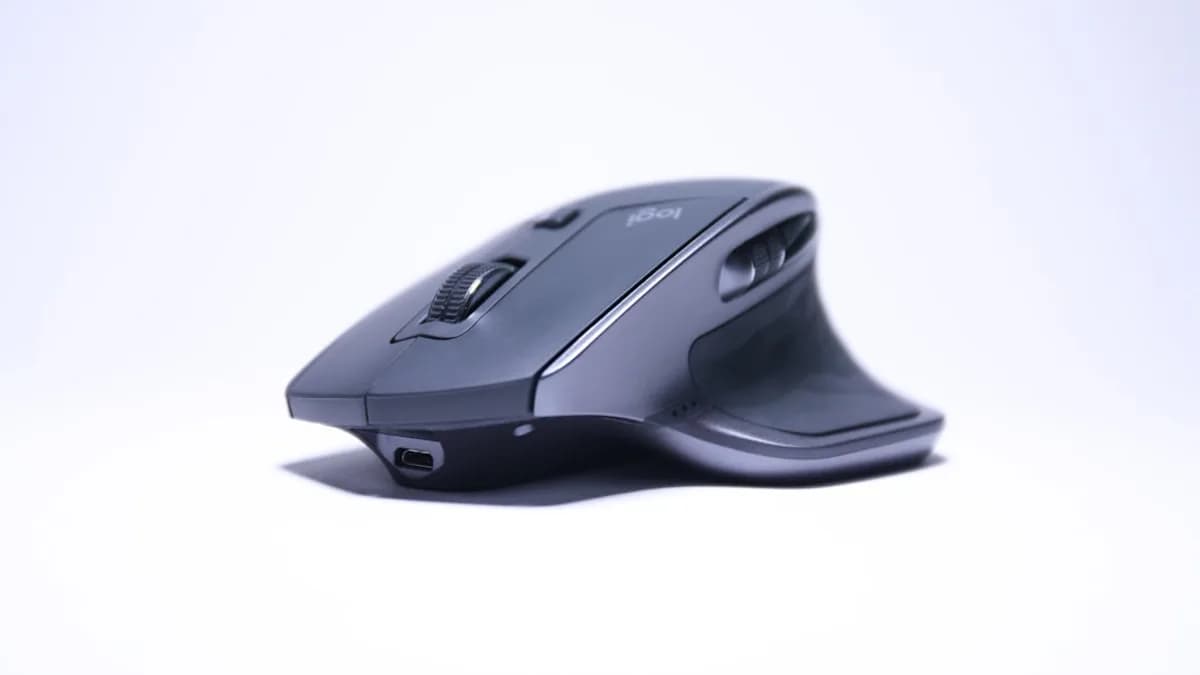
Why Logitech’s Foldable Mouse Could Redefine Portable Computing Accessories
A mouse that folds in half and fits in your pocket sounds like a party trick—until you see Logitech’s leaked design and the data behind it. Logitech isn’t just chasing portability for its own sake. According to The Verge, their new wireless folding mouse claims to cut muscle strain by 22% compared to a laptop trackpad, all while working across multiple operating systems. That reframes the problem: mobile workers have long been forced to choose between the cramped inefficiency of a trackpad and the bulk of a traditional mouse. Logitech’s pitch is simple—stop settling.
This device enters a market where the compromise between mobility and usability is still unsolved. Most laptop trackpads are passable for quick emails or browsing, but fall short in precision and comfort for real work—design, spreadsheets, editing. Existing travel mice improve on precision, but remain awkward to pack or easy to lose. By collapsing to near-phone size, Logitech’s folding mouse aims to address both pain points head-on.
MLXIO analysis: If Logitech delivers on its ergonomic claims, this isn’t just another mouse—it’s a shot at redefining what “mobile-first” means for serious work. For every traveling analyst, consultant, or digital nomad tired of finger cramps, Logitech’s approach signals a stronger focus on health and productivity, not just form factor.
Breaking Down the Ergonomic Edge: What 22% Less Muscle Strain Really Means
A 22% reduction in muscle strain is the kind of number that raises eyebrows—especially when the baseline is the humble laptop trackpad. This claim, visible in leaked marketing images, positions the folding mouse as a legitimate health upgrade, not just a convenience. Even without full study details, the implication is clear: extended trackpad use is physically taxing, and mobile professionals are already feeling the effects.
The strain comes from the unnatural hand positions and limited range of motion that trackpads require. A mouse, especially one with an arched design, promotes a more neutral wrist angle and less finger contortion. By matching the ergonomics of full-sized mice, Logitech claims its foldable device slashes the effort required for repetitive tasks—a selling point for anyone clocking hours on a laptop.
MLXIO analysis: If the 22% figure holds up under independent testing, it could drive a shift in how users—and IT buyers—prioritize input devices. The signal is that trackpad fatigue is no longer just a minor annoyance but a quantifiable productivity and wellness issue. Competitors will be forced to justify why their mobile solutions don’t address health as aggressively.
Design Evolution: How Logitech’s Foldable Mouse Stands Out Among Competitors
At first glance, Logitech’s folding mouse is a close cousin to Microsoft’s Surface Arc and Lenovo’s Yoga mouse—sleek, arched, and clearly designed for portability. But the engineering twist is subtle and significant: Microsoft and Lenovo’s mice fold flat for storage, while Logitech’s design folds in half, creating an even smaller footprint that slips into a pocket or bag without the awkwardness of a rigid slab.
The underlying bet is that users want true pocket-ability, not just a thinner device. The hinge or folding mechanism, though still under wraps, will be crucial for durability—a weak point in previous foldable peripherals. By folding in half, Logitech may also be able to protect sensitive tracking surfaces and buttons during transport, increasing longevity.
MLXIO analysis: This design choice sets Logitech apart in two ways. First, it signals a willingness to rethink the shape of a mouse, not just its thickness. Second, it raises the bar for what “portable” means in this category. If the folding mechanism is robust, competitors could find their flat-folding designs suddenly looking outdated.
Multiple Operating Systems, One Device: Logitech’s Cross-Platform Strategy Explained
The marketing leak highlights another key feature: seamless use “across multiple operating systems.” In an era when professionals toggle between Windows, macOS, and sometimes Linux or Chrome OS, device lock-in is a dealbreaker. Most travel mice work best with one or two operating systems, often requiring users to carry multiple devices or settle for limited functionality.
Logitech’s promise is universal pairing—one mouse, all your computers and tablets. Achieving this requires solid wireless protocols (likely Bluetooth Low Energy) and driver support that doesn’t break as you switch devices. It’s a technical hurdle that only established accessory brands are positioned to clear.
MLXIO analysis: Multi-OS support isn’t just a nice-to-have feature. It’s a wedge that could win over IT departments and freelancers alike, who demand flexibility as device stacks fragment. If Logitech executes on this claim, it will strengthen their position in a market that’s still plagued by compatibility headaches.
Stakeholder Perspectives: What Users, Industry Experts, and Competitors Think
User expectations for portable mice are clear: small, reliable, and comfortable enough for long sessions. Past attempts have either sacrificed ergonomics for size or delivered durability concerns with moving parts. Industry analysts have often been skeptical of “gimmick” designs, but the 22% muscle strain reduction—if real—could change the dialogue from novelty to necessity.
The source does not provide user quotes or reactions, but MLXIO interpretation is that early adopters will scrutinize hinge durability and battery life. Experts will likely focus on independent validation of ergonomic claims. Competitors—especially Microsoft and Lenovo—will be forced to evaluate whether their own flat-folding mice are now a generation behind, or whether Logitech’s radical rethinking has created new technical pitfalls.
MLXIO analysis: The real test will come from extended use in the field. If the mouse delivers comfort and reliability, Logitech could set a new standard for mobile peripherals. But skepticism will remain until hands-on reviews confirm both the ergonomic benefits and the longevity of the folding mechanism.
Tracing the History of Foldable Tech in Computer Accessories and Its Market Impact
Foldable designs have a checkered past in tech accessories. From roll-up keyboards to compact mice, the promise of portability has often clashed with the realities of build quality and user experience. Microsoft’s Arc mouse and Lenovo’s Yoga mouse made folding cool, but only within the narrow limits of flat-folding designs. These were easier to pack, but still awkward in a pocket and often uncomfortable for prolonged use.
Logitech’s approach takes a sharper turn—aiming for true half-size storage while retaining the arched, ergonomic shape. This fits within a broader trend of flexible, adaptable hardware, but with a pragmatic focus on daily pain points: muscle strain and device sprawl.
MLXIO analysis: The lesson from past foldable peripherals is clear—convenience cannot come at the expense of durability or comfort. Logitech’s challenge is to prove that a folding mechanism can survive real-world abuse and still provide a noticeably better user experience. If successful, it could revive interest in foldable hardware designs for other accessories.
What Logitech’s Foldable Mouse Means for Mobile Professionals and the Future of Input Devices
Mobile professionals, remote workers, and digital nomads are the immediate beneficiaries. If the ergonomic and cross-platform claims hold, the folding mouse could become the default travel companion for anyone who works on the road. The days of sacrificing comfort for portability—or juggling multiple mice for different laptops—could be numbered.
MLXIO analysis: The broader implication is that input devices are finally catching up with the realities of hybrid work. Logitech’s folding mouse could inspire a wave of innovation, not just in mice, but in other travel peripherals—think foldable chargers, keyboards, or even screens. The market will be watching to see if Logitech can turn a slick design into a must-have tool, or if the folding mouse will join the ranks of clever but short-lived gadgets.
What We Know, What Remains Unclear, and What to Watch Next
What We Know:
- Logitech is developing a wireless folding mouse that folds in half for easier storage.
- Leaked marketing claims a 22% reduction in muscle strain versus laptop trackpads.
- The device works across multiple operating systems.
- The design is visually similar to Microsoft Surface Arc and Lenovo Yoga mouse, but with a different folding mechanism.
What Remains Unclear:
- The actual name, price, and release date of the mouse.
- Technical specifics of the folding mechanism and materials.
- Independent verification of the 22% muscle strain claim.
- Real-world durability and battery life.
What to Watch:
- Official announcement and hands-on reviews to confirm the ergonomic and durability claims.
- User and IT department adoption for multi-device workflows.
- Whether competitors respond with their own new folding designs or double down on existing models.
If Logitech’s folding mouse survives scrutiny, it could spark a new wave of practical, user-driven innovation in mobile tech accessories. The next chapter will depend on whether the device is as comfortable and reliable as the leaked images promise—or just another clever prototype.
Why It Matters
- A folding mouse that reduces muscle strain by 22% could improve health and comfort for mobile workers.
- Logitech's design bridges the gap between portability and usability in computing accessories.
- This innovation signals a shift towards prioritizing ergonomics and productivity for remote professionals.