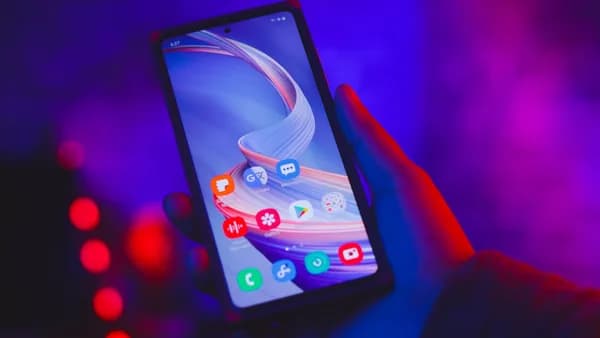
On May 25, Huawei’s next flagship HiSilicon Kirin chip became less a routine phone-component story and more a test of how far design can compensate for manufacturing limits.
Huawei’s reported Kirin2026 claims are aggressive: 238 Mtr/mm² transistor density, a 12.7% increase in maximum clock speed for performance cores, and a 41% improvement in power efficiency, according to Notebookcheck. The chip could launch as Kirin 9050 later this year.
Those numbers matter because Huawei still cannot use TSMC, Intel, or Samsung cutting-edge nodes for new Kirin chips. It relies on SMIC, which makes every claimed efficiency gain more consequential — and more in need of independent proof.
Why the May 25 Kirin2026 claim matters for phone buyers
Power efficiency is often more valuable than peak speed in a phone. A chip that burns less energy can stay fast longer, run cooler, and drain less battery during sustained workloads. That matters for gaming, long camera sessions, AI image processing, and modem-heavy use.
Huawei’s headline claim is not just “faster.” It is faster and more efficient. The reported 12.7% max-clock gain points to better burst performance. The 41% efficiency improvement points to the more important question: can the phone hold performance after the first few seconds?
There is a catch. These are Huawei-linked projections reported through Notebookcheck and Tech Home, not retail-device benchmark results. No independent lab has yet shown how Kirin2026 behaves in a shipping phone.
MLXIO analysis: Treat the numbers as an early signal, not a verdict. If Huawei can deliver even part of the claimed gain in real devices, it would mark a meaningful step for its in-house silicon push. If the gains appear only under narrow lab conditions, buyers may barely notice.
For readers tracking Huawei hardware more broadly, MLXIO’s adjacent coverage of the company’s device pipeline includes Weird Camera Bet Grabs Huawei Nova 16 Ultra Spotlight. For a wider tech strategy lens, see Strategic Takeaways Reveal the Trends to Watch Next.
Where Kirin2026 fits in Huawei’s flagship phone plan
Kirin2026 is the reported codename for Huawei’s next flagship Kirin SoC from HiSilicon. Notebookcheck says it is expected later this year and could be branded Kirin 9050 at launch.
A flagship smartphone SoC is not just a CPU. It brings together the CPU, GPU, modem, image-processing hardware, AI acceleration, memory control, and power-management logic. That is why a chip upgrade can affect more than app launch times. It can shape camera speed, heat, wireless performance, battery life, and AI features.
Huawei’s current constraint is structural. Before U.S. sanctions, the company was the world’s second-largest smartphone maker and was developing its own Kirin chips while competing at the top end of the market. Today, it cannot turn to the leading external foundries named in the source for new Kirin production on their most advanced nodes.
That leaves Huawei trying to win more from design. The company’s claimed tool for that is LogicFolding, described by Notebookcheck as part of a new chip design philosophy.
| Chip | Reported transistor density |
|---|---|
| Kirin 9030 Pro in Huawei Mate 80 Pro Max | 125 Mtr/mm² |
| Kirin2026 / possible Kirin 9050 | 238 Mtr/mm² |
The density claim is striking because 238 Mtr/mm² is nearly double 125 Mtr/mm². But density alone does not prove real-world speed. Heat, yield, power delivery, memory bandwidth, and software tuning still decide what users feel.
How LogicFolding could explain the speed and efficiency pitch
Huawei has not provided enough public technical detail to fully evaluate LogicFolding. The available source describes it as a chip-design approach tied to better performance, power efficiency, and cost.
MLXIO analysis: In plain terms, LogicFolding appears to be aimed at arranging or integrating logic more efficiently. If that means shorter paths between functional blocks, better placement of repeated logic, or less wasted signal movement, it could reduce power loss and heat. That would make higher clocks easier to sustain.
This is the basic mechanism to watch:
- Shorter data movement: Less energy spent moving signals around the chip.
- Lower heat: More room before thermal throttling begins.
- Higher boost clocks: Faster bursts for short tasks.
- Better sustained output: More performance over minutes, not just seconds.
The reported 12.7% boost-frequency improvement would help in short workloads: opening apps, rendering a web page, switching camera modes, or processing a photo. Those tasks often benefit from quick bursts.
The 41% power-efficiency claim is the bigger number. If it applies to the performance cores under meaningful workloads, it could help Huawei phones run heavier tasks with less heat. If it applies only to a limited test case, the impact would be smaller.
Without die shots, process-node details, benchmark runs, and power measurements, it is impossible to separate how much of the gain comes from LogicFolding versus architecture changes, process tuning, or power-management software.
What 41% efficiency could mean in a 30-minute workload
Consider a simple hypothetical: two flagship phones run the same 30-minute gaming session or long video-recording task. One uses an older Kirin-class chip. The other uses a Kirin2026-class chip with Huawei’s claimed efficiency gain.
If the newer chip really needs less power for the same work, the phone may hold performance longer before heat forces a slowdown. The user might see fewer frame-rate dips, less body heat, or more stable camera behavior during a long session.
But a 41% chip-efficiency improvement does not mean 41% longer battery life. The display, modem, camera sensors, storage, speakers, cooling design, and software all consume power. A bright screen can erase some chip-level gains.
The more realistic benefit would be workload-specific:
- Gaming: Better sustained performance if thermals allow it.
- Camera use: Longer high-load shooting before heat becomes a constraint.
- AI tasks: Faster processing if the relevant AI hardware also improves.
- Battery life: Possible gains under heavy SoC load, not guaranteed across all use.
Peak clock gains are often brief. Efficiency gains matter most when they keep the chip from falling back after the first burst.
The Snapdragon, Dimensity, Exynos, and Apple gap remains Huawei’s hard wall
Notebookcheck is blunt on the competitive comparison: even with Huawei’s claimed improvements, chips such as Qualcomm Snapdragon 8 Elite Gen 5, Samsung Exynos 2600, MediaTek Dimensity 9500, and Apple A19 Pro are expected to remain out of reach.
The reason is manufacturing. Those rival mobile SoCs use advanced nodes from TSMC and Samsung, while Huawei currently has no equivalent path in the supplied source material.
That does not make Kirin2026 irrelevant. It changes the benchmark. Huawei is trying to improve within constraints that its major rivals do not face in the same way.
MLXIO analysis: The key question is not whether Kirin2026 beats Apple or Qualcomm outright. The sharper question is whether Huawei can narrow the practical gap enough that its own premium phones feel competitive to users who stay inside Huawei’s hardware and software stack.
To prove that, Huawei needs more than launch slides.
The evidence that should decide whether Kirin2026 is real progress
Readers should wait for hard data before accepting the headline percentages. The useful evidence will be specific, repeatable, and tied to shipping devices.
The strongest signals would include:
- Process details: What node SMIC is using and how Huawei characterizes it.
- Power measurements: Actual wattage under CPU, GPU, AI, and mixed workloads.
- Thermal data: How fast the phone heats and when it throttles.
- Sustained benchmarks: Performance over several minutes, not one peak run.
- Retail testing: Results from phones people can buy, not engineering samples.
- Workload clarity: Whether the 41% efficiency figure applies to CPU cores, the whole SoC, or a specific test.
Huawei’s Kirin2026 claim is best read as a marker of intent. The company is signaling that LogicFolding and design-level gains can offset some of its foundry disadvantage.
The next decision point is independent validation. If retail phones show cooler sustained performance and credible power savings, Kirin2026 becomes a serious step in Huawei’s silicon comeback. If the numbers collapse outside controlled tests, the story stays where it is now: ambitious, technically intriguing, and still unproven.
The Bottom Line
- Huawei’s claimed 41% efficiency gain could mean cooler phones, longer battery life, and better sustained performance.
- The claims are especially significant because Huawei remains dependent on SMIC rather than leading-edge TSMC, Intel, or Samsung nodes.
- Buyers should wait for independent retail-device benchmarks before treating Kirin2026 as a proven flagship leap.