If the leak is right, Apple’s first foldable iPhone is no longer waiting on the screen; it is waiting on whether the hinge can meet Apple’s durability bar.
That is the real signal beneath the latest report. Apple has reportedly locked in a no-crease display approach for a 2026 iPhone Ultra, with the same hardware logic expected to move later into a larger foldable iPad, according to Notebookcheck. The claim remains leak-based. Apple has not announced a foldable iPhone, an iPhone Ultra, or a foldable iPad.
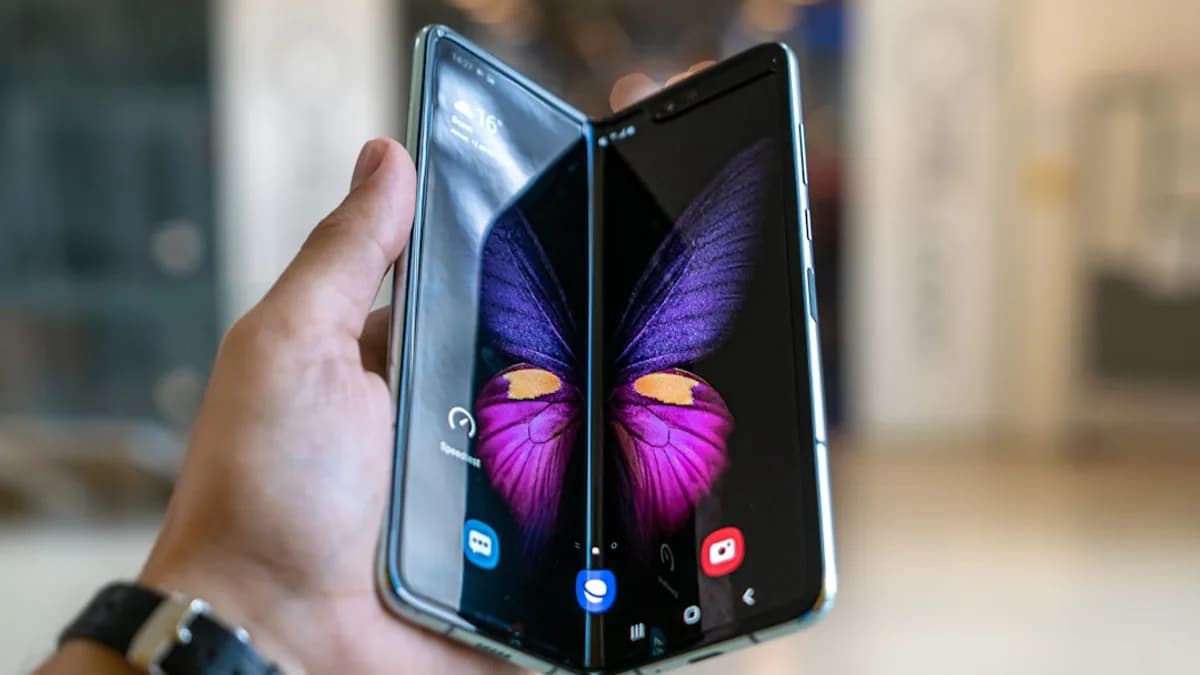
But if the report holds, the company may have solved the one flaw that makes many foldables still feel unfinished: the visible trench running through the display.
Apple’s foldable iPhone gamble hinges on making the crease disappear
What We Know: Notebookcheck reports that Apple has “indeed achieved” the target of a no-crease display for its long-rumored foldable iPhone Ultra. The device is described as a book-style foldable with a compact phone mode when closed and an iPad mini-like experience when opened.
That matters because Apple cannot enter this category with a device that looks like a prototype. A foldable iPhone carrying Ultra branding would be judged against Apple’s own premium hardware standards, not against the compromises buyers have accepted from earlier foldables.
The crease is not only cosmetic. It signals fragility. It interrupts video, reading, drawing, gaming, and multitasking. It also breaks the illusion that the inner display is a single tablet-like canvas.
Apple’s reported position appears simple: do not ship until the fold line stops being the first thing people notice.
The caution is just as important. This is not an Apple confirmation. The source material relies on leaks, including claims from Digital Chat Station and related reporting from Weibo accounts. Recent reporting has also pointed to hinge challenges, so the panel story and the production story may not be moving at the same speed.
Why It Matters: If Apple believes the biggest visual objection has been solved, the foldable iPhone moves from “experimental Apple product” toward “Ultra-tier hardware bet.” Apple would not be first. It would be trying to arrive when the format feels ready.
How a no-crease foldable display could change the iPhone Ultra design playbook
The rumored iPhone Ultra design sounds less like a phone with a trick screen and more like two devices compressed into one chassis.
Notebookcheck lists expected specs including a 5.5-inch outer screen and a 7.8-inch internal OLED panel that is said to be crease-free. The device is also rumored to use an Apple A20 Pro built on TSMC’s 2nm node, 12GB RAM “optimized for Apple Intelligence,” a titanium and aluminum frame, Touch ID in the power button, and a roughly 5,400 mAh dual-cell battery.
The profile is the most aggressive number: 4.5mm unfolded. If accurate, Apple would be trying to make the inner tablet mode feel thin enough to avoid the usual foldable penalty.
Notebookcheck says Apple’s approach “more or less mirrors” the Oppo Find N6 solution. Oppo’s recent flagship uses a 3D-printed liquid metal hinge to achieve what it calls “Zero-Feel Crease.” The report also notes a complication: reviews have found that the Oppo Find N6 still shows a crease after a few days of use, even if it is less visible than competing designs.
That is the key distinction. A crease can be hidden in early demos. Keeping it visually suppressed after thousands of open-close cycles is harder.
Apple’s design problem is brutal. A gentler folding path can reduce display stress, but the hardware still has to control thickness, weight, battery volume, dust exposure, camera placement, heat, and long-term hinge reliability. Every millimeter allocated to the hinge is a millimeter not used for battery, cameras, speakers, or thermal headroom.
This is why “Ultra” branding would make sense if Apple uses it. The name creates room for a high price, a new form factor, and a cleaner separation from the mainstream Pro line.
It also gives Apple a way to frame risk. The first foldable iPhone would not need to replace the iPhone Pro Max on day one. It could sit above it as a prestige device for buyers willing to pay for the largest pocketable iPhone display Apple has ever shipped.
For context, MLXIO has tracked this same durability tension in prior foldable iPhone coverage, including the question of whether Apple can clear the hinge and panel thresholds ahead of the iPhone 18 Pro cycle: Apple Cracks Foldable iPhone Ultra Durability Ahead of iPhone 18 Pro.
The numbers behind Apple’s foldable timing: price, market share, and 2026 expectations
The reported hardware numbers point to a product that would sit far above a normal iPhone refresh.
CNET reports that the foldable iPhone release date could be as early as September 2026, with possible names including iPhone Fold, iPhone Ultra, or iPhone Flip. It also cites one analyst prediction that the device could cost between $2,000 and $2,500. Macworld’s summary puts the likely starting price around $1,999-$2,000.
Notebookcheck’s spec list implies why. A 7.8-inch internal OLED, a 5.5-inch cover display, a custom hinge, a dual-cell battery, a thin titanium-and-aluminum body, and 12GB RAM would not be cheap to build.
The market data is more interesting. CNET says it found that 64% of people said they do not want a foldable phone. Yet it also cites IDC analysts predicting that global foldable sales will jump 19% if the iPhone Fold launches in 2026, with Apple’s device capturing around 24% of global market share.
Those two figures can both be true. Foldables may still face skepticism, while an Apple launch could expand the buyer pool.
MLXIO analysis: early volume may matter less than positioning. If crease-free panels and custom hinges are difficult to produce at scale, Apple could treat the first iPhone Ultra as a controlled rollout rather than a mass-market iPhone. Limited supply would not be surprising if the display and hinge remain hard to manufacture consistently.
The 2026 timing also fits a broader Apple hardware logic. The rumored 12GB RAM tie to Apple Intelligence suggests Apple wants the device to carry both the AI story and the form-factor story. A foldable Ultra would give Apple a physical reason to upgrade, not just a software one.
Why Apple waited while Samsung, Oppo, and Huawei shaped the foldable phone market
Apple’s delay has often been framed as hesitation. It may be more disciplined than that.
The supplied sources describe a market where rivals have already tested multiple design paths. CNET references book-style designs such as the Galaxy Z Fold 7 and Pixel 10 Pro Fold, while also noting that Samsung’s Galaxy Z TriFold still has two creases, one for each hinge. Notebookcheck points to Oppo’s Find N6 as the closest design comparison for Apple’s reported solution.
That gives Apple years of public trial-and-error to study: visible creases, bulky bodies, awkward aspect ratios, hinge anxiety, software uncertainty, and durability concerns.
The benefit of waiting is obvious. Apple can benchmark what competitors improved and what users still criticize. The risk is just as clear. Samsung, Oppo, and other Android brands have had years to refine foldable software, retail education, repair processes, and buyer expectations.
Huawei is part of the competitive foldable conversation, but the supplied source material does not provide device-specific Huawei details. That limits how far any direct comparison can go here.
The historical pattern is familiar: Apple often enters after others define the first wave. But foldables are not like wireless earbuds or smartwatches in one important way. The hardware trade-offs are visible every time the user opens the device.
If Apple ships a foldable iPhone, it has to make the hinge disappear from the experience. Not literally. Functionally.
Stakeholder views: what a foldable iPhone means for users, developers, suppliers, and rivals
For users, the appeal is direct: a phone-sized device that opens into a mini tablet. Reading, video, gaming, spreadsheets, photo editing, and multitasking all benefit from more display area.
The anxiety is just as direct. Durability, repair cost, battery life, and pocketability will decide whether the device feels practical or precious.
For developers, the opportunity is software shape-shifting. MLXIO analysis: adaptive layouts, split-screen workflows, gaming controls, creative tools, and productivity apps could become more important if Apple gives the inner display distinct behaviors rather than treating it as a stretched iPhone screen.
That software question may decide the product’s ceiling. A 7.8-inch display is only valuable if iOS makes it feel meaningfully different.
For suppliers, the upside could be large but unforgiving. Notebookcheck’s rumored foldable iPad uses an 18.8-inch Samsung-made foldable OLED. The iPhone Ultra would likely place pressure on advanced OLED production, hinge design, cover materials, and assembly precision.
Apple’s quality demands can cut both ways. They can create premium supply contracts, but they can also punish yields if the crease-free target proves hard to repeat at scale.
For rivals, the threat is normalization. Samsung and Chinese brands have used foldables as a premium differentiator. If Apple makes the format feel mainstream for high-end buyers, that differentiation narrows.
Yet rivals could also benefit if Apple validates the category. A high-profile iPhone Ultra launch would put foldables in front of buyers who previously ignored them.
A crease-free iPhone could be the bridge to a foldable iPad, not the final destination
The bigger strategic prize may not be the iPhone Ultra. It may be the foldable iPad.
Notebookcheck says the specialized hardware could eventually “trickle down” to a foldable iPad, potentially forming the structural basis of a future iPad/MacBook Fold. The rumored iPad device would have an 18.8-inch Samsung-made foldable OLED, no secondary panel, an all-aluminum exterior, and a MacBook-like closed shape.
The reported weight is the problem: approximately 3.5 lbs. Notebookcheck calls that the main challenge for Apple’s engineering team. The rumored price is also steep, starting as high as $3,500-$3,900.
A crease matters more at that size. On a phone, it is annoying. On an 18.8-inch canvas, it could interfere with drawing, reading, spreadsheets, video editing, and professional workflows.
The rumored iPad design also sounds like a product-line collision. It could behave like a 13-inch laptop, a giant tablet, or something between an iPad Pro and a MacBook Air. Notebookcheck says it would have no physical keyboard and would rely on software typing or external peripherals.
That raises the software boundary question Apple has avoided for years: where does iPadOS stop, and where does Mac-like productivity begin?
MLXIO analysis: the iPhone Ultra could be the smaller proving ground. If Apple can validate the hinge, panel, battery, repair model, and software behavior at phone scale, it gains evidence for a larger folding device where failure would be more expensive and more visible.
What happens next: foldable iPhone predictions for Apple’s 2026 hardware strategy
What Is Still Unclear: Apple has not confirmed the device, the name, the launch date, the display supplier, the hinge design, the price, or the final specs. The biggest unresolved issue is whether “crease-free” means visually clean in controlled testing or durable after long-term daily use.
9to5Mac, citing Weibo leaker Instant Digital, reports that current test results show the display has reached a visually crease-free state with “long-term stability.” The same report says the hinge is struggling with reliability after prolonged, high-frequency opening and closing, falling short of Apple’s quality control standards.
That tension is the whole story.
If Apple launches in 2026, expect the marketing to focus less on hinge mechanics and more on daily use: a pocketable iPhone that opens into a larger canvas for work, media, and Apple Intelligence. The hinge will be shown only if Apple can make it look boring.
A cautious rollout would fit the evidence. High pricing, limited early supply, conservative finishes, and heavy durability messaging would all make sense if Apple is protecting the first generation from overexposure.
What To Watch: The confirming evidence would be supply-chain reports pointing to stable panel yields, hinge durability approval, and mass production timing for late 2026. Stronger leaks around iOS foldable multitasking would also support the thesis that Apple is building a real new device class, not just a bigger iPhone.
The weakening evidence would be reports of hinge redesigns, delayed production tooling, reduced launch volumes, or a visible crease returning after extended testing.
If the no-crease leak is accurate, Apple’s foldable era may start with the iPhone Ultra. But the larger move could be using that same display-and-hinge system to reshape the iPad into a folding productivity device.
The Bottom Line
- A crease-free display would address one of the biggest complaints about current foldables.
- Apple’s remaining challenge appears to be hinge durability rather than screen quality.
- If true, the leak suggests Apple is preparing foldable hardware for both iPhone and iPad categories.