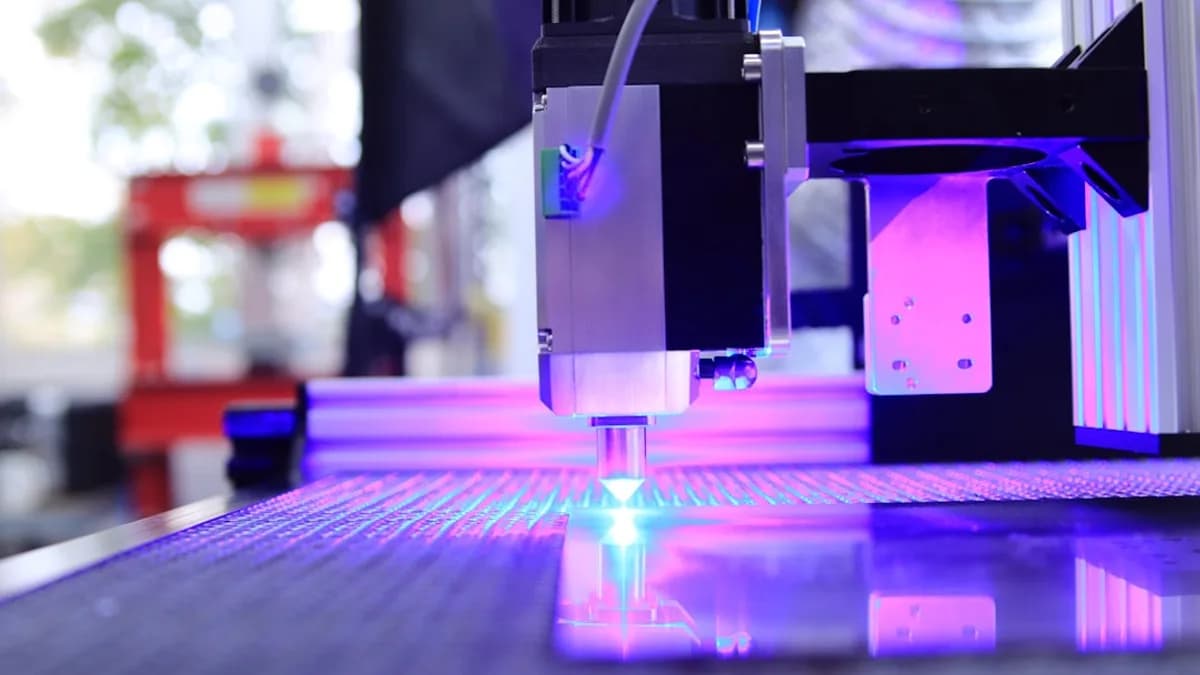
Creality is trying to compress several laser-workshop roles into one presale product, and the hook is an early discount before the Falcon T1 moves beyond its launch window. The Creality Falcon T1 is being marketed as a flexible, modular laser workstation available for a short presale period with savings attached, according to Notebookcheck.
The launch appears aimed at users who want more than a fixed-purpose desktop laser, though the supplied source material does not independently verify a precise buyer segment or full production-workflow package. Creality’s broad pitch is simple: one enclosed workstation that can support multiple laser functions and different workshop tasks in a more compact setup.
“This article is a paid placement. All content was provided by the advertiser.”
That disclosure matters. The product claims are attractive, but they come through a sponsored placement, so the Falcon T1 should be treated as a launch-and-presale story — not an independent performance verdict.
Creality’s Falcon T1 presale puts the discount in front of the proof
The strongest commercial fact is the presale framing itself: Creality is promoting early savings on the Falcon T1 for a limited period. That gives interested buyers a reason to look before the launch window closes, but the supplied source material does not provide enough independently verifiable detail to confirm final pricing, deadline, regional availability, or channel-by-channel bundle differences.
Creality is positioning the Falcon T1 as a workstation for multiple laser tasks rather than a single-use cutter or engraver. The company’s broader message is that the system can help users move between different materials and jobs through a modular design, but the exact module lineup, included accessories, and automated setup behavior should be confirmed directly before purchase.
The counterpoint is obvious: presale pricing rewards early commitment before broad customer feedback exists. The source presents the Falcon T1 as a flexible laser workstation, but it does not provide independent testing, long-run reliability data, noise figures, filtration results, or third-party output comparisons.
That does not make the presale irrelevant. It means the real buying decision turns on whether the listed hardware package matches a buyer’s workflow. A shop already juggling multiple materials may care more about practical setup time, included modules, and repeatable output than any single headline specification.
For readers comparing discount-driven tech purchases more broadly, the lesson carries over: the headline discount is only useful if the bundle, timing, warranty terms, and real-world utility line up.
Five laser modules make the Falcon T1 more than a fixed-purpose cutter
The Falcon T1’s main technical argument is modularity. Creality’s marketing presents the workstation as a 5-in-1 system, but the supplied source material does not independently verify the exact laser module list, module-switching time, or the full extent of any automatic configuration changes.
That distinction matters because modular laser systems are only as useful as their included parts and supported workflows. A “5-in-1” label can imply broad material coverage, but buyers should check whether all modules are included in the presale package, whether any are optional, and whether software, optics, cooling, air assist, filtration, or workholding accessories are bundled separately.
Rather than treating the T1 as a proven replacement for several machines, it is safer to view it as Creality’s attempt to package multiple laser roles into one enclosed workstation. That could be compelling for users who switch between engraving, marking, and cutting jobs, but the value depends on how smoothly those changes work in daily use.
Any very high speed figure in this class should also be read carefully. For galvo-style laser systems, figures in the thousands of millimeters per second often refer to scanning, marking, engraving, or general processing movement rather than real material-cutting speed. Actual cutting performance depends heavily on material type, thickness, laser source, settings, ventilation, lens condition, and operator workflow.
That “if” is doing real work. Cutting depth, engraving quality, and repeatability depend on conditions that are not proven by a presale description alone. The supplied source says what the T1 is designed to be; it does not show independent test cuts, production logs, or long-term output comparisons.
AI alignment and conveyor production are the real small-business pitch
The Falcon T1 is not being sold only as a laser head collection. Creality’s broader workstation pitch appears to include workflow automation, but the supplied source material does not independently verify the exact AI, camera, CAM, or conveyor feature set that buyers will receive at launch.
That makes the software side especially important to check. Features such as camera alignment, automatic layout assistance, nesting, image cleanup, or guided production tools can save time if they are mature, included, and compatible with a buyer’s files. If they require separate software, cloud services, optional add-ons, or later updates, the real value of the workstation changes quickly.
The same caution applies to any conveyor or batch-production claims. A conveyor-style workflow can be useful for repeated customization jobs, but buyers need to know supported workpiece sizes, usable area, positioning accuracy, included hardware, and whether the conveyor is standard or optional.
Still, the overall direction is clear. Creality is presenting the Falcon T1 as a system for people who want faster setup and more flexible production than a basic open-frame laser can provide. That is a reasonable pitch, but it remains a pitch until shipped units show consistent results in normal workshop use.
That leaves the Falcon T1 in a familiar presale position: the feature list is attractive, but the operational details will decide whether it saves time or simply adds another layer of setup.
Enclosure and sensors push the T1 beyond open-frame hobby gear
Creality is also leaning on the workstation format as part of the safety and usability argument. The Falcon T1 is being positioned as an enclosed laser system, which would make it meaningfully different from open-frame hobby gear if the enclosure, interlocks, ventilation path, and protection systems are implemented well.
The supplied source material, however, does not independently verify the exact safety sensor set, certification status, filtration performance, or maintenance requirements. That matters because lasers used around homes, studios, classrooms, and shared workspaces need more than a reassuring product description.
That positioning is sensible for a laser product aimed beyond hobby benches. Enclosures, interlocks, and sensor systems can affect where a machine can be placed, who can operate it, and how comfortably teams can run repeat jobs.
But again, the missing details matter. Buyers should verify certification documents, filtration specifications, exhaust requirements, maintenance intervals, replacement-part costs, and any fire-detection or shutdown behavior directly before treating the T1 as ready for a shared workspace.
Buyers should check the bundle before chasing the $2,249 price
The presale discount is the immediate hook, but the included package is the real purchase question. Before ordering, buyers should confirm the final presale price, discount deadline, delivery timeline, regional availability, taxes, shipping fees, and warranty terms.
They should also verify exactly what the 5-in-1 package includes. Module names, accessories, lenses, rotary tools, air assist, filtration components, conveyor options, software access, and replacement consumables can vary by bundle or retailer, and the supplied source material does not independently confirm every detail.
The Falcon T1’s strongest case is clear: a modular workstation concept with a limited presale discount and the promise of more flexible laser work in one enclosure. The strongest counterpoint is just as clear: the source is a paid placement, and the claims still need independent testing.
The next proof point is not another spec sheet. It is whether shipped units deliver consistent output across real materials, whether module changes are smooth in daily use, whether workflow tools reduce setup time, and whether the presale package includes everything buyers need to turn the Falcon T1 into a real production tool.
Key Takeaways
- The Falcon T1 may appeal to buyers who want one modular laser workstation instead of several specialized tools.
- The presale discount creates urgency, but the article does not confirm final pricing, deadlines, or regional availability.
- Because the source is a paid placement, readers should treat performance and workflow claims as marketing until independently reviewed.