NASA Completes Roman Space Telescope, Eyes September Launch
NASA finished building its newest space telescope. The Nancy Grace Roman Space Telescope will help map the universe and search for tens of thousands of planets outside our solar system. NASA plans to launch the telescope in early September. This marks a big step for space exploration, as Roman aims to answer some of the biggest questions about the universe, including what makes it expand and how common planets are around other stars [Source: Google News]. This new observatory will join Hubble and James Webb, giving scientists another powerful tool to explore space. The Roman telescope could change what we know about cosmic history and the search for life beyond Earth.
Roman Telescope: New Tech for a Bigger View
The Roman Space Telescope packs some of the most advanced tech NASA has ever sent to space. It uses a giant camera called the Wide Field Instrument (WFI). The WFI can capture images 100 times bigger than Hubble’s, but with the same sharp detail. This means Roman can take huge snapshots of space and spot objects that other telescopes might miss.
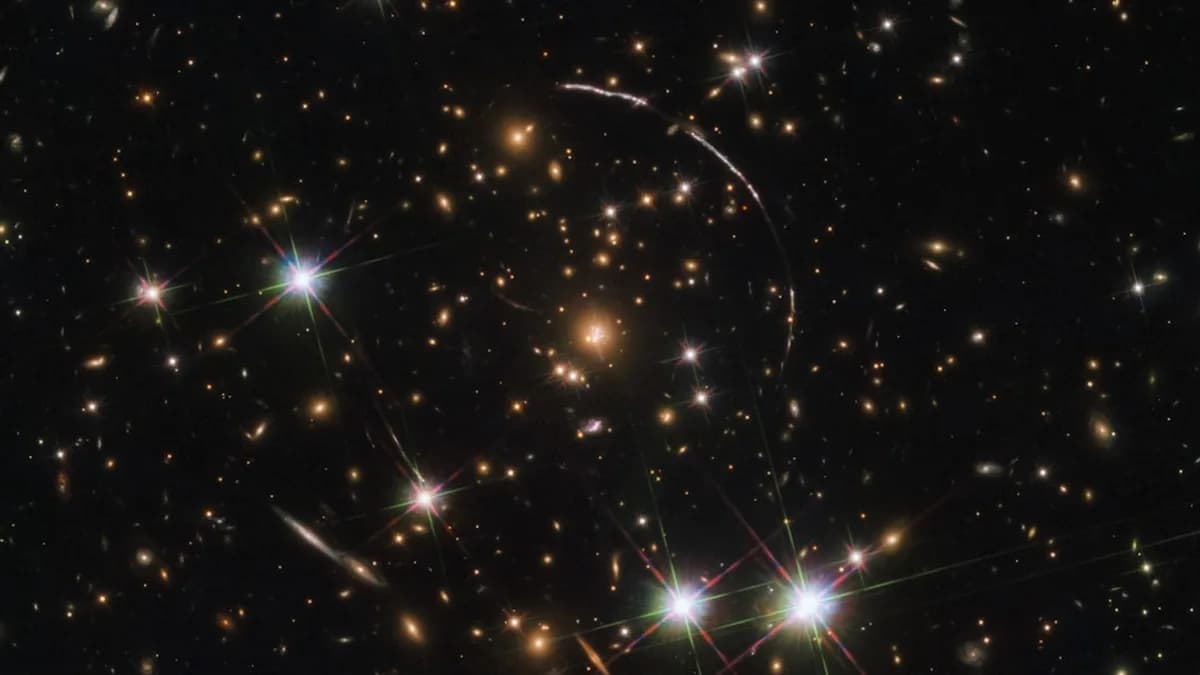
Roman’s main job is to study dark energy and dark matter. These are invisible forces and stuff that shape the universe, but we don’t fully understand them yet. Roman’s wide field lets it map large areas of the sky quickly, showing how galaxies and stars are spread out. By watching how light bends as it travels through space (a trick called gravitational lensing), Roman can help scientists figure out where dark matter is hiding.
Another big feature is Roman’s Coronagraph Instrument. This device blocks the bright light from stars so Roman can see planets orbiting them. It's like putting your hand up to block the sun and spot something behind it. With this, Roman can find and study exoplanets—planets outside our solar system—with much greater detail.
Roman will also watch for planets using a method called microlensing. When a planet passes in front of a distant star, its gravity bends the star’s light and creates a tiny flash. Roman’s wide view means it can catch lots of these flashes at once, making it possible to find many planets, even ones that are far from their stars or hard to spot with other telescopes.
Roman’s tech goes beyond finding planets. It can measure the brightness and movement of stars, map the shapes of galaxies, and track exploding stars (supernovae). This helps scientists build a clearer picture of how the universe changes over time. Compared to Hubble, which has a narrow field, and James Webb, which looks deeper into space, Roman offers a new way to study cosmic puzzles by looking at big sections of the sky at once.
Mapping the Universe and Hunting for New Worlds
Roman’s main science goals are bold. First, it will create detailed maps of the universe. By scanning huge areas, Roman can show how galaxies, stars, and dark matter are arranged. This will help answer questions about how the universe grew and why it keeps getting bigger.
Studying dark energy is one of Roman’s top jobs. Dark energy is a mysterious force making the universe expand faster and faster. By seeing how galaxies move and change, Roman will help scientists test ideas about what dark energy is and how it works. The maps Roman makes will also show where dark matter “clumps” together, which shapes the way galaxies form.
Roman is also expected to find tens of thousands of exoplanets. Right now, astronomers have found about 5,500 planets outside our solar system [Source: NASA.gov]. Roman could double or triple that number. Its wide field and fast scanning mean it can spot planets in places other telescopes haven’t looked. Roman can find planets as small as Earth and as far from their stars as Jupiter is from our Sun.
The exoplanet discoveries will help scientists understand how planets form and how common habitable worlds might be. If Roman finds many planets like Earth, it could boost hope for finding life elsewhere. If most planets are very different, it might change our ideas about how unique our solar system is.
Roman’s work will also help guide future missions. By showing where planets are and what they’re like, Roman can tell other telescopes, like James Webb, where to look for signs of life or study planets in more detail.
Launch Plans and Roman’s Mission Timeline
NASA plans to launch the Roman Space Telescope in early September. The telescope will ride a rocket from Kennedy Space Center in Florida. Before launch, teams finished key tests to make sure Roman can handle the tough conditions of space. They checked its instruments, power systems, and onboard computers.
After launch, Roman will spend a few months getting ready in orbit. Scientists will turn on its instruments, test its cameras, and make sure everything works as planned. Once Roman starts its science mission, it will scan the sky for at least five years. NASA hopes the telescope will last longer, depending on how well it works and how much fuel it has.
Roman’s mission is a big team effort. NASA leads the project, but it works with the Space Telescope Science Institute, universities, and partners in the U.S. and abroad. Other space agencies in Europe and Asia may help with data analysis or follow-up studies. Roman’s data will be shared with scientists around the world, making its discoveries open for everyone [Source: Google News].
How Roman Will Change Astronomy and Space Exploration
Roman will work alongside Hubble and James Webb, not replace them. Hubble is famous for its sharp pictures of stars and galaxies. James Webb looks deeper into space and can spot the first galaxies that formed after the Big Bang. Roman fills a new role: it can scan large areas quickly, spot faint objects, and find more planets in less time.
Roman’s maps of galaxies and dark matter could solve old puzzles about how the universe grew. For example, scientists still debate why the universe is expanding faster than expected. Roman’s wide field lets it measure galaxy movement and test theories about dark energy. If Roman finds new patterns or surprises, it could change how we think about the fate of the universe.
The telescope’s hunt for exoplanets will also drive big changes. By finding planets in all kinds of places—near stars, far away, big and small—Roman gives a fuller picture of how planets form. It could spot planets in strange orbits or with unusual features, which would help scientists guess how common planets like Earth are.
These discoveries matter for future space missions. If Roman finds promising planets, NASA or other agencies might plan trips to study them up close. Roman’s data could help pick targets for new telescopes or even robotic probes.
Roman’s mission will also push technology forward. Its wide-field camera and coronagraph are new designs, which could be used in future telescopes. Sharing data with scientists worldwide encourages teamwork and lets experts from many countries join the search for answers.
The Future: Roman Space Telescope and Cosmic Discovery
NASA’s Roman Space Telescope is ready to launch soon, bringing new tools to map the universe and find planets. Its wide field, sharp cameras, and special instruments will let scientists answer questions about dark energy, dark matter, and how planets form. The mission aims to find tens of thousands of exoplanets and reveal secrets about how the universe changes.
Excitement is building as the launch date gets closer. Roman will work with Hubble and James Webb to give a more complete picture of space. Its discoveries could shape future missions and change how we think about the universe.
As Roman starts scanning the sky this fall, watch for new updates and breakthroughs. This telescope could help us learn where we came from—and maybe find new worlds where life could exist. The journey is just beginning, and Roman’s mission will set the stage for years of cosmic discovery [Source: Google News].
Why It Matters
- The Roman telescope will vastly increase our ability to discover exoplanets and study their characteristics.
- Its advanced technology enables large-scale mapping of the universe, offering new insights into dark energy and dark matter.
- Roman joins Hubble and Webb, giving scientists a more complete toolkit to unravel cosmic mysteries and search for life beyond Earth.