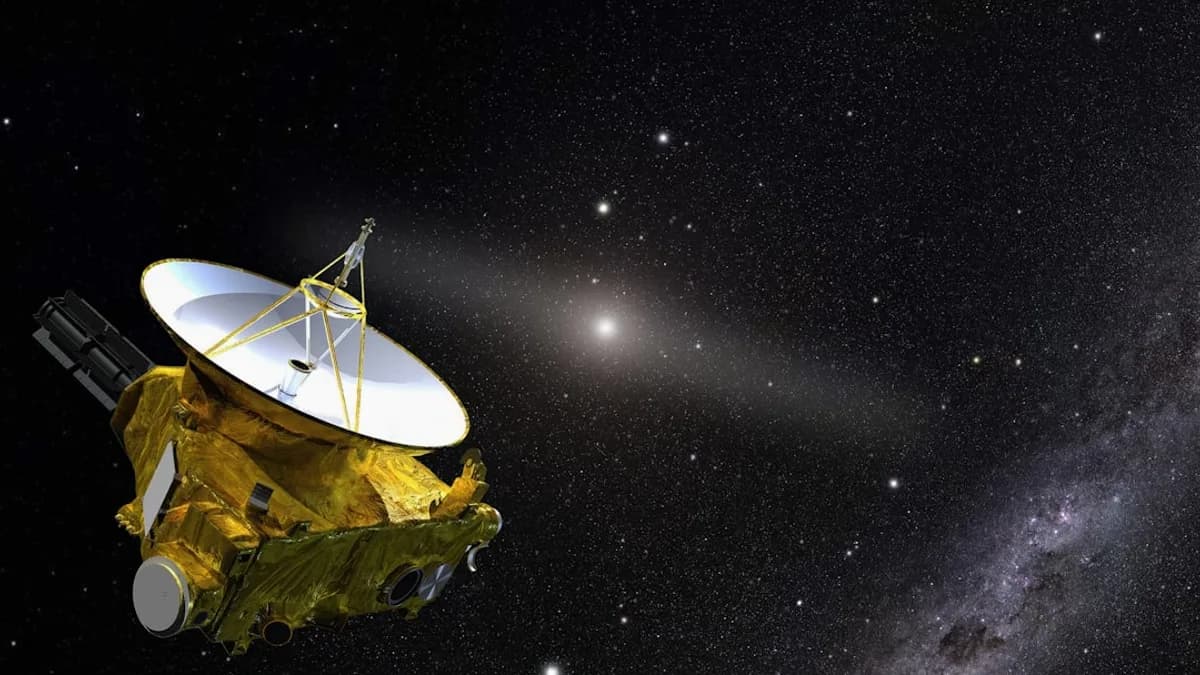
NASA Powers Down Key Voyager 1 Instrument to Save Energy
NASA just turned off a major instrument on the Voyager 1 probe to save power. This move marks a turning point for the spacecraft, which has been exploring space for over 45 years. Voyager 1 is now more than 15 billion miles from Earth, farther than any other human-made object. NASA says shutting down the instrument is needed to keep the probe running as long as possible [Source: Google News]. This moment shows both how far we’ve come and how hard it is to keep old space tech working in deep space.
Voyager 1: Journey and Achievements Over 45 Years
Voyager 1 launched on September 5, 1977. It started as a mission to study Jupiter and Saturn, but it went much further. After sending back stunning photos of these planets and their moons, Voyager 1 kept traveling outward. In 2012, it became the first spacecraft to enter interstellar space. That means it left the bubble of gas and particles shaped by our Sun and entered the space between stars [Source: NASA Science].
Today, Voyager 1 is more than 15 billion miles from Earth. To get a sense of that distance, light takes over 22 hours to travel from Earth to the probe. The spacecraft has sent back data about cosmic rays, magnetic fields, and the nature of interstellar space. Its findings have helped scientists learn how the Sun’s influence fades as you move farther from the solar system. Voyager 1’s journey has lasted longer than most scientists ever thought possible. It’s often called “the little probe that could” because it keeps working despite great odds.
Technical Reasons Behind Shutting Off Voyager 1 Instrument
NASA says it shut off the probe’s “Plasma Wave Subsystem” (PWS), which measures electric and magnetic waves in space [Source: Google News]. This instrument has helped scientists study the space between stars. But every year, Voyager 1’s power supply gets weaker. That’s because it relies on tiny nuclear generators called RTGs, which slowly lose power as their fuel decays. When Voyager 1 launched, its RTGs could run all systems easily. Now, after 45 years, there’s not enough power for everything.
The team at NASA had to make tough choices. They want to keep the probe alive as long as possible. So they started cutting off the least critical systems. Turning off the PWS saves about 4 watts—enough to keep other key systems running. NASA’s main goal is to keep sending back basic data and to stay in contact. This strategy is similar to what they did with Voyager 2, which also faces the same power limits.
Implications of the Instrument Shutdown for Voyager 1’s Mission
By shutting down the plasma instrument, Voyager 1 will send back less detailed scientific data. The probe won’t be able to measure some aspects of interstellar space as before. But other instruments, like the cosmic ray detector and magnetometer, remain on. This means Voyager 1 can still help scientists study space beyond our solar system, just not as fully.
The shutdown buys more time for the probe. NASA says this move should help Voyager 1 keep working for a few more years [Source: NASA Science]. Eventually, more systems will need to be turned off. Each shutdown is a reminder that the probe is getting old. NASA plans to manage Voyager 1 carefully, focusing on keeping communication alive and collecting whatever data is possible. The team is watching power levels closely and choosing which systems to keep running.
The Broader Significance of Voyager 1 in Space Exploration History
Voyager 1 stands as a symbol of human curiosity and grit. Few machines have lasted this long or gone so far. Its mission has pushed the limits of what we can do with technology. The probe has taught NASA—and the world—how to manage long missions with old equipment. Engineers have had to invent new ways to fix problems from billions of miles away, often with limited tools.
Voyager 1’s lessons shape how we plan future deep space missions. NASA and other space agencies now build probes to last longer and use less power. The public has followed Voyager 1’s journey for decades. News of the shutdown sparked both sadness and pride online—people see the probe as a sign of what humans can achieve. Scientists say Voyager 1 will keep inspiring new missions, like the planned Interstellar Probe, which could one day venture even farther.
What Voyager 1’s Instrument Shutdown Means for the Future
The shutdown of a key instrument on Voyager 1 is a big moment. It shows how NASA is working to stretch the life of one of its greatest explorers. As power runs low, the agency must choose what to turn off and what to keep. But Voyager 1’s legacy will live on—it has changed how we look at space and what we think is possible.
NASA says it will keep supporting Voyager 1 for as long as it can send back data. Even as more systems go dark, the probe’s journey will continue, drifting through interstellar space. People around the world can take pride in what Voyager 1 has done and look forward to new missions that build on its story. The probe’s endurance reminds us to keep exploring, keep asking questions, and keep reaching for the stars.
Why It Matters
- Voyager 1's longevity demonstrates the durability and importance of space exploration technology.
- Shutting down a key instrument highlights the challenges of maintaining aging spacecraft in extreme environments.
- The probe's historic journey continues to provide valuable scientific data about interstellar space.