Introduction to NASA's Curiosity Rover and Its Groundbreaking Chemistry Experiment on Mars
NASA’s Curiosity rover just pulled off a chemistry experiment on Mars that has never been done anywhere but Earth. The rover found new organic molecules—these are some of the building blocks of life—right on the red planet’s surface [Source: Google News]. Curiosity has been exploring Mars since 2012. Its main job is to look for signs that Mars could have supported life long ago.
This new experiment is special. Scientists made Curiosity test Martian soil in ways no other rover has tried before. The rover used its onboard lab to check for molecules that are important for life. And it worked: Curiosity found even more types of organic compounds than before. This discovery pushes us a step closer to answering the big question: Could life have ever started on Mars?
Understanding Organic Molecules and Their Significance in the Search for Life
Organic molecules are chemicals that contain carbon. Most life on Earth is built from these molecules. They include things like amino acids, which are used to make proteins, and sugars, which store energy. In astrobiology, finding organic molecules is a big deal because they are needed for life as we know it.
Scientists don’t just look for actual life—they search for its ingredients. If Mars has organic compounds, it means the planet has some of what’s needed for life to start. Earlier Mars missions, like Viking in the 1970s, tried to find organics but didn’t have the tools to detect them well. Later, Curiosity found simple organic molecules in 2018, like methane and chlorobenzene. But this new experiment reveals even more complex compounds. Each new discovery adds to the list and helps scientists piece together Mars’ history.
When they find organic molecules, it doesn’t prove life exists. But it makes Mars more interesting for future missions. It shows the planet has—or had—the right ingredients for something alive to develop. This keeps the search for Martian life going strong.
Details of the Chemistry Experiment Conducted by Curiosity Rover on Mars
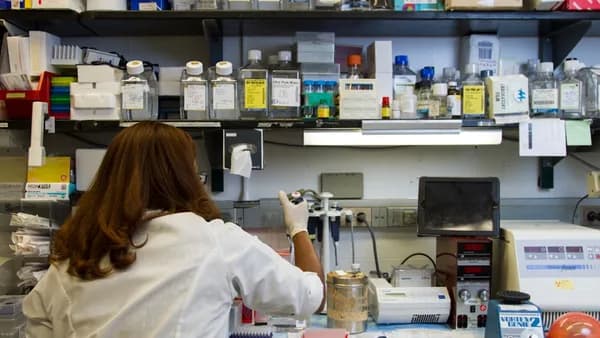
Curiosity’s chemistry experiment used a tool called SAM—the Sample Analysis at Mars. SAM is like a mini-lab built into the rover. It can heat up soil and rocks, then sniff out the gases that come off to see what chemicals are inside. For this experiment, scientists made SAM run a test called "wet chemistry," which means mixing soil with special liquids to see what happens. This was the first time this kind of test had ever been done beyond Earth.
The rover scooped up Martian dirt and dropped it into SAM’s chambers. Then it added a liquid called MTBSTFA, which helps pull out hidden organic molecules. By heating the samples and using the liquid, Curiosity found new types of organics—some that didn’t show up in earlier dry tests. Among them were molecules called carboxylic acids, which play a big role in making proteins and cell walls. The experiment also detected other carbon-based molecules, showing that Mars has a wider range of organics than scientists thought.
This experiment is unique because it looked for molecules that are hard to spot with normal tests. Using liquids to help break down soil is something scientists do in Earth labs, but never before on another planet. Curiosity’s success means future rovers can try even fancier chemistry experiments. It opens the door to finding even more complex molecules, or maybe even signs of life.
Scientific Implications: What the Discovery Means for the Possibility of Life on Mars
Finding more organic molecules on Mars is exciting, but it doesn’t mean we’ve found life. Scientists have to figure out where these molecules came from. They might be made by living things, or they could form from chemical reactions in rocks and dust. On Earth, most organic compounds come from living creatures, but on Mars, the story could be very different.
One challenge is that Mars has harsh conditions. Its surface is blasted by radiation and dry as a bone. That makes it hard for life to survive, and it can also break down organic molecules over time. But the fact that Curiosity found them means some molecules survived, maybe protected deep in the soil or in rocks.
Scientists now face a big puzzle: Did Mars make these molecules by itself, or did something alive help? Some organics can form from volcanoes, meteor impacts, or sunlight hitting chemicals in the air. Others need living things to create them. The experiment found molecules that could be made either way, so it’s hard to tell.
This discovery changes how researchers plan future Mars missions. They know the planet has a wider mix of organics than expected. Now, they want to test even deeper underground, where molecules might be better preserved. There’s also hope to find patterns or shapes that only living things make, like DNA or certain proteins. Robots like the Perseverance rover are already looking for these signs.
For now, scientists are careful not to jump to conclusions. As one NASA expert said, "Is it life? We can’t tell." But each new finding gives more clues. The search for Martian life will keep going, with smarter robots and new labs sent to Mars.
Contextualizing the Discovery Within Mars Exploration History and Future Prospects
Mars has been explored by many missions over the years. Viking tried to look for life in the 1970s, but its results were confusing. More recent rovers like Spirit and Opportunity found signs that Mars once had water, which is another key for life. Curiosity’s earlier work showed Mars had the right conditions billions of years ago—wet, warmer, and with the right minerals.
Compared to past missions, Curiosity’s latest experiment is a big leap. It used new chemistry methods and found more types of molecules than ever before. Other orbiters, like Mars Express and MAVEN, have also found hints of organics in the air and on the surface. But Curiosity’s tests are done right on the ground, which gives scientists more confidence in the results.
Looking ahead, NASA’s Perseverance rover is now searching for signs of ancient life in Jezero Crater, which once held a lake. It will collect samples for a future mission to bring back to Earth. Other missions, like Europe’s Rosalind Franklin rover, are also being planned. Each mission builds on discoveries like Curiosity’s, trying to solve Mars’ mysteries step by step.
Conclusion: The Road Ahead in Unraveling Mars’ Mysteries and the Quest for Life
Curiosity’s chemistry experiment is a big leap forward. It found more organic molecules on Mars, showing the planet has some of the building blocks for life [Source: Google News]. But nobody can say yet if Mars ever had living creatures. The search is still on, and every new test brings us closer to an answer.
Scientists have learned that Mars is not just a dry, dead world. It holds secrets that could help us understand how life starts, not just on Mars, but anywhere in the universe. The next steps will use smarter robots and better labs, maybe even bringing Mars samples back to Earth. For anyone watching space science, Curiosity’s discovery is a reminder: the hunt for life on Mars is far from over. Keep your eyes on the red planet—big surprises could be next.
Why It Matters
- Finding new organic molecules on Mars strengthens the case that the planet once had conditions suitable for life.
- The experiment demonstrates advanced chemistry techniques can be performed remotely on another planet, opening doors for future research.
- Each discovery informs upcoming missions and deepens our understanding of Mars' potential for habitability.