Introduction: Unraveling the Mystery of the Colorado River’s Disappearance
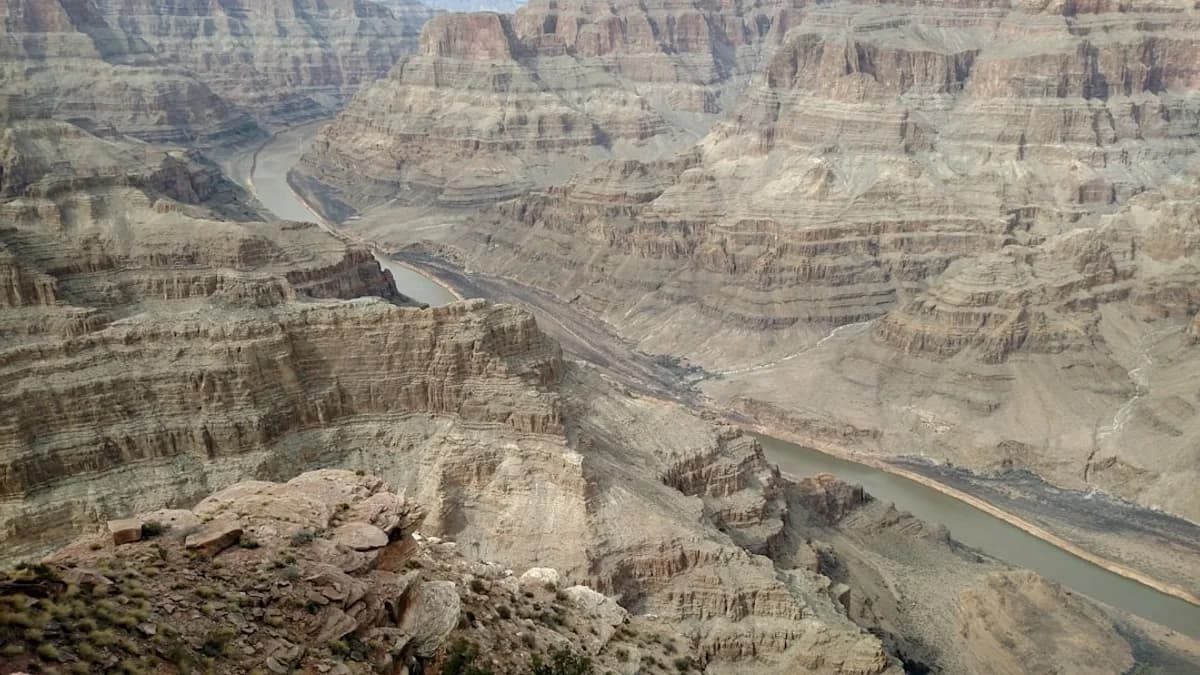
Few rivers have shaped the American Southwest as profoundly as the Colorado River. Its meandering course has carved iconic landscapes, most notably the Grand Canyon—a testament to the force of water over millions of years. Yet, recent research has uncovered a perplexing chapter in its history: the Colorado River vanished from the geological record for an astonishing 5 million years. This gap has puzzled geologists for decades, raising questions about the river’s role in sculpting the Grand Canyon and its broader impact on the region’s evolution. Now, a new theory posits a solution to this mystery, suggesting the river pooled and spilled over, forging one of America’s grandest natural wonders. However, the findings remain controversial, sparking vigorous debate within the scientific community. Understanding this lost chapter is crucial not only for unraveling the Grand Canyon’s origins, but also for appreciating the dynamic processes that continue to shape our planet [Source: Source].
The Geological Record and the 5-Million-Year Gap
To say that the Colorado River “disappeared” from the geological record is not mere hyperbole. Rivers leave behind distinct signatures in rock strata—layers of sediment and minerals deposited over time. By analyzing these markers, scientists can trace the river’s path and reconstruct its history. In the case of the Colorado River, researchers observed a surprising absence: between approximately 11 and 6 million years ago, there are no geological traces of the river reaching the Pacific Ocean through the Grand Canyon [Source: Source].
This revelation emerged from meticulous studies of sediment deposits, fossil assemblages, and isotope geochemistry. Scientists employed cutting-edge techniques, including uranium-lead dating and thermochronology, to pinpoint when ancient sediments were laid down and subsequently eroded. By comparing these findings with known river activity, they identified a 5-million-year hiatus—an interval where the river’s characteristic deposits simply stopped appearing in the geological record. This absence implies that the Colorado River either ceased to flow through its current course or was diverted elsewhere, fundamentally altering the region’s landscape.
The implications are profound. The gap challenges previous assumptions about the river’s continuity and its role in carving the Grand Canyon. Understanding this missing chapter is essential for interpreting not only the canyon’s formation, but also broader patterns of geological change across the Southwest. It illustrates how river systems can be disrupted, redirected, or even erased from the landscape, underscoring the complex interplay between tectonics, climate, and erosion [Source: Source].
New Theories on the Colorado River’s Course and the Grand Canyon Formation
The latest research offers a bold new explanation for the Colorado River’s vanished presence: the river pooled in a large basin, eventually overflowing and spilling through what would become the Grand Canyon [Source: Source]. This “pool and spillover” hypothesis marks a significant departure from earlier theories, which suggested a gradual, continuous carving of the canyon by the river.
Traditionally, geologists believed the Grand Canyon formed as the Colorado River relentlessly eroded uplifted rock over tens of millions of years. The new theory, however, posits a more episodic process. According to recent studies, tectonic activity created a vast inland basin, blocking the river’s flow to the sea. The Colorado River accumulated in this basin, creating a massive lake. Over time, geological changes—such as faulting or uplift—allowed the pooled water to breach a natural barrier, triggering a dramatic spillover event. This surge of water initiated the deep incision that formed the Grand Canyon’s iconic cliffs and valleys [Source: Source].
Researchers cite a variety of evidence for this scenario. Isotope analyses of ancient lake sediments reveal chemical signatures consistent with stagnant, pooled water. Meanwhile, the abrupt reappearance of river deposits downstream suggests a sudden release, rather than a gradual progression. Fossil records and mineral compositions further support the idea that the region experienced periods of isolation and flooding, rather than steady river flow.
Not all scientists are convinced by the pooling and spillover model. Some argue that the evidence can be interpreted in other ways, such as localized uplift or changes in precipitation patterns. Others point out that the Grand Canyon’s complex stratigraphy may reflect a combination of processes, including both gradual erosion and episodic flooding. These disagreements highlight the challenges of reconstructing events that unfolded millions of years ago, where the geological record is incomplete and open to interpretation.
While the new theory has garnered attention, it remains one piece of a larger puzzle. The formation of the Grand Canyon is likely a messy, multifaceted story, shaped by tectonics, climate shifts, and the unpredictable dynamics of river systems [Source: Source]. Ongoing research—combining fieldwork, laboratory analysis, and computer modeling—continues to refine our understanding, offering new insights into how rivers can shape landscapes in unexpected ways.
Scientific and Environmental Significance of the Findings
Solving the mystery of the Colorado River’s vanished history is more than a matter of geological curiosity. It has far-reaching implications for earth sciences, environmental management, and our understanding of landscape evolution. By tracing the river’s ancient path, scientists gain crucial insights into the forces that drive erosion, sediment transport, and canyon formation—processes that shape continents and influence ecosystems [Source: Source].
The findings also shed light on river dynamics, particularly how rivers respond to tectonic changes and climate shifts. The “pool and spillover” model illustrates that river systems can be surprisingly resilient yet vulnerable to disruption. Understanding these dynamics is essential for predicting future changes in river courses, especially in the context of ongoing climate change and human intervention.
Broader environmental implications are equally significant. The Colorado River remains a vital water source for millions of people, supporting agriculture, industry, and urban life across the Southwest. Insights into its ancient history provide context for current challenges in water resource management, including allocation, conservation, and the risks posed by drought and warming temperatures. If the river could be diverted, dammed, or disappear for millions of years in the past, it underscores the importance of safeguarding its future.
Finally, the research may influence how geologists approach similar mysteries elsewhere. The techniques used to unravel the Colorado River’s history—combining sediment analysis, isotope geochemistry, and advanced dating methods—can be applied to other river systems, helping to resolve questions about landscape evolution on a global scale. As new evidence emerges, our understanding of Earth’s dynamic past becomes increasingly nuanced, informing both science and policy [Source: Source].
Challenges and Controversies in Interpreting the Geological Data
The quest to reconstruct the Colorado River’s ancient course is fraught with challenges and controversies. Geological data spanning millions of years are inherently fragmentary, subject to erosion, burial, and alteration by subsequent events. Even with advanced technologies, uncertainties persist regarding the timing, mechanics, and extent of river activity [Source: Source].
Critics of the pooling and spillover theory point to gaps in the evidence, such as ambiguous sediment signatures and the difficulty of distinguishing between lake deposits and river floods. Some experts argue that the Grand Canyon’s formation was likely more gradual, shaped by steady erosion and tectonic uplift rather than episodic flooding. Others question whether the proposed basin would have been large enough to account for the observed geological features.
Ongoing research and technological advances—such as improved radiometric dating, high-resolution mapping, and computer simulations—are helping to address these uncertainties. As scientists gather more data and refine their models, the debate continues, reflecting the iterative nature of geological inquiry. The story of the Colorado River’s disappearance remains a compelling example of how scientific understanding evolves in response to new evidence and critical scrutiny [Source: Source].
Conclusion: The Evolving Story of the Colorado River and the Grand Canyon
The recent discovery of the Colorado River’s 5-million-year absence from the geological record has transformed our understanding of the Grand Canyon’s origins. The emerging theory of pooling and spillover offers a dramatic new perspective, challenging long-held assumptions and highlighting the complexity of landscape evolution. While controversies persist and the geological record remains incomplete, the findings underscore the importance of continued investigation—both to resolve scientific debates and to deepen public appreciation for natural wonders like the Grand Canyon.
As new techniques and data illuminate Earth’s ancient past, our knowledge grows ever more nuanced. The story of the Colorado River is a reminder that even the most familiar landscapes can harbor hidden mysteries, waiting to be uncovered by the next generation of researchers [Source: Source].