


Introduction: Revisiting a Space Photography Milestone
Space photography has long played a pivotal role in shaping how we view ourselves and our planet. Images captured from beyond Earth’s atmosphere offer unique perspectives, sparking both scientific inquiry and cultural reflection. Few photos have had as profound an effect as the famed “Earthrise” taken during the Apollo 8 mission in 1968—a picture credited with igniting global environmental awareness and a sense of planetary unity. Now, more than half a century later, NASA’s Artemis II mission has delivered a new milestone: the “Earthset” photo, a modern counterpart that revisits and reimagines the awe of seeing our world from lunar orbit. As we compare these two images, we gain insight not only into technological progress but also into how space exploration continues to inspire and inform humanity [Source: Source].
The Iconic Earthrise Image of 1968
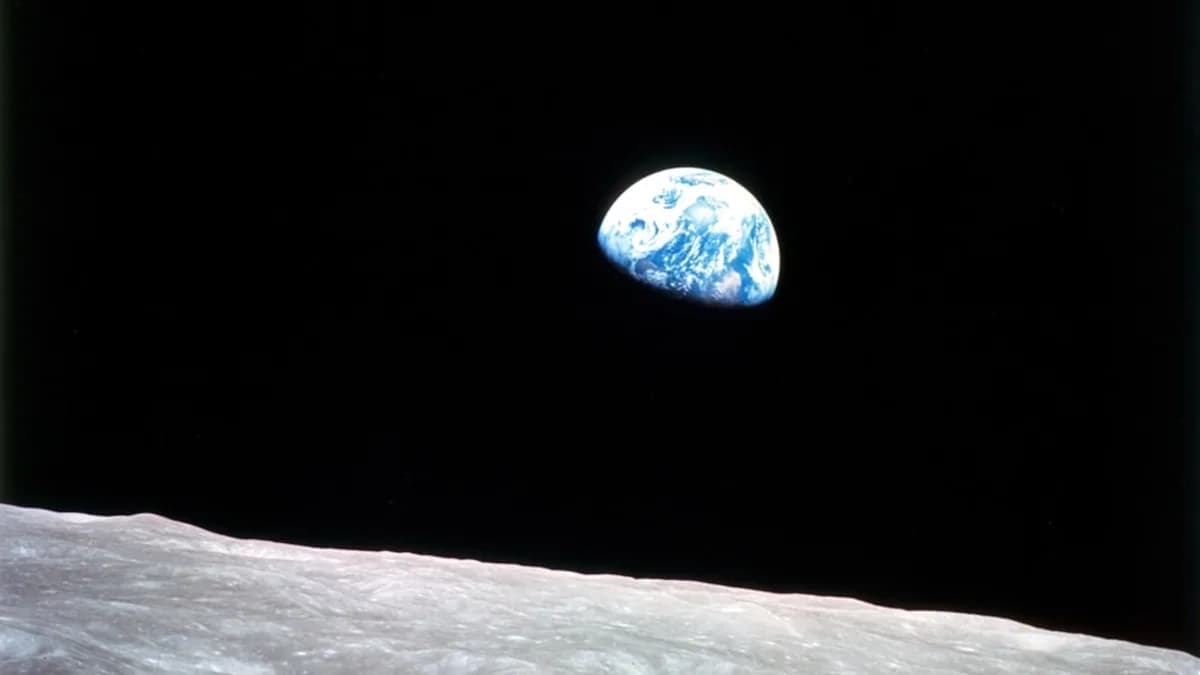
The Earthrise photo was captured by astronaut William Anders aboard Apollo 8, the first crewed mission to orbit the Moon. On December 24, 1968, as the spacecraft emerged from the lunar shadow, the crew witnessed Earth rising above the Moon’s barren horizon—a moment Anders instinctively photographed with a handheld Hasselblad camera. The resulting image shows our planet as a vibrant blue-and-white orb, suspended in darkness and framed by the rugged lunar landscape.
This photo was unprecedented, not only in its artistic composition but also in the perspective it offered. For the first time, humanity saw Earth as a single, fragile entity, isolated in the vastness of space. The image quickly became a symbol for the burgeoning environmental movement, featured in campaigns and publications that called for stewardship of our planet. Technically, the Apollo 8 crew relied on film cameras with manual settings, limited by the era’s technology. Lighting was unpredictable, and the window for capturing such a shot was narrow; yet the image’s clarity and emotional resonance have endured for decades [Source: Source].
Artemis II’s Earthset Photo: A New Perspective
In 2024, the Artemis II mission provided an updated view of Earth’s relationship with the Moon. The “Earthset” photo was taken as the spacecraft orbited the lunar surface, documenting the moment when Earth dipped below the horizon—a mirror image to the famous Earthrise. Unlike its predecessor, Earthset was captured using state-of-the-art digital cameras mounted on the spacecraft, offering unprecedented resolution and detail. The composition highlights Earth’s gradual disappearance, set against the Moon’s stark foreground, and evokes a powerful sense of distance and separation.
Where Earthrise emphasized the arrival of Earth into view, Earthset dramatizes its departure—a subtle but significant shift in narrative. The Artemis II team utilized advanced imaging techniques, including high-dynamic-range photography and enhanced stabilization, to ensure sharpness and color accuracy. Modern sensors allowed for real-time adjustments and multiple exposures, overcoming challenges of glare, shadow, and rapid movement that had limited Apollo-era photography. The visual impact is striking: Earth appears smaller, the lunar terrain sharper, and the overall effect more immersive, reflecting both technological progress and a nuanced appreciation for our planet’s place in the cosmos [Source: Source].
Training the Artemis II Astronauts in Space Photography
Behind the stunning imagery of Artemis II lies rigorous astronaut training, guided in part by alumni from the Rochester Institute of Technology (RIT). These experts helped design a curriculum to prepare astronauts for the unique demands of space photography, blending technical instruction with creative vision [Source: Source]. The training emphasized not just camera operation, but also the selection of scientifically meaningful subjects, timing, and composition. Astronauts practiced in simulated environments, learning to anticipate lighting changes and coordinate camera functions under mission constraints.
This approach marks a significant evolution from the Apollo era, when astronauts received basic photography tips but lacked comprehensive preparation. Today, capturing images in space is recognized as both a scientific and an artistic endeavor, with the aim of producing data-rich visuals for research and compelling photos for public outreach. The RIT-led training ensures that astronauts are equipped to document lunar geology, Earth’s atmosphere, and mission milestones, contributing to both science and storytelling [Source: Source].
The Emotional and Scientific Impact of Viewing Earth from Space
For the Artemis II crew, witnessing Earth vanish behind the Moon was a profoundly emotional experience—one described as “unreal” and difficult to process [Source: Source]. The moment underscores the psychological impact of space exploration: seeing our planet reduced to a distant, fading point brings home the isolation and interconnectedness of life on Earth. These images, whether Earthrise or Earthset, have the power to alter public perception, reminding viewers of the planet’s vulnerability and the shared fate of its inhabitants.
Scientifically, such photographs hold enduring value. They provide reference points for Earth observation—tracking atmospheric changes, weather patterns, and surface features—and offer context for lunar exploration by mapping the Moon’s surface in relation to Earth. The visual documentation supports mission planning, environmental monitoring, and educational outreach, making these images more than just works of art. They are tools for understanding our world and our place within it [Source: Source].
Conclusion: The Legacy and Future of Space Photography
Artemis II’s Earthset photo stands as a testament to the enduring legacy of Earthrise, building on its foundation with new technology and fresh perspective. Space photography remains a vital bridge between exploration and public engagement, combining scientific utility with the power to inspire. As camera systems evolve and missions expand, future astronauts will continue to capture moments that redefine our relationship with Earth and the universe. Each new image—whether of Earth, the Moon, or deep space—reminds us that exploration is not only about discovery, but also about seeing ourselves anew [Source: Source].