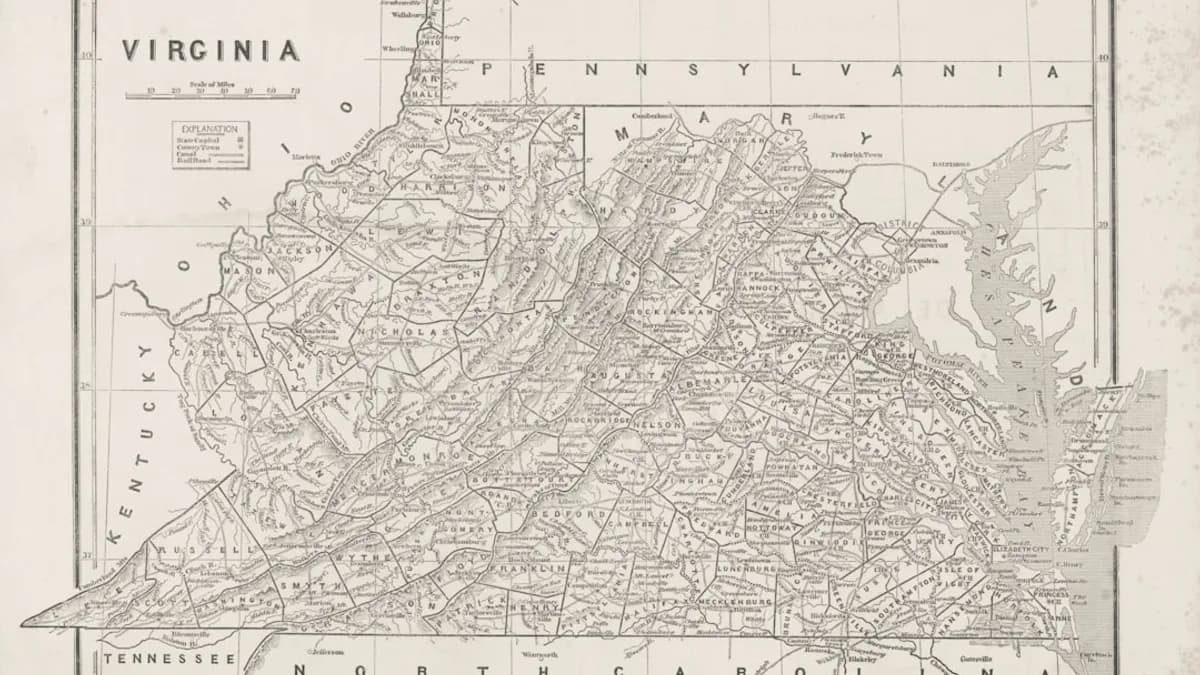
Virginia's Redistricting Vote Shifts Political Landscape
Democrats just scored a win in Virginia that could change the fight over congressional maps across America. Voters approved a new map that gives Democrats a shot at picking up four more seats in the U.S. House of Representatives [Source: Google News]. This move didn’t just tilt Virginia’s balance. It sends a signal to other states where the battle over district lines is hot and heavy.
Why does this matter? Redistricting—the process of drawing voting districts—can decide which party controls Congress. In the past, the GOP led by former President Trump has pushed hard to draw maps that favor Republicans. Now, Virginia’s vote gives Democrats more leverage. It could force Republicans to rethink their strategy in other states.
Virginia’s choice stands out because it came from voters, not just politicians. With the 2024 elections around the corner, every seat counts. This win gives Democrats momentum and puts Trump’s national redistricting plans on shaky ground. It also raises new questions about fairness and who gets to choose their leaders.
Details of Virginia's New Congressional Map and Its Impact
The new Virginia map shifts boundaries to help Democrats compete in more areas. Before the vote, Republicans held a stronger grip on several districts. Now, the map puts at least four seats within reach for Democratic candidates [Source: Google News]. That could swing the U.S. House if races are close.
How did this happen? Virginia’s state legislature played a big part. Lawmakers debated and shaped the map, but voters had the final say. This is different from states where politicians decide in private. In Virginia, public input mattered. The process involved both parties, though Democrats pushed for lines that reflected changing population trends.
Democratic leaders cheered the vote. House Minority Leader Hakeem Jeffries said the win could inspire Democrats in other states. He pointed to Florida, where Republicans are now eyeing their own boundary changes [Source: Google News]. Virginia’s success shows that new maps can shift power fast.
Some Republicans cried foul. They argued the map unfairly cuts their chances in districts they once dominated. GOP lawmakers warned that this could set off a wave of legal fights. They say the map doesn’t respect communities and could confuse voters.
Political experts say the new map is a big deal. It shows how local votes can have national impact. It also highlights the importance of fair and open redistricting. Virginia’s approach—letting voters weigh in—could become a model for other states.
How Virginia's Vote Influences National GOP Redistricting Strategies
Virginia’s win for Democrats is more than a local story. It disrupts Trump’s plan for Republicans to use redistricting as a tool to keep control of Congress. The GOP has relied on drawing maps that help their candidates. Now, with Virginia breaking the mold, their strategy is harder to pull off [Source: Google News].
Take Florida, for example. After Virginia’s vote, Republicans in Florida are looking at their own maps. House Democrats say this could spark new fights over boundaries. If Florida Republicans change their districts, it might trigger lawsuits or pushback from voters. The ripple effect could spread to states like Georgia, Texas, and North Carolina.
Political analysts say the stakes are high. The 2024 midterms could be shaped by maps drawn this year. Every seat in Congress matters. With Virginia opening the door for Democrats, other states may follow. That means both parties could rush to redraw lines before next November.
Lawmakers are watching closely. Some worry that the redistricting battle will distract from real policy work. Others say it’s a sign of how much power maps hold in American politics. In the past, the party in charge of drawing lines often kept control for years. Now, the process is more open—and much more contested.
One big question is whether more states will let voters decide their maps. In Virginia, the public had a say, and it changed the outcome. If this idea catches on, it could make elections more fair. But it could also lead to more fights and delays.
The Broader Debate: Gerrymandering and Its Impact on American Democracy
Gerrymandering means drawing maps to help one party win. It’s a word that sparks arguments across America. Virginia’s new map has stirred up the debate again. Some say it’s a step toward fairness. Others argue it’s just a new form of gerrymandering dressed up as reform.
Media outlets and experts have weighed in. The Washington Post called Virginia’s move a plunge deeper into the “gerrymandering abyss” [Source: Google News]. Critics say the new map carves up communities to give Democrats more power. They worry that maps like this make voters feel their voices don’t count.
Supporters see things differently. They say the new map reflects real population changes. Urban areas and suburbs have grown, and the old lines didn’t match these shifts. The new districts, they argue, give more people a shot at being heard.
Gerrymandering isn’t new. It’s been around since the early 1800s. Both parties have used it to stay in power. But in the past decade, technology has made it easier to draw lines with pinpoint accuracy. That means the stakes are higher, and fights over maps are nastier.
The controversy over Virginia’s map shows how divided Americans are over redistricting. Some want independent commissions to draw maps. Others believe elected officials should decide. Experts say that as long as parties fight over lines, trust in elections will suffer.
This debate matters because it shapes who gets to vote, who wins, and what laws get passed. Until the country finds a better way to draw districts, gerrymandering will stay in the headlines.
What Virginia's Redistricting Vote Means for Future Elections
Virginia’s redistricting win gives Democrats a boost heading into the 2024 elections. With four new seats up for grabs, the party has a chance to shift the balance in Congress [Source: Google News]. This could change how both parties campaign and where they focus their money.
The vote also shows that letting voters have a say can change outcomes. Other states might follow Virginia’s lead and open up their redistricting process. This could make elections more fair—or spark more fights over who controls the maps.
As the battle over district lines heats up, expect more legal challenges and public debates. Both parties will push to draw maps that help their candidates. But Virginia’s move proves that voters can break the mold and shape the future.
For anyone watching American politics, redistricting is now a top story. What happens in Virginia may set the pace for the rest of the country. The fight over maps could decide who runs Congress—and which laws get passed—for years to come.
Why It Matters
- Virginia’s new map could help Democrats gain up to four U.S. House seats, potentially impacting control of Congress.
- The voter-approved process in Virginia challenges the GOP’s national redistricting efforts led by Trump.
- This result may set a precedent for more transparent and competitive redistricting in other states.