US Threatens Force as Hormuz Shipping Crisis Escalates
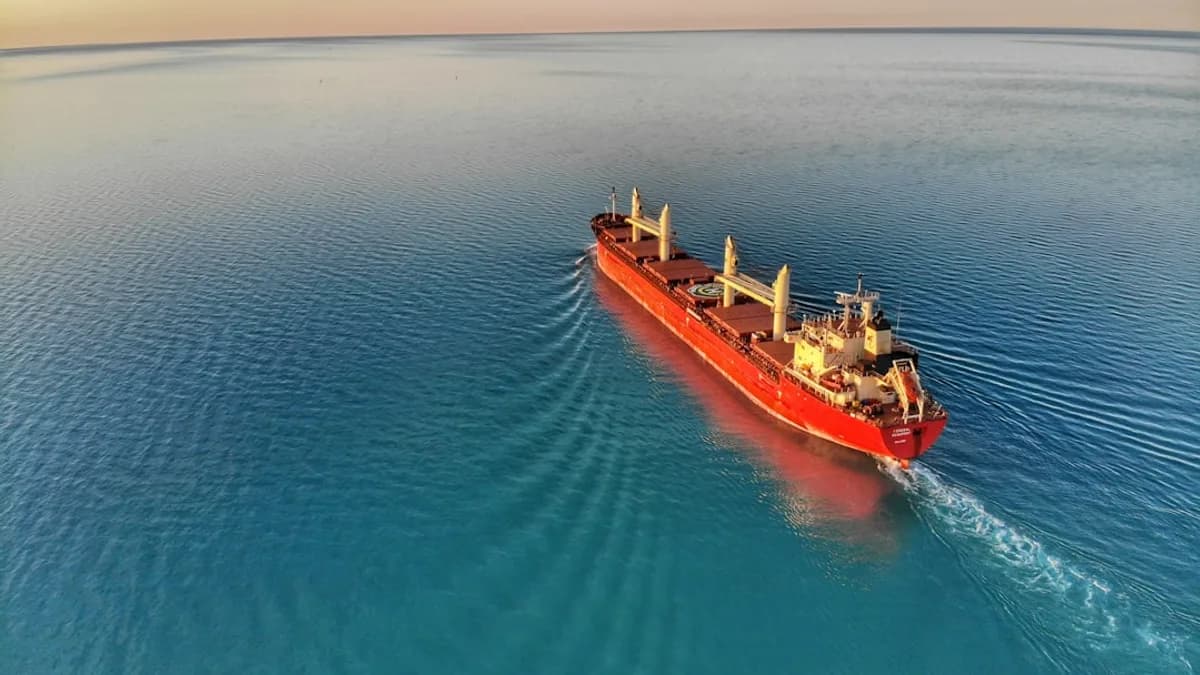
President Trump’s vow to “help free up” ships trapped in the Strait of Hormuz signals far more than a routine show of naval strength. The threat of forceful intervention isn’t just about getting tankers moving—it’s about defending the arteries of global commerce at a moment when the world’s energy supply sits on a knife’s edge. With dozens of vessels immobilized and operators facing mounting losses, Washington is telegraphing a willingness to escalate military action if challenged, stoking fears of a wider confrontation in the Persian Gulf according to Al Jazeera.
What’s at stake isn’t abstract. The Strait of Hormuz handles roughly a fifth of the world’s daily oil consumption and nearly a third of global liquefied natural gas shipments. Any disruption, even temporary, ripples through supply chains and spikes energy prices. Trump’s warning—“any interference… will have to be dealt with forcefully”—comes as Iran and Western-aligned Gulf states ramp up naval patrols, each signaling they won’t back down. The US isn’t just threatening Iran; it’s sending a message to every player with ambitions in the Gulf: the rules of free passage aren’t up for negotiation.
Hormuz: The Chokepoint That Turns Tension Into Crisis
The Strait of Hormuz has set the stage for more than one global showdown. In 1988, US warships sank Iranian vessels during Operation Praying Mantis, retaliating for mines that crippled a US frigate. A decade later, the “Tanker War” saw both sides target oil carriers, sending insurance premiums soaring and forcing rerouting as far as the Cape of Good Hope. Even outside open conflict, Iran has repeatedly threatened to close the strait—most recently in 2019, when it seized British and US-linked tankers in retaliation for sanctions.
Today’s standoff rhymes with past crises, but the stakes have shifted. Iran’s navy has modernized, adding fast-attack boats and anti-ship missiles, while Gulf states—Saudi Arabia, UAE, Qatar—have bulked up their own patrols. US strategy, once limited to “showing the flag,” now involves joint exercises and pre-positioned assets. The precedent is clear: when shipping lanes are threatened, the US responds with force, but escalation is never simple. Last time, the price was a spike in oil costs and a surge in global risk premiums. This time, the world’s dependency on Hormuz is even deeper, and the margin for error far thinner.
Disruption by the Numbers: Oil, Gas, and Global Markets
Hormuz isn’t just a regional issue—it’s the nerve center of the world’s energy logistics. On average, 21 million barrels of oil flow through the strait each day, representing about 20% of global consumption. When shipping stalls, even for days, the impact is immediate. In the 2019 incident, oil prices jumped by 9% within 48 hours. LNG shipments, critical for Asian importers like Japan and South Korea, routinely account for 30% of global trade, with over 10,000 tankers transiting annually.
The economic fallout compounds quickly. Delays force refiners to pay spot premiums, disrupt hedging strategies, and threaten supply contracts. According to the EIA, a full blockade could push Brent crude above $120/barrel, triggering inflation and currency volatility in energy-dependent economies. Insurance rates for Gulf-bound cargoes can triple overnight, costing shippers millions per voyage. For comparison, during the Suez Canal blockage in 2021, global supply chains lost an estimated $400 million per hour; Hormuz, with its heavier traffic and higher strategic value, could inflict even greater damage.
Stakeholders Clash: US, Iran, Gulf States, Shippers, Global Consumers
Washington’s perspective is clear: freedom of navigation is non-negotiable. The Pentagon has deployed carrier strike groups and amphibious forces, signaling readiness to forcibly clear blockages. US officials argue that a passive response would embolden Iran, destabilize allies, and undermine global norms. Iran, meanwhile, casts US intervention as imperial overreach, warning that any incursion will trigger “unpredictable consequences.” Tehran’s calculus is shaped by domestic politics and a desire to project power—both at home and in the region.
Gulf states, especially Saudi Arabia and the UAE, back US action but worry about collateral damage. Their economies rely on export stability, and any escalation would threaten both infrastructure and investment flows. International shipping firms—Maersk, Mitsui, BW Group—face a dilemma: reroute and absorb longer transit times, or risk exposure to conflict zones. Insurers have already warned of exclusions for war-related damages, raising costs for everyone involved.
Energy consumers—China, India, the EU—watch nervously. Their governments urge restraint, fearing price jumps and supply shocks. The International Maritime Organization and UN Security Council have called for de-escalation, but their influence is limited. The last time US-Iran tensions boiled over, Asian importers scrambled for alternate sources, and European buyers faced rationing. This time, the stakes are higher, and patience is thinner.
US Intervention Redraws Maritime Security and Energy Market Rules
A US-led operation to “free up” Hormuz ships would reset the rules for maritime security in the Gulf. Joint patrols and convoy systems, once seen as Cold War relics, could return. Regional actors might accelerate naval buildups, with Saudi Arabia and the UAE investing in anti-drone and missile defenses. If the US succeeds without escalation, it will reinforce the principle of freedom of navigation; failure or heavy-handed tactics could invite retaliatory blockades, sabotage, or cyber attacks.
The energy market impact would be swift. Even rumors of conflict push crude futures higher; a real disruption could trigger emergency stock releases from OECD nations and force buyers to seek riskier, more expensive routes. LNG contracts might shift toward more flexible sourcing, with Australia and North America positioned to gain market share at the expense of Gulf producers. For US foreign policy, the move would cement its role as guarantor of open sea lanes—but also risk entanglement in a conflict with no clear exit.
International norms, especially regarding the use of force in defense of commercial shipping, would be tested. Allies might back the US, but rivals could exploit any perceived overreach. The precedent would echo well beyond the Gulf, influencing how navies respond to piracy in the Horn of Africa, blockades in the South China Sea, or cyber threats to port infrastructure.
What Comes Next: Scenarios for Trade, Security, and Diplomacy
The immediate outcome hinges on whether US forces encounter resistance. If Iran backs down, expect a temporary stabilization, with oil prices retreating but risk premiums lingering. Should Tehran engage, military escalation is likely—potentially dragging in Gulf allies and testing NATO’s readiness to support US operations. A limited confrontation could see ships freed but leave infrastructure damaged, prompting years of reconstruction and heightened patrols.
Diplomatic solutions remain possible but increasingly remote. A negotiated settlement might involve third-party monitoring or limited sanctions relief in exchange for restored passage. Yet, the trend toward confrontation has deep roots, shaped by decades of mistrust and tit-for-tat provocations.
Long-term, the crisis accelerates diversification. India and China will intensify efforts to secure alternate energy routes—pipelines from Russia, expanded LNG terminals, and investments in renewables. Shipping companies may shift to longer, less vulnerable routes, even if it means higher costs. Gulf states will push for regional security coordination, but their ability to act independently is constrained by US dominance.
For US-Iran relations, the standoff hardens positions. The likelihood of renewed nuclear diplomacy fades, replaced by cycles of sanctions and military brinkmanship. Regional alliances could fracture if intervention goes poorly, with Turkey and Qatar drifting from the US orbit. The Strait of Hormuz, once a symbol of shared interest, risks becoming a fault line for global trade and security.
The most probable scenario: a tense but contained operation, with ships eventually moving but the specter of disruption haunting the markets. Investors, insurers, and governments will treat Hormuz as a permanent risk zone—pricing in volatility and planning for the next crisis, not the last. If history holds true, the world will pay more for energy, and the Gulf will remain the stage for high-stakes diplomacy and brinkmanship.
Impact Analysis
- Disruption in the Strait of Hormuz threatens a fifth of global oil supply and a third of LNG shipments.
- Escalating US-Iran tensions increase the risk of military conflict, impacting global trade routes.
- Higher energy prices and supply chain instability could result from prolonged shipping blockages.