Introduction: The Emerging Clash Between Trump and Pope Leo XIV
A new fault line has emerged in American political and religious life as former President Donald Trump finds himself in a public confrontation with Pope Leo XIV. The dispute, which has quickly become a headline-grabbing controversy, highlights the growing complexities at the intersection of faith and politics in the United States. The clash was further ignited when a Republican senator broke ranks, openly criticizing Trump’s combative posture and labeling the dispute a “holy war.” This rare rebuke from within Trump’s own party underscores the magnitude of the conflict and its potential to reshape alliances among conservatives, Catholics, and religious leaders [Source: Source].
Background: Understanding Pope Leo XIV’s Position and Message
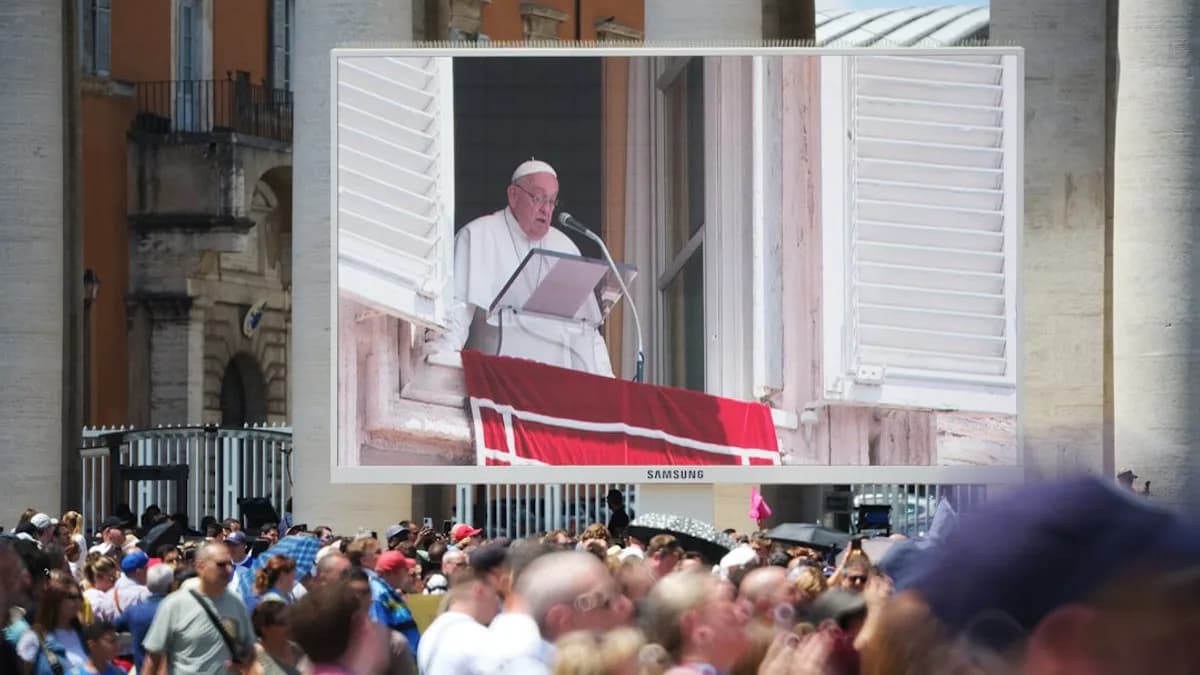
Pope Leo XIV, known for his forthright engagement with global political issues, has in recent weeks become a central figure in a debate over the role of faith in American public life. The controversy began when the pontiff delivered a series of speeches and interviews in which he warned against the rise of what he termed “MAGA Jesus”—a phrase describing the conflation of Christian identity with the political and cultural brand associated with Trump’s “Make America Great Again” movement. The Pope’s statements were widely interpreted as a rebuke of Trump’s efforts to claim religious legitimacy and suggest a divergence between core Catholic teachings and the rhetoric of some conservative American politicians [Source: Source].
However, Pope Leo XIV soon clarified his position, emphasizing that his concerns were not directed solely at Trump, but rather at a broader phenomenon of political leaders seeking to co-opt religious imagery for partisan ends. In a statement to reporters, the Pope said, “Some news outlets have misread my remarks as an attack on a single individual. My intent is to remind the faithful that our allegiance is to Christ, not to any political ideology or personality” [Source: Source]. The Vatican’s communications office also released a statement underscoring the Pope’s desire to foster unity within the global Church and to resist efforts that would divide believers along political lines.
Despite these clarifications, the Pope’s remarks have continued to reverberate in the United States, with both supporters and critics interpreting his message through the lens of ongoing cultural and political battles. The episode has reignited longstanding debates over the appropriate relationship between church leadership and political activism, particularly in a nation where Catholic voters represent a pivotal constituency.
Republican Senator’s Criticism of Trump’s ‘Holy War’
Amid the escalating tension, a prominent Republican senator has emerged as an unexpected critic of Trump’s approach. In a public statement, the senator condemned what they described as Trump’s “holy war” with Pope Leo XIV, warning that such confrontations risk undermining the credibility of both political and religious institutions. “This is not a battle the American people want or need,” the senator remarked. “We should respect the role of faith leaders and avoid using religion as a cudgel in our political disputes” [Source: Source].
The senator’s intervention is notable not only for its substance but also for its timing. Breaking with the party’s typical deference to Trump, the senator articulated concerns that the former president’s combative style is deepening divisions among conservatives and alienating religious voters who may be uncomfortable with the politicization of their faith. Political analysts suggest that this rare public dissent from a Republican lawmaker reflects broader unease within the party about the long-term consequences of conflating religious identity with partisan loyalty.
By openly challenging Trump on this issue, the senator has added a new layer of complexity to the already volatile relationship between the Republican Party, its religious base, and the institutional Church. The senator’s remarks have been praised by some Catholic leaders as a call to civility, while others warn that the party risks fracturing ahead of a critical election cycle.
Divisions Among Catholics and Political Ramifications
The Trump-Pope Leo XIV clash has exposed deep divisions within the American Catholic community. Some Catholic leaders and laypeople have rallied to the Pope’s defense, arguing that his message is a necessary corrective to the politicization of faith. Others, however, view the Pope’s statements as an unwarranted intrusion into American political debates, and have sided with Trump, framing the conflict as a struggle for the soul of the Church in the U.S. [Source: Source].
These divisions are reflected in the broader political landscape, where Catholic voters represent a key swing demographic. Advocacy groups on both sides have seized on the controversy to mobilize support and shape the narrative ahead of upcoming elections. Progressive Catholic organizations have applauded the Pope’s emphasis on social justice and the dangers of political idolatry, while conservative groups warn that the Vatican is becoming overly entangled in partisan disputes.
The conflict also highlights a larger trend: the growing entanglement of religion and politics in America. As political polarization intensifies, religious identity is increasingly leveraged as a tool for mobilization and cultural signaling. The Trump-Pope dispute is the latest—and perhaps most prominent—example of how these dynamics can create rifts not only within faith communities but also across the political spectrum.
Other Key Reactions: Vance’s Plea and Media Interpretations
As the dispute escalated, Senator J.D. Vance publicly appealed to Pope Leo XIV for prayers, characterizing himself and other Trump allies as targets of “relentless attacks” from both the Pope and his supporters. “We need your prayers now more than ever,” Vance wrote, in a move that sought to reframe the conflict as a spiritual battle rather than a purely political one [Source: Source].
Media coverage of the Trump-Pope clash has been intense and varied. Outlets such as CNN have emphasized the Pope’s critique of “MAGA Jesus” and the broader implications for the Catholic Church’s identity in America, while The New York Times focused on the Pope’s clarification that he was not singling out Trump personally. The divergent coverage has played a significant role in shaping public perceptions, with some narratives portraying the Pope as a unifying moral authority and others casting him as a controversial figure intervening in American politics [Source: Source].
This variation in media framing underscores the power of news outlets to influence how such high-profile disputes are understood by the public. As the story continues to unfold, the role of the media will remain central in determining whether the conflict is seen as a watershed moment or a passing controversy.
Conclusion: The Broader Significance of the Trump-Pope Conflict
The escalating confrontation between Donald Trump and Pope Leo XIV offers a revealing snapshot of the current state of political and religious dynamics in the United States. It highlights the challenges facing both political leaders and religious authorities as they navigate questions of identity, loyalty, and the appropriate boundaries between faith and public life. With prominent Republicans now openly questioning Trump’s tactics and Catholic communities deeply divided, the episode may foreshadow further realignments within both the GOP and the American Church.
Looking ahead, the outcome of this dispute could have significant implications for Trump’s political standing and for the broader conversation about the role of religious leadership in politics. As faith leaders and politicians alike grapple with these issues, the Trump-Pope conflict serves as a powerful reminder of the enduring importance—and volatility—of religion in American public discourse [Source: Source].