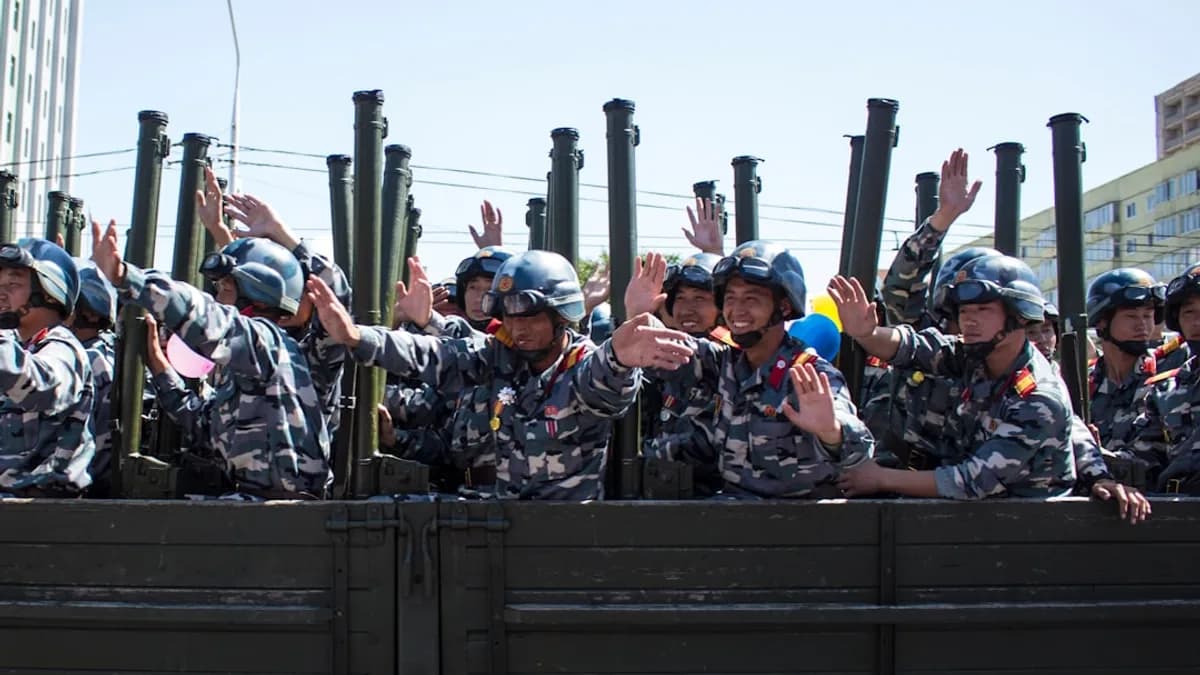
North Korea’s Latest Cluster Munition Test Under Kim Jong Un’s Watch
When North Korean leader Kim Jong Un appears in public to observe a weapons test, the world sits up and takes notice. But this time, the stakes were higher. Flanked by his young daughter, Kim personally witnessed the test-launch of missiles equipped with cluster munitions—a weapon class widely condemned for its indiscriminate lethality [Source: Source]. The event, splashed across international news outlets, serves as both a chilling demonstration of North Korea’s advancing arsenal and a carefully staged act of political theater. It sends a message not only to Pyongyang’s adversaries, but also to its own citizens and future generations.
This latest test comes at a time of heightened global uncertainty, with ongoing conflicts shaking the Middle East and security dynamics shifting across Asia. North Korea’s move is more than a technical milestone; it is a calculated provocation that probes the boundaries of international tolerance and tests the resolve of the global community. The presence of Kim’s daughter at the launch further hints at a deliberate effort to project dynastic continuity and personal investment in the regime’s military ambitions. As headlines dissect the dramatic scene, the world must grapple with what this portends for regional stability and the future of arms control.
Understanding Cluster Munitions and Their Controversial Impact
Cluster munitions are not ordinary weapons. They are designed to break open midair, scattering dozens or even hundreds of smaller bomblets over a wide area. While intended to destroy dispersed military targets such as vehicles or troop formations, these submunitions often fail to explode on impact. The result: vast tracts of land left littered with unexploded ordnance, which can remain deadly for decades.
The humanitarian consequences are severe. Civilians—especially children—are routinely killed or maimed by bomblets long after conflicts end. This grim legacy has spurred the international community to act. The 2008 Convention on Cluster Munitions, now signed by more than 120 nations, bans their use, production, and transfer, citing their “unacceptable harm to civilians.” Yet major powers, including the United States, Russia, and China, have not joined the treaty, and North Korea remains unbound by its strictures.
North Korea’s renewed testing of cluster munitions thus rings alarm bells worldwide. Not only does it signal the regime’s willingness to employ widely condemned weapons, but it also underscores the persistent gaps in global arms control frameworks. For neighboring countries and humanitarian organizations, Pyongyang’s actions serve as a stark reminder that the dangers posed by these munitions are not confined to distant battlefields—they are a present and pressing threat.
Kim Jong Un’s Strategic Messaging: Military Power and Political Signaling
Kim Jong Un’s decision to personally oversee the test, accompanied by his daughter, is rich with symbolism and intent. In North Korea’s tightly controlled political theater, such appearances are never coincidental. The presence of his daughter—already being groomed by state media as a figure of significance—signals the regime’s confidence in its dynastic succession and its intent to project stability and continuity even as it escalates military provocations.
Domestically, this spectacle reinforces Kim’s image as a leader who is both a protective father and an unyielding commander. It serves to rally elite and public support around the regime’s narrative of security and self-reliance. Internationally, the timing and nature of the test are a flex of military muscle meant to deter adversaries and remind the world that North Korea’s capabilities cannot be ignored [Source: Source].
The choice to test cluster munitions now is particularly provocative given the broader geopolitical climate. With the world’s attention divided by the ongoing conflict in the Middle East—specifically the Iran-Israel tensions—North Korea may see an opportunity to advance its weapons program with reduced risk of swift, unified retaliation. This pattern fits a well-established playbook: Pyongyang often stages high-profile launches when the international system is distracted or divided. The regime’s signaling is clear: North Korea will continue to develop its arsenal, international condemnation notwithstanding, and it expects to be recognized as a formidable military power.
Regional and Global Security Implications of North Korea’s Missile Tests
The reverberations of North Korea’s missile tests are felt most acutely in its immediate neighborhood. South Korea, Japan, and even China must constantly recalibrate their defense strategies in response to Pyongyang’s evolving threat profile. For Seoul and Tokyo, the prospect of cluster munitions—combined with ballistic missile delivery—raises the stakes for both civilian populations and military planners. It complicates missile defense calculations and increases the urgency of securing countermeasures capable of neutralizing not just missiles, but the wider area effects of cluster payloads.
Diplomatically, each new test further undermines efforts to restart denuclearization talks. The United States and its allies face a dilemma: how to respond firmly enough to deter further escalation, yet flexibly enough to keep diplomatic channels open. The continued development and testing of cluster munitions represent a direct challenge to United Nations sanctions and the broader non-proliferation regime, highlighting the limitations of existing enforcement mechanisms [Source: Source].
Globally, North Korea’s actions threaten to erode the credibility of arms control agreements. If Pyongyang is seen to flout international norms with impunity, it sets a dangerous precedent for other would-be proliferators. The risk is not limited to traditional state actors; non-state groups may also seek to acquire or emulate such capabilities if global enforcement appears weak. In this context, North Korea’s latest launch is more than a regional provocation—it is a test case for the resilience of the entire international security architecture.
The Role of Media and International Community in Responding to North Korea’s Provocations
Media coverage plays a crucial role in shaping global perceptions of North Korea’s actions. The dramatic images of Kim Jong Un and his daughter observing the launch are not just propaganda for domestic audiences; they are designed for international consumption, amplifying the sense of threat and urgency [Source: Source]. News outlets worldwide have highlighted the symbolism and technical implications of the test, ensuring that Pyongyang’s message reaches policymakers and the public alike.
Yet, the media’s focus on spectacle can sometimes overshadow the underlying policy challenges. Effective responses require more than condemnation or alarmist headlines—they demand coordinated international action. Sanctions, diplomatic pressure, and strategic messaging must be aligned to dissuade further provocations while keeping open the possibility of meaningful engagement. The international community faces a delicate balancing act: it must avoid legitimizing North Korea’s weapons program by overreacting, yet cannot afford to appear complacent or divided.
This is compounded by the reality that North Korea has grown adept at exploiting divisions within the international system. Whether through sanctions evasion, cyber operations, or strategic partnerships with sympathetic states, Pyongyang has demonstrated a capacity to adapt and endure. The challenge for the global community is to present a united front—both in public messaging and behind-the-scenes diplomacy—while preparing for the possibility that North Korea’s provocations will continue.
Navigating the Complexities of North Korea’s Military Posturing
North Korea’s latest test of cluster munitions is a sobering reminder of the persistent risks confronting Northeast Asia and the world at large. Each new launch not only advances Pyongyang’s technical capabilities but also tests the limits of international patience and resolve. The presence of Kim Jong Un’s daughter at the launch hints at a regime thinking in terms of decades, not years—one committed to institutionalizing its military-first policy for another generation.
The way forward will demand a nuanced blend of pressure and engagement. Blanket sanctions alone have failed to halt North Korea’s weapons development, while unconditioned dialogue risks emboldening its ambitions. Policymakers must craft strategies that combine credible deterrence with pragmatic pathways for negotiation, leveraging both traditional alliances and innovative forms of engagement.
Above all, vigilance and international solidarity are essential. The dangers posed by cluster munitions and ballistic missiles are not abstract—they are immediate and evolving. By remaining alert to shifts in North Korea’s tactics and united in response, the global community can help prevent further destabilization and keep alive the hope for a more secure and peaceful future.