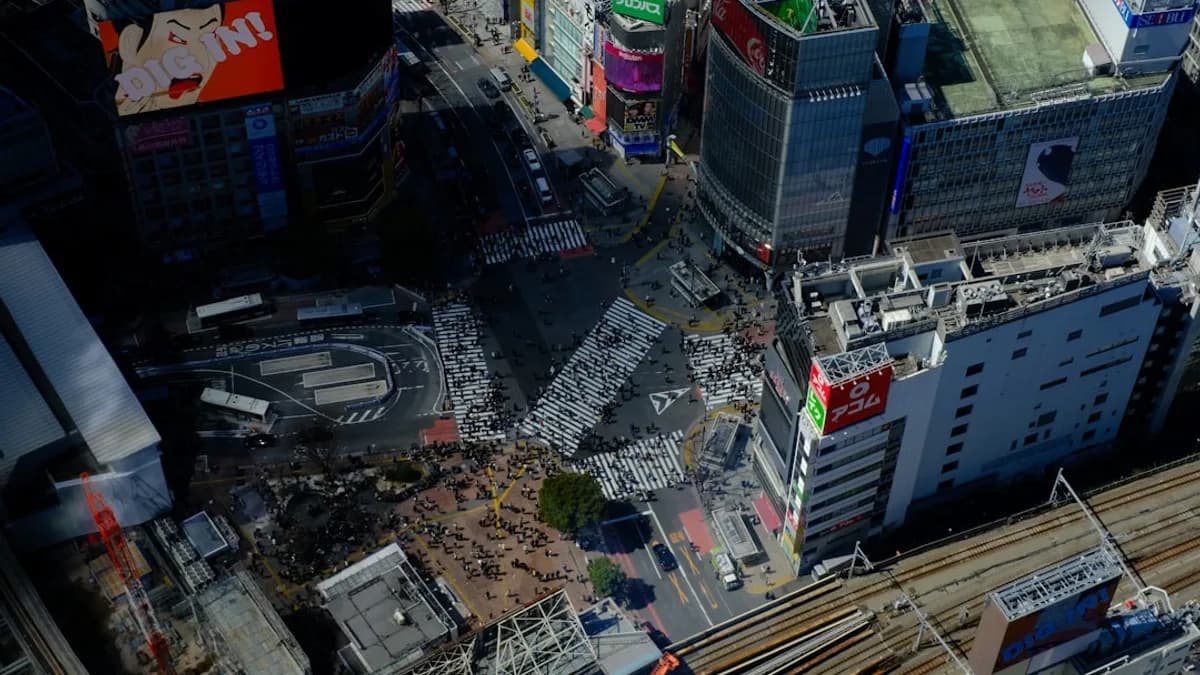
Overview of the Recent 7.7 Magnitude Earthquake in Northern Japan
In the early hours of the morning, northern Japan was rocked by a powerful 7.7-magnitude earthquake, jolting millions awake and sending tremors rippling across a wide swath of the country’s coastline. The epicenter was located off the northern coast, beneath the Sea of Japan, a region known for its volatile tectonic activity. The quake struck with little warning, unleashing intense shaking that was felt across several prefectures, including Ishikawa, Niigata, and Toyama, and causing widespread concern about potential aftershocks and secondary disasters [Source: Source].
Almost immediately, Japan’s Meteorological Agency issued a tsunami warning, urging residents in coastal areas to seek higher ground. In some locations, waves measuring up to 1.2 meters were observed, prompting swift evacuations and the closure of critical infrastructure along at-risk shorelines. Train services were temporarily suspended, and power outages were reported in several towns closest to the epicenter. Despite the intensity, early reports suggest that Japan’s robust building codes and disaster-readiness culture helped minimize casualties and property damage in the critical first hours after the quake.
Government officials rapidly activated emergency response centers, deploying rescue teams and mobilizing resources to assess and address immediate needs. Communication channels, both digital and traditional, buzzed with updates and instructions as authorities sought to keep the public informed and coordinated. The country’s rapid response stands as a testament to decades of investment in disaster management, but the event’s magnitude—and the subsequent official advisory—signaled that the situation could yet escalate.
Japan's Rare Special Advisory: What It Means and Why It Was Issued
What set this event apart from the dozens of seismic tremors Japan experiences each year was the issuance of a rare “special advisory” by the Meteorological Agency. Such advisories are seldom deployed—reserved for situations where there is a heightened risk of a more powerful earthquake following a major shock. In this case, the advisory warned of the possibility that the 7.7-magnitude quake might not be the main event, but rather a precursor to an even larger seismic rupture [Source: Source].
Special advisories differ significantly from standard earthquake alerts. While typical warnings focus on immediate seismic activity or aftershocks, a special advisory raises the specter of an imminent, potentially more devastating event. This heightened alert threshold reflects both the unpredictability of Japan’s complex tectonic environment and recent advances in seismological modeling, which have allowed scientists to identify patterns that occasionally precede mega-quakes.
Experts highlighted that this advisory was not issued lightly. Government officials emphasized that, although the probability of a larger follow-on quake remains relatively low, the consequences of being unprepared could be catastrophic. The precedent for such caution was set after the 2011 Tohoku earthquake, when a magnitude 9.0 event followed a significant foreshock, triggering a tsunami and reactor meltdown at Fukushima. The current advisory, therefore, serves both as a scientific assessment and a policy tool—designed to prompt heightened vigilance and readiness while authorities continue to monitor seismic activity.
Public Reaction and Preparedness: Calm Amidst the Quake
Despite the high magnitude and the gravity of the advisory, Japanese society demonstrated remarkable composure. Scenes from supermarkets and public spaces captured by local media showed shoppers calmly evacuating or sheltering in place, following practiced routines rather than panicking [Source: Source]. This measured response is no accident; it is the product of decades of public education, regular emergency drills, and a deeply embedded culture of disaster preparedness.
From schoolchildren who learn to duck under desks at the first sign of shaking, to office workers who keep emergency kits at their desks, Japan’s population is among the best-prepared in the world for earthquakes. Public buildings, transportation hubs, and even private homes are equipped with earthquake-resistant features, and neighborhood disaster committees frequently conduct evacuation exercises.
In the hours after the quake, social media was filled not with fear, but with messages of reassurance and offers of help. Local governments opened evacuation centers, and volunteers mobilized to assist the elderly and vulnerable. This collective calm is not just a cultural phenomenon, but a public health and safety asset that reduces injuries and allows emergency services to operate more effectively during crises.
Tsunami Warning and Safety Measures Implemented Post-Quake
The tsunami warning issued immediately after the quake underscored the multi-layered threat Japan faces from its seismic geography. Coastal regions, particularly along the Sea of Japan, were identified as at-risk zones, prompting authorities to order evacuations in low-lying communities and urge boat operators to move vessels to safer waters [Source: Source].
Japan’s early warning systems, among the most advanced in the world, played a critical role in this response. Within minutes, automated alerts were broadcast to mobile phones, television, and radio, providing clear instructions to residents. Municipalities activated loudspeaker systems to reach those without digital access, ensuring no one was left uninformed.
Comparisons to past tsunami events, such as the devastating 2011 disaster, highlight just how far Japan’s safety infrastructure has evolved. While the waves triggered by this quake were significantly smaller, the rapid and orderly evacuation minimized risk to life and property. Emergency shelters were quickly opened, stocked with supplies, and managed by trained staff. The effectiveness of these measures serves as a model for other tsunami-prone regions globally.
Seismic Context: Understanding Japan’s Earthquake Risks and Preparedness
Japan’s vulnerability to earthquakes is rooted in its position atop four major tectonic plates: the Pacific, Philippine Sea, Eurasian, and North American plates. The constant grinding and subduction of these plates generates frequent and sometimes catastrophic seismic activity. Historical records reveal a legacy of major quakes, from the 1923 Great Kanto earthquake, which leveled much of Tokyo, to the 1995 Kobe disaster and the 2011 Tohoku tragedy.
Over time, these events have spurred relentless innovation in monitoring, prediction, and preparedness. Japan boasts one of the world’s densest networks of seismographs and GPS sensors, feeding real-time data to the Meteorological Agency and research institutes. These systems enable not only immediate quake detection, but also sophisticated modeling of aftershock probabilities and tsunami risk.
Government policy has evolved in tandem with technological progress. Building codes now require structures to withstand severe shaking, with regular inspections to enforce compliance. Urban planning incorporates buffer zones and evacuation routes, while public education campaigns emphasize readiness at every age and social level. Investment in research continues, with AI-driven models and cross-border collaborations pushing the boundaries of what is possible in disaster prediction and response.
This relentless focus on resilience has paid dividends, dramatically reducing fatalities and economic losses from earthquakes over the past several decades. However, as the latest quake and advisory indicate, the risks remain ever-present, demanding constant vigilance and adaptation.
Implications and Future Outlook: What This Event Signals for Japan’s Seismic Safety
The issuance of a special advisory following such a powerful quake is both a reflection of Japan’s scientific sophistication and a sobering reminder of nature’s unpredictability. For policymakers, the event highlights the need to continually update risk assessments and preparedness plans, especially as urban populations grow and infrastructure ages.
Seismologists caution that while the probability of an even larger follow-up quake is statistically low, it cannot be dismissed outright. The real value of the advisory lies in its ability to spur extra caution and readiness—qualities that can mean the difference between life and death in a worst-case scenario [Source: Source].
For residents, the quake is a timely prompt to review emergency plans, replenish supplies, and stay informed through official channels. For the global community, it offers a case study in disaster resilience, underscoring the importance of investing in early warning systems, building standards, and public education.
Conclusion: Summarizing the Impact and Ongoing Vigilance in Japan
Japan’s recent 7.7-magnitude earthquake and the unprecedented special advisory have once again tested—and affirmed—the nation’s capacity for calm, coordinated crisis response. While the immediate threat appears to have been contained, the episode serves as a powerful reminder that seismic risk is never far from the surface in this island nation.
Preparedness, public trust in science, and a culture of collective responsibility remain Japan’s greatest assets in the face of geological uncertainty. As scientists continue to monitor for signs of further seismic activity, the call is clear: vigilance and continuous improvement are non-negotiable for a country built on shifting ground. For Japan and earthquake-prone regions everywhere, the lesson is simple—expect the unexpected, and prepare today for tomorrow’s uncertainties.