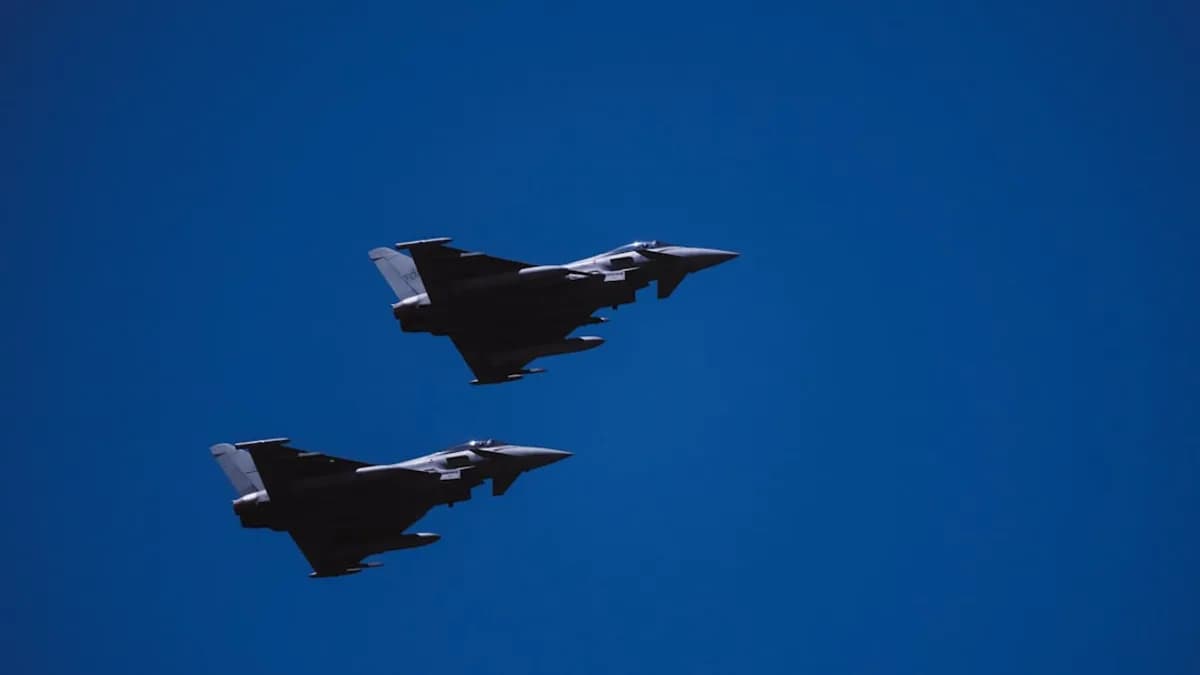
How Israel’s New Fighter Jet Deal Could Shift Middle East Military Dynamics
Israel’s approval to buy two new squadrons of F-35 and F-15IA fighters isn’t just a routine arms deal — it’s a calculated move to widen the military gap with its neighbors, at a moment when regional tensions are spiking. The $10 billion purchase, greenlit amid renewed hostilities with Iran-backed proxies, signals Israel’s intent to maintain air superiority regardless of shifting alliances or emerging threats according to Al Jazeera.
The stealth and strike capabilities of the F-35, combined with the upgraded range and payload of the F-15IA, give Israel a toolkit for both deep-penetration precision strikes and rapid response to multi-front scenarios. For adversaries like Iran, Lebanon’s Hezbollah, and even Gulf states wary of Israeli power, the message is clear: Israel’s qualitative edge is not just holding — it’s expanding.
Neighboring Egypt and Jordan, who rely on older F-16s and Mirage jets, face a widening gap. Gulf states such as the UAE, recently granted access to F-35s, now must contend with Israel’s longer operational experience and deeper integration of the platform. The deal could spark counter-moves: expect increased lobbying for advanced US or European aircraft, and more aggressive investments in missile defense or electronic warfare from rivals. The balance isn’t just shifting — it’s tilting hard in Israel’s favor.
Breaking Down the Numbers: What Two New Combat Squadrons Mean for Israel’s Air Force
A typical Israeli Air Force squadron fields 12-18 aircraft. This purchase translates to roughly 30-36 new jets — likely split between F-35s and F-15IAs, though exact numbers are undisclosed. The F-35 “Adir” delivers a radar cross-section measured in mere centimeters, making it nearly invisible to most regional radars. Its sensor fusion allows pilots to identify and target threats far beyond the reach of legacy platforms. Meanwhile, the F-15IA — Israel’s customized variant of Boeing’s F-15EX — packs over 12,000 kg of ordnance and can fly more than 1,200 nautical miles without refueling.
Israel’s current fleet includes about 39 F-35s and 25 older F-15I “Ra’am” strike aircraft. The new F-15IA jets offer digital avionics, improved jamming, and advanced air-to-air missiles, closing the gap with the F-35 in terms of electronics while vastly outpacing it in payload and range. The estimated $10 billion price tag covers not just airframes, but training, maintenance, spare parts, and advanced munitions — a significant chunk of Israel’s annual defense budget, which stood at $23.6 billion in 2025.
Compared to regional rivals, Israel now fields the most advanced mixed fleet in the Middle East. The UAE’s recent F-35 acquisition is smaller in scale — just 50 jets — and lacks Israel’s depth of operational experience. Saudi Arabia, stuck with older F-15S and Eurofighter Typhoons, will need years and billions to catch up. For Israel, this isn’t incremental growth. It’s a leap.
Diverse Stakeholder Perspectives on Israel’s Fighter Jet Acquisition
Israeli defense officials tout the deal as an “insurance policy” against escalation, emphasizing deterrence. Air Force commanders argue that stealth and deep-strike capabilities are essential given threats from Iran’s ballistic missiles and Hezbollah’s rocket arsenal. Some strategists, however, warn that relying on high-tech jets could invite asymmetric attacks — drone swarms, cyber sabotage, or guerrilla tactics — that jets can’t easily counter.
From Washington, the Biden administration frames the deal as a pillar of US-Israeli security cooperation. Lockheed Martin and Boeing, facing a cooling US defense procurement cycle, see Israel as a crucial export market. The contract provides multiyear revenue: Lockheed’s F-35 program alone nets $80 million per airframe, while Boeing’s F-15IA upgrades run higher due to customization. Both firms gain leverage in future Middle Eastern negotiations, as their platforms become the gold standard.
Regional actors view the purchase through a lens of threat and opportunity. Iran denounces the deal as “destabilizing,” suggesting it will accelerate its own drone and missile programs. Gulf states, keen to balance Israeli power, may pressure Washington for access to even newer platforms — or look eastward, as Qatar did with its Rafale and Su-35 buys. European security analysts point to the risk of arms races: the last major Israeli fighter acquisition in 2010 triggered a wave of Gulf purchases, raising regional military spending by 18% over five years.
Tracing the Evolution of Israel’s Air Power: From Early Jets to Cutting-Edge Stealth Fighters
Israel’s air force started with cast-off French Mystère and British Spitfires in the 1950s, scrambling for survival amid hostile neighbors. The watershed came in 1967, when Israeli Mirages and Skyhawks decimated Arab air forces in the Six-Day War, cementing air superiority as a strategic doctrine.
Major leaps followed: the US-supplied F-4 Phantom in the 1970s, then the F-15 in 1976, which enabled precision strikes deep into enemy territory. The 1982 Lebanon campaign showcased Israel’s mastery of electronic warfare, as it neutralized Syrian SAMs and MiGs. The 1990s saw the arrival of F-16s, and by 2016, Israel became the first country outside the US to operationalize the F-35.
Each new generation of jets has recalibrated Israel’s options — from defensive shield to preemptive strike capability. The current F-35/F-15IA acquisition fits a pattern: when regional threats intensify, Israel invests heavily to stay several steps ahead. The historical outcome? Adversaries scramble for countermeasures, but rarely succeed in neutralizing Israel’s qualitative edge.
Implications of Advanced Fighter Jets for Israel’s National Security and Regional Influence
The new jets aren’t just hardware — they reshape Israel’s entire defense posture. With F-35s, Israel can strike Iranian nuclear facilities or Hezbollah bunkers with minimal detection risk. The F-15IA, carrying heavier loads and more advanced jamming, can operate in contested airspace over Syria or even further afield.
Deterrence gets a boost: adversaries must factor in the possibility of undetectable, multi-axis strikes. Operationally, Israel can maintain persistent air presence in Lebanon, Gaza, or over the Red Sea, while holding reserves for rapid escalation scenarios. The jets’ integrated sensors feed intelligence to ground units, tightening the kill chain and shortening response times.
Diplomatically, Israel’s bargaining power rises. The US, mindful of export controls and regional stability, treats Israel as a key partner for testing and deploying new tech. Gulf states, hedging against Iran, may seek closer ties with Israel — witness the Abraham Accords’ expansion. The risk? An arms race that draws in Russia and China, as regional players seek counterbalance through alternative suppliers.
Forecasting the Future: How Israel’s New Fighter Jets Could Shape Regional Security and Defense Innovation
This deal is likely to trigger a new wave of procurement across the region. Saudi Arabia, facing pressure from Iran and Yemen, will lobby harder for US or European fifth-generation fighters. Egypt may accelerate its own Rafale and Su-35 programs. Expect a surge in demand for missile defense systems, electronic warfare suites, and indigenous drone swarms — as states try to offset Israel’s advantage.
Technologically, Israel will push the envelope. F-35s are already testing AI-driven targeting, networked operations, and secure battlefield communications. The F-15IA’s modular architecture allows rapid upgrades, making it a testbed for future electronic warfare and hypersonic weapons. Israel’s defense industry — Elbit, Rafael, IAI — gains leverage as integration partners, drawing in regional clients for training and support.
In geopolitical terms, these jets could be decisive in any major conflict. In a scenario where Iran ramps up nuclear development, Israel now has the means for deep, multi-wave strikes without risking detection or attrition. In peace efforts, air superiority gives Israel more room to negotiate from strength.
The most probable outcome: Israel’s air force sets the technological pace for the region, driving rivals to spend big on catch-up. The risk is a spiral — military budgets balloon, procurement races intensify, and the odds of miscalculation rise. But for Israel, the calculus is clear: qualitative edge buys time, options, and bargaining power. The region will have to adapt — or escalate.
Why It Matters
- Israel's purchase expands its military edge over regional rivals, affecting strategic balances.
- The deal may prompt neighboring countries to seek their own advanced jets or invest in countermeasures.
- Rising tensions make this acquisition a signal of Israel's intent to maintain air dominance in the Middle East.