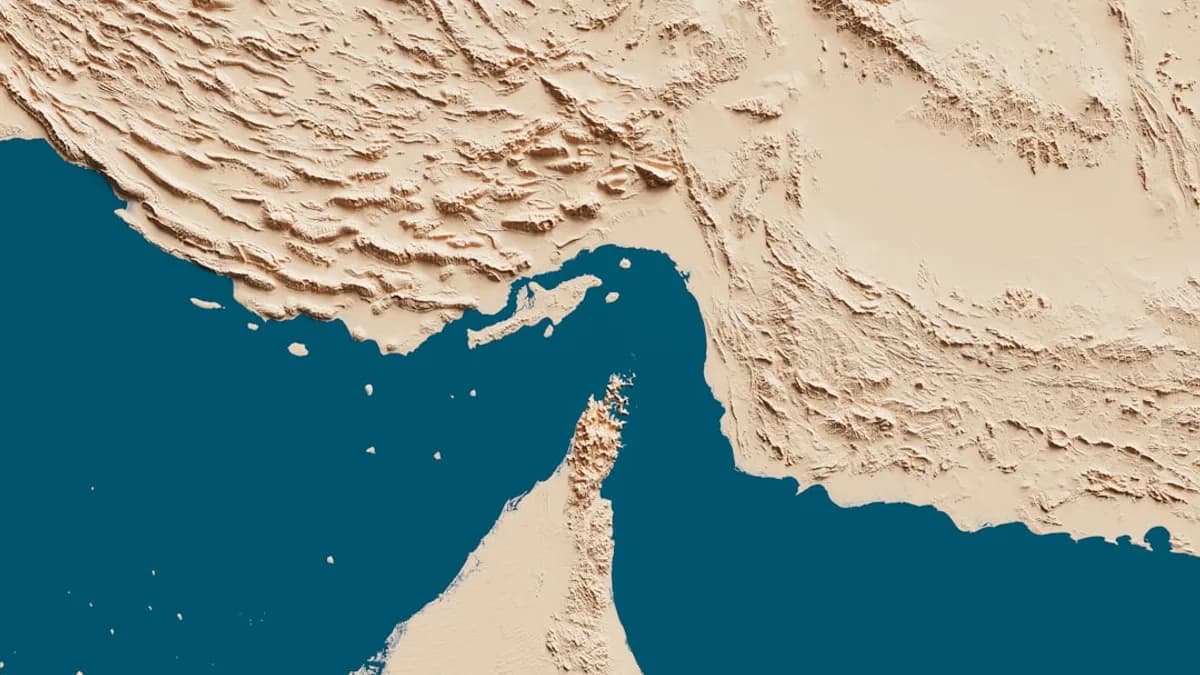
Introduction: Overview of the Strait of Hormuz Crisis
The Strait of Hormuz, a narrow waterway connecting the Persian Gulf with the Gulf of Oman, remains one of the most vital arteries for global oil transportation. Recent events have amplified the strategic tension in this region, as Iran threatened to close the strait if the United States continues its blockade efforts. This warning comes amid a period of heightened volatility, with conflicting narratives from Tehran and Washington shaping the outlook for peace talks. While President Trump has celebrated the reopening of the strait, Iranian officials insist that the threat of closure remains, underscoring the fragility of any diplomatic progress [Source: Source]. The crisis has already sent shockwaves through financial markets, driving major swings in oil prices and fueling concerns about broader economic stability. Against this backdrop, the world is watching closely as negotiations and military posturing unfold, with the fate of the strait—and global energy security—hanging in the balance.
Geopolitical Significance of the Strait of Hormuz
The Strait of Hormuz is not merely a geographic feature; it is a linchpin of international trade and energy security. Roughly one-third of the world’s seaborne oil passes through this choke point, making it critical for both oil-producing states and consumers worldwide [Source: Source]. Any disruption—whether through conflict, blockade, or political brinkmanship—can instantly reverberate through global markets, sending oil prices soaring and threatening the stability of economies dependent on energy imports.
Historically, the strait has been a flashpoint for regional and international tensions. During the Iran-Iraq War in the 1980s, attacks on tankers and the so-called “Tanker War” prompted US intervention to safeguard shipping lanes. More recently, incidents involving the seizure of vessels and threats to maritime traffic have underscored the vulnerability of this vital corridor. Each episode has demonstrated how quickly regional disputes can escalate into global crises, forcing policymakers to weigh military action against diplomatic engagement.
The importance of the Strait of Hormuz goes beyond oil. It also serves as a gateway for liquefied natural gas exports from Qatar, further amplifying its significance in the global energy mix. This convergence of economic interests and security concerns has made the strait a perennial focus for international diplomacy, drawing in actors from the US, EU, China, and Russia, each with their own stakes in uninterrupted passage.
In this latest crisis, the possibility of closure by Iran—whether actual or threatened—poses a direct challenge to the international community’s ability to maintain stability. It raises questions about the effectiveness of military deterrence, the role of economic sanctions, and the prospects for negotiated solutions to longstanding disputes.
Analysis of Iran’s Strategic Position and Motivations
Iran’s warning to close the Strait of Hormuz is a calculated response to mounting US pressure and blockade efforts. The move underscores Tehran’s leverage over a crucial global supply chain, turning the strait into both a bargaining chip and a symbol of resistance. At the heart of Iran’s strategy is the desire to counter US sanctions and compel Washington to ease economic restrictions, particularly those targeting oil exports and access to international financial systems [Source: Source].
The Islamic Revolutionary Guard Corps (IRGC) plays a central role in enforcing Iran’s control over the strait. According to Iranian officials, vessels wishing to traverse the waterway now require explicit approval from the IRGC, adding a layer of oversight and signaling Tehran’s readiness to assert its authority [Source: Source]. This mechanism not only serves as a tactical deterrent but also reinforces Iran’s message that it can disrupt global markets if its interests are ignored.
A key demand in ongoing negotiations is the unfreezing of Iranian funds held abroad, which Tehran views as essential for economic recovery and domestic stability. Linking maritime security to financial concessions is a hallmark of Iran’s approach, seeking to intertwine economic and security issues in a way that maximizes its negotiating power. By threatening closure, Iran aims to pressure the US and its allies to offer tangible relief rather than mere rhetorical gestures.
Iran’s motivations are multifaceted. On one hand, the country seeks to reassert its sovereignty and push back against what it views as unjust external interference. On the other, it recognizes the risks of escalation, including military confrontation and further economic isolation. The threat serves both as a warning and as a negotiating tool, designed to extract concessions while avoiding outright conflict.
This delicate balancing act is complicated by internal dynamics within Iran, where hardliners and moderates disagree on the appropriate level of confrontation. The IRGC’s prominent role reflects the influence of military and ideological factions, who prioritize resistance over compromise. At the same time, ongoing peace talks suggest that some within the leadership remain open to dialogue, provided their core demands are addressed.
US Response and Its Implications
The US response to the crisis has been characterized by a combination of assertive rhetoric and strategic maneuvering. President Trump publicly celebrated the reopening of the Strait of Hormuz, framing it as a victory for American resolve and a testament to the effectiveness of US pressure [Source: Source]. However, beneath the surface, the administration faces a complex set of challenges in maintaining the blockade and ensuring freedom of navigation.
The primary US objective is to curtail Iran’s regional influence and prevent the country from using the strait as a tool of coercion. By sustaining a military presence and supporting allied naval operations, Washington aims to deter Iranian actions while reassuring partners in the Gulf region. Yet, the risks of escalation are significant. Any miscalculation or incident could trigger a broader conflict, drawing in multiple actors and destabilizing the region.
The US blockade strategy is also intertwined with broader foreign policy goals, including the containment of Iranian nuclear ambitions and the promotion of regional security alliances. These efforts are complicated by divergent interests among Gulf states, who rely on the strait for exports but also seek to avoid direct confrontation. The US must balance its desire for influence with the need to preserve stability, a task made more difficult by Iran’s willingness to challenge the status quo.
Diplomatically, the crisis has strained relations between Washington and Tehran, with each side accusing the other of false claims and provocative actions [Source: Source]. The mutual distrust hampers efforts to reach a lasting settlement, raising questions about the viability of ongoing peace talks and the potential for future engagement.
Economic Impact: Oil Markets and Global Financial Reactions
The reopening of the Strait of Hormuz prompted an immediate and dramatic response in global oil markets. Prices dropped by 9% as fears of a prolonged disruption eased, reflecting the sensitivity of traders to geopolitical developments [Source: Source]. This volatility underscores the centrality of the strait to global supply chains and the outsized influence of regional events on financial markets.
Wall Street, meanwhile, rallied to record highs following the news, buoyed by optimism that energy flows would remain uninterrupted and that the risk of a major conflict had diminished [Source: Source]. The broader financial reaction highlights the interconnectedness of geopolitical risk and economic performance, with investors closely monitoring developments for signs of escalation or resolution.
In the longer term, persistent instability in the region could undermine confidence in global energy markets and drive up costs for consumers and businesses. While the immediate crisis may have been averted, the underlying vulnerabilities remain. Any future disruption—whether caused by renewed conflict, sabotage, or political maneuvering—could trigger another round of price spikes and economic uncertainty.
Prospects for Peace and Stability in the Region
The ongoing peace talks between Iran and the US offer a glimmer of hope for resolving the crisis, but significant obstacles remain. Mutual distrust and conflicting claims have hampered progress, with each side reluctant to make concessions without guarantees of reciprocity [Source: Source]. The challenge lies in finding a framework that addresses both security and economic concerns, while accommodating the interests of regional stakeholders.
Diplomatic efforts are further complicated by domestic politics in both countries. In Iran, factions within the government debate the merits of engagement versus confrontation, while in the US, shifting priorities and election cycles influence the willingness to negotiate. The involvement of external actors, such as the EU and Russia, adds another layer of complexity, as they seek to mediate while protecting their own interests.
Several scenarios are possible. A successful negotiation could lead to the easing of sanctions, the unfreezing of Iranian funds, and a commitment to maritime security, paving the way for greater stability. Alternatively, continued stalemate or escalation could result in renewed threats to the strait and heightened regional tensions. The outcome will depend on the ability of both sides to overcome entrenched positions and build trust through incremental steps.
Conclusion: Strategic Lessons and Future Outlook
The current crisis in the Strait of Hormuz illustrates the delicate interplay between military power, economic interests, and diplomatic engagement. Iran’s threat to close the strait, and the subsequent response from the US and global markets, highlight the vulnerability of critical supply chains to geopolitical risk. The episode underscores the need for robust multilateral diplomacy and mechanisms to manage disputes before they escalate into conflict.
Looking ahead, the resolution of this crisis will have far-reaching implications for US-Iran relations and global energy security. It will shape the contours of future negotiations, influence the behavior of regional actors, and determine the resilience of international markets to shocks. Ultimately, the lessons learned point to the importance of sustained dialogue and the avoidance of unilateral actions that jeopardize stability.
As the region continues to grapple with uncertainty, the world’s attention remains fixed on the Strait of Hormuz—a narrow passage with outsized significance for peace, prosperity, and progress [Source: Source].