Why Germany’s Merz Is Minimizing Tensions with the US Amid Troop Reductions
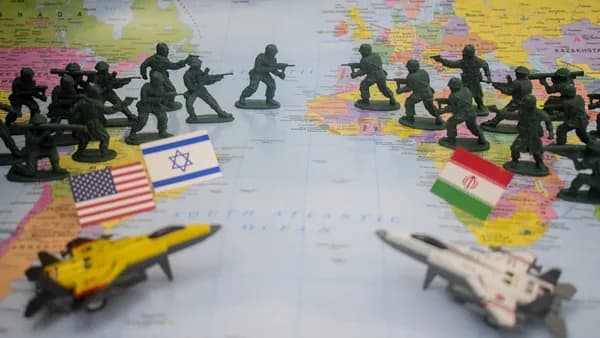
Chancellor Friedrich Merz isn’t just downplaying the friction with Washington—he’s making a calculated bet that Germany’s geopolitical leverage depends on projecting unity, even as US troops pack up. The timing isn’t accidental. With American soldiers set to leave key bases across Bavaria and Rhineland, Berlin faces a security reshuffle that could rattle NATO’s eastern flank. Yet Merz insists his criticism of Donald Trump’s Iran strategy is “unrelated” to the troop withdrawal, separating the two in public messaging to avoid inflaming a transatlantic spat, according to Al Jazeera.
The political calculus is clear: German voters, wary after years of Trump-era unpredictability, want assurance that their ties to Washington aren’t fraying further. Meanwhile, EU leaders are watching for signs that Berlin might pivot toward greater defense autonomy—a move that could fracture NATO. Merz’s restraint isn’t just optics; it’s an attempt to hold the alliance together while quietly recalibrating Germany’s military posture. By decoupling disagreements on Iran from troop movements, Merz signals to allies and adversaries alike that Berlin won’t let US politics dictate its strategic priorities. The subtext: Germany intends to remain the linchpin of European security, no matter how Washington’s mood swings.
Quantifying the Impact: Data on US Troop Drawdown and German Military Commitments
US troop numbers in Germany have dropped from a Cold War peak of over 250,000 to roughly 35,000 in 2024. The latest drawdown, announced in early May, slashes that figure by an estimated 7,000—one-fifth of the current contingent. Bases like Ramstein and Grafenwöhr, long central to NATO logistics and rapid deployment, are seeing scaled-back operations. This isn’t just symbolic; it’s a realignment of US force posture that leaves gaps in air defense, intelligence, and medical support for European allies.
Germany’s own military spending has climbed, but not fast enough to offset US reductions. Berlin allocated €57 billion ($61 billion) for defense in 2025, up from €50 billion in 2022—a 14% increase, but still only about 1.5% of GDP, well below NATO’s 2% target. German troop deployments abroad remain limited: just 1,500 soldiers in Mali, 800 in Lithuania, and small contingents elsewhere. By comparison, US forces provide the backbone for missile defense and rapid response in the region.
For NATO, these numbers aren’t academic. The alliance’s “tripwire” deterrence, especially in the Baltic states and Poland, depends on US boots and hardware. The drawdown shrinks the margin for error if Russia tests NATO’s resolve. As Germany inches toward greater defense spending and operational leadership, the question isn’t whether it can fill the gap—it’s whether it will, and if so, how quickly.
Divergent Views on Iran Policy: How US and German Perspectives Clash and Converge
Berlin’s criticisms of Trump’s Iran policy aren’t just rhetorical. German officials have repeatedly blasted the US withdrawal from the JCPOA, warning that maximum pressure tactics risk escalation and undermine European diplomatic channels. Merz’s government argues that the Iran nuclear deal, flawed as it was, offered a framework for engagement and inspection—something Washington’s unilateral sanctions shredded.
The US rationale for pulling troops from Germany, however, is rooted less in Iranian strategy and more in an “America First” drive to cut overseas commitments and redeploy assets closer to hotspots like the Middle East and Indo-Pacific. Trump’s administration has justified the drawdown as necessary for flexibility against Iran-backed threats, but critics—including German diplomats—call this a misreading of deterrence dynamics in Europe.
These differences spill over into joint operations. Germany’s reluctance to join US-led naval patrols in the Strait of Hormuz, its push for EU autonomy in defense procurement, and its skepticism toward US intelligence on Iranian missile programs all point to a widening philosophical gap. Yet both sides agree on one thing: Iran’s destabilizing influence needs to be contained. The fracture lies in the methods—and in the willingness to compromise on sanctions versus engagement.
Historical Patterns of US-German Military Cooperation and Disagreements
This isn’t the first time Washington has pulled troops from German soil. In 2006, the Bush administration cut 10,000 soldiers, citing post-Iraq realignment. The Obama years saw further reductions, but with an emphasis on rotational deployments and joint exercises to compensate. Each episode sparked German anxiety about “decoupling” from US security guarantees, but the alliance ultimately adapted—often with Berlin ramping up its own commitments in response.
Middle East policies have been a recurring flashpoint. In 2003, Germany refused to back the US invasion of Iraq, triggering a diplomatic freeze. Yet by 2014, Berlin was supplying arms to Kurdish forces in northern Iraq, in step with US strategy against ISIS. The lesson: German-US disagreements tend to flare, then fade, as mutual interests—counterterrorism, Russian containment, intelligence sharing—force pragmatic cooperation.
But the stakes are higher now. The Russian invasion of Ukraine and the resurgence of Iranian proxies in Syria and Lebanon have made NATO’s posture more precarious. Past troop cuts were offset by technology and multinational drills. Today, with the US signaling a deeper retreat, Germany faces pressure to absorb more risk, both militarily and politically.
What Germany’s Stance Means for European Security and NATO’s Future Role
Merz’s balancing act has real consequences for Europe’s defense trajectory. By signaling continued commitment to NATO while distancing from US Iran policy, Berlin positions itself as both peacemaker and power broker. This duality could accelerate the EU’s push for a “European Security Council”—a concept floated by French President Macron and increasingly popular among defense strategists.
If Germany boosts spending to NATO’s 2% benchmark—an increase of roughly $18 billion annually—it could reshape the alliance’s burden-sharing calculus. More German-led battlegroups in the Baltics, expanded air-defense networks, or new cyber operations would signal a shift from reliance on US muscle to European initiative.
Yet the risk of fragmentation is real. Eastern European states, wary of Russian aggression, depend on US guarantees. If Berlin’s message is misread as hedging against Washington, it could spark a scramble for bilateral defense deals and weaken NATO’s collective command. For the Middle East, a more independent German posture opens the door for EU-led diplomacy, but also for policy incoherence if member states diverge.
Stakeholder Perspectives: Reactions from German Officials, US Policymakers, and NATO Allies
German defense ministers have echoed Merz’s line, stressing that the US drawdown is “regrettable but manageable.” Foreign Minister Annalena Baerbock warned, “Our alliance is strong enough to weather tactical disagreements.” Yet Bundestag opposition leaders accuse Merz of glossing over the risks, pushing for a parliamentary inquiry into defense readiness.
US officials, meanwhile, insist the troop reductions are part of a broader strategic pivot. Pentagon spokespersons cite “dynamic threats” and argue that “Germany must step up” as the US reallocates forces to the Gulf and Indo-Pacific. Diplomats in Berlin privately admit concern that the move could embolden Russia and erode trust.
NATO allies are split. Poland and the Baltic states urge Germany to fill the vacuum, warning that US disengagement could expose them to hybrid attacks. France and Italy see an opportunity for greater EU defense integration, but caution against undermining NATO’s command structure. The UK, still grappling with post-Brexit defense realignment, advocates for “maximum cohesion” and quietly lobbies Berlin to stick to NATO protocols.
Forecasting the Transatlantic Security Landscape: Predictions on US-German Relations and Military Strategy
Expect troop levels in Germany to shrink further if US domestic politics trend isolationist. Berlin, pressured by both allies and voters, will likely announce new defense initiatives—rotational battlegroups, expanded drone fleets, or increased cyber defense funding—within the next 12 months. If Merz’s government can deliver a credible plan to reach NATO’s 2% target by 2027, it could stabilize alliance confidence and blunt Russian opportunism.
Diplomatic reconciliation is possible but will require more than public restraint. Germany and the US may launch a joint working group on Iran, seeking common ground on sanctions and regional engagement. The EU will push for a greater role in Middle East mediation, leveraging Germany’s credibility as a “bridge” between Washington and Brussels.
Emerging challenges—AI-enabled cyber warfare, drone swarms, energy security—will test the alliance’s cohesion more than troop numbers. If Berlin seizes the moment to lead, NATO could emerge more resilient, with Germany as the central pillar. But if the government stalls or hedges, expect a patchwork of mini-alliances and fragmented deterrence, with the US increasingly focused on Asia and Germany forced to shoulder a heavier European defense load. The next year will set the template for a new transatlantic order—one shaped as much by Berlin’s choices as Washington’s.
Impact Analysis
- Germany’s security landscape is shifting as US troop numbers drop sharply.
- Merz’s efforts to maintain unity are crucial for NATO stability amid uncertainty.
- The troop drawdown could prompt Germany and the EU to rethink their defense strategies.