Introduction to the 2026 Boston Marathon: Key Highlights and Expectations
Every spring, Boston transforms into the epicenter of the global running community, but the anticipation for the 2026 Boston Marathon has reached new heights. Scheduled, as tradition dictates, for Patriots' Day, this year’s race blends storied legacy with fresh intrigue. The marathon’s hallowed course—stretching from Hopkinton to Boylston Street—will once again challenge elite athletes and inspire amateur runners alike. Live coverage and photo updates are streaming from the course, offering fans near and far a front-row seat to every stride and story [Source: Source].
What sets 2026 apart? For starters, attention swirls around defending champions John Korir and Sharon Lokedi, both eyeing rare back-to-back victories. Meanwhile, a slate of celebrities—ranging from Chelsea Clinton to reality TV’s Matt James—add an extra layer of excitement and mainstream appeal. With civic pride, intense competition, and a vibrant community atmosphere, the 2026 Boston Marathon promises to be as memorable as any in its illustrious history.
Top Elite Runners to Watch: John Korir, Sharon Lokedi, and Other Champions
At the heart of the Boston Marathon’s enduring appeal is its elite field—a crucible where legends are forged and records are shattered. John Korir, the reigning men’s champion, returns in 2026 not just to defend his title but to etch his name alongside the rare few who have captured back-to-back victories on this unforgiving course [Source: Source]. Korir’s 2025 finish electrified Boston, his tactical mastery on the Newton hills drawing comparisons to icons like Geoffrey Mutai and Meb Keflezighi. Now, all eyes are on whether he can withstand a hungry international field eager to dethrone him.
On the women’s side, Sharon Lokedi is chasing her own piece of marathon history. Lokedi’s 2025 triumph was a blend of calculated patience and late-race surges, a performance that marked her as a new force in women’s distance running. Her training has reportedly focused on mastering the unpredictable Boston weather and the infamous Heartbreak Hill—two factors that often determine the outcome here. If she repeats, Lokedi will join a select club of women who have won consecutive Boston titles, a feat last accomplished by Catherine Ndereba in the early 2000s.
Yet, the fields are hardly limited to these headline names. The 2026 line-up features a deep roster of international talent, including rising stars from East Africa, established American marathoners hoping to break the Kenyan and Ethiopian stranglehold, and Japanese runners known for their tactical discipline. Compared to previous years, the competition’s depth in 2026 feels especially intense, with several athletes boasting personal bests within mere seconds of each other. This parity sets the stage for a tactical battle—where patience, weather-readiness, and split-second decisions will likely decide the champions.
Celebrity Runners Adding Star Power to the 2026 Boston Marathon
If the battle at the front is about athletic excellence, the 2026 Boston Marathon’s middle and back-of-the-pack runners are defined by star power and stories of inspiration. This year’s celebrity contingent has captured widespread attention. Chelsea Clinton, daughter of former President Bill Clinton and former Secretary of State Hillary Clinton, headlines the group, using her run to spotlight child health initiatives [Source: Source]. Reality TV star Matt James, whose marathon debut in 2024 drew both fans and skeptics, returns with a personal mission tied to mental health advocacy.
Other notable names on the start list include actors, musicians, and entrepreneurs, each bringing their own narratives to the course. Their participation does more than generate headlines: it expands the event’s reach, engaging audiences who might never tune in for a road race. The increased media coverage—spanning traditional broadcasts to social media live streams—reflects how celebrities amplify both the marathon’s visibility and its charitable impact. In recent years, runners like Tedy Bruschi and Shalane Flanagan have shown how personal stories can galvanize public support for causes ranging from stroke awareness to youth fitness.
What’s especially interesting about 2026 is how celebrity involvement is increasingly intertwined with social issues. Many runners are leveraging their platforms not simply for self-promotion, but to raise millions for nonprofit organizations—demonstrating the marathon’s evolving role as a stage for activism. This trend, while not new, feels more pronounced as celebrities and influencers use Boston’s international spotlight to champion causes, further blurring the line between sports, culture, and social change.
Visual Highlights: Capturing the Spirit of the 2026 Boston Marathon Through Photos
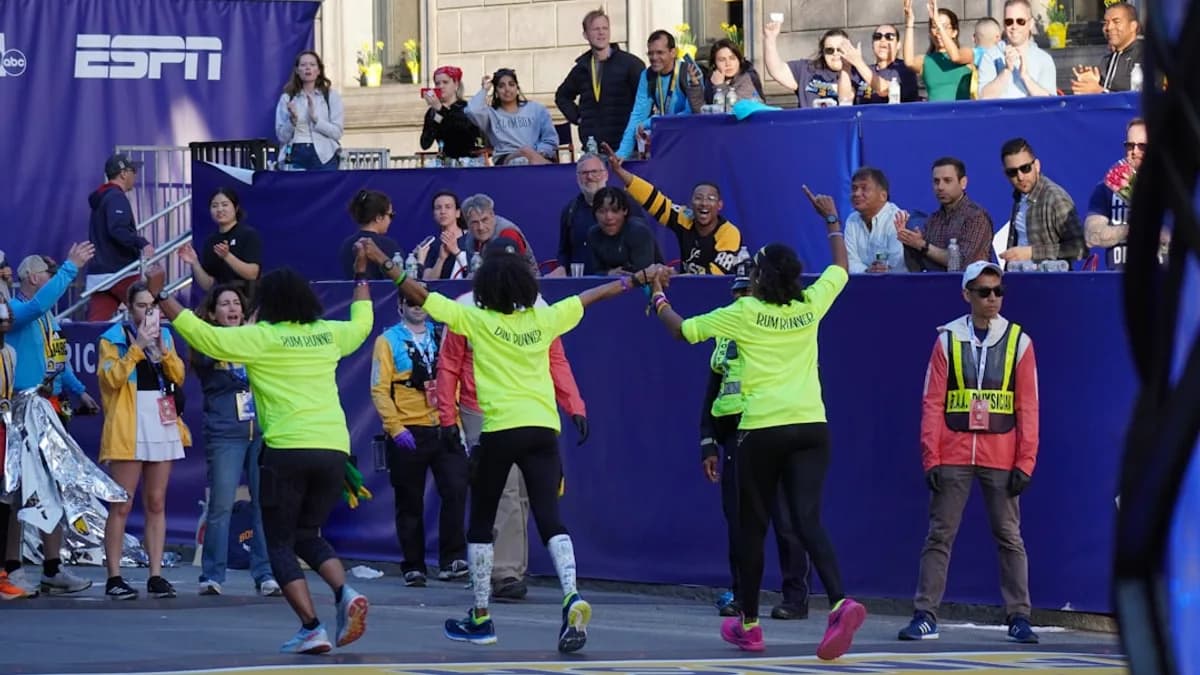
While split times and finish line drama fuel the competitive narrative, it’s the photographs that often define the Boston Marathon’s emotional core. In 2026, photojournalists and amateur photographers alike have captured a tapestry of moments: the swelling crowds along Wellesley’s famed “scream tunnel,” the determined faces cresting Heartbreak Hill, and the jubilant finishers embracing on Boylston Street [Source: Source].
These images do more than document a race—they encapsulate the event’s singular energy and sense of community. For spectators unable to attend in person, curated galleries and live photo feeds offer an immersive experience. Outlets like Wicked Local and WGBH have published extensive photo essays, highlighting both the athletic feats and the quieter, poignant moments: volunteers handing out water, families cheering on loved ones, and first-time runners pushing through exhaustion.
Visual media plays a powerful role in amplifying the marathon’s reach. In an era of digital storytelling, these images are instantly shareable, turning fleeting moments into lasting memories and inspiring future generations of runners. Fans can find the most comprehensive galleries and real-time updates on official marathon websites and local media platforms, ensuring the spirit of the Boston Marathon resonates far beyond the streets of the city.
Analysis: What the 2026 Boston Marathon Means for the Running Community and Beyond
Beyond its status as a world-class sporting event, the Boston Marathon functions as a barometer for broader trends in fitness, resilience, and civic engagement. In 2026, its significance seems only to have grown. The continued participation of elite athletes underscores the event’s role as a proving ground for the very best, but it’s the widening embrace of diverse runners—amateurs, celebrities, differently-abled athletes—that signals a democratization of the sport.
The presence of high-profile figures brings undeniable benefits: increased fundraising, greater media coverage, and a spotlight on critical social issues. Yet, it also raises questions about the balance between competition and spectacle. The Boston Marathon, with its storied qualifying standards and historic roots, has always walked this tightrope. In 2026, the event appears to have struck a careful equilibrium—celebrating both elite performance and mass participation without sacrificing its unique identity.
Economically, the marathon remains a powerhouse for Boston. The influx of visitors, estimated in past years to contribute over $200 million in direct spending, boosts local businesses and supports thousands of jobs. Socially, the event acts as a unifying force—bringing together residents, volunteers, and fans from around the world. In the wake of global challenges and shifting attitudes toward health and wellness, the 2026 Boston Marathon stands as a testament to the power of community-driven events to foster resilience, pride, and hope.
Importantly, the 2026 edition reflects a running world that is more inclusive and technologically advanced. Real-time tracking, live video feeds, and interactive apps have transformed how fans engage with the race, making it accessible to a global audience. The surge in charity runners and corporate teams underscores a shift toward purpose-driven participation, echoing trends seen in other major marathons like New York and London.
For the broader running community, Boston’s continued prestige reinforces the marathon’s role as a “bucket list” achievement. Its rigorous qualifying standards remain a motivating force for amateur runners worldwide, while innovations in race management and community engagement set benchmarks for other events. Looking ahead, the Boston Marathon’s blend of tradition and progress offers a blueprint for how legacy sports events can stay relevant—and even thrive—in a rapidly changing world.
Conclusion: Staying Updated and Engaged with the 2026 Boston Marathon
The 2026 Boston Marathon has once again lived up to its billing as a showcase of human endurance, community spirit, and cultural relevance. From the thrilling battles among elite athletes to the inspirational stories of celebrity and amateur runners, this year’s race encapsulates what makes Boston unique on the global sporting calendar. Fans are encouraged to dive deeper—whether by following live updates, exploring photo galleries, or engaging with the marathon’s vibrant social media presence [Source: Source].
For those inspired by today’s feats, the Boston Marathon offers multiple pathways to get involved: as a future participant, a charity supporter, or simply a member of the worldwide running community. As the city recovers from the roar of the 2026 race, one thing remains clear: the Boston Marathon’s legacy endures, evolving but unbroken, ready to inspire the next generation of dreamers and doers.