Updated note: This article has been refreshed with current Strait of Hormuz energy-flow estimates, clearer sanctions context, and a more precise explanation of the legal and market risks around any Iranian attempt to collect transit fees.
Introduction to the Latest US Sanctions on Iran and Hormuz Toll Payments
The US has continued to tighten sanctions on Iran’s oil, shipping, and financial networks while warning companies and governments against supporting any Iranian effort to collect payments from vessels transiting the Strait of Hormuz. Washington’s position is that the strait is an international waterway and that any forced “toll” or transit fee demanded by Iran could violate international navigation rules and potentially funnel money to sanctioned Iranian institutions, including entities linked to the Islamic Revolutionary Guard Corps.
The warning matters because the Strait of Hormuz remains one of the most sensitive pressure points in the global economy. Roughly one-fifth of the world’s oil consumption moves through the waterway, along with major liquefied natural gas shipments from Qatar. Even the suggestion of new fees, vessel seizures, or military escalation can unsettle energy markets, raise shipping insurance costs, and put oil importers on alert.
For companies, the issue is not only geopolitical. It is also a compliance risk. Any payment that touches sanctioned Iranian banks, ports, military-linked bodies, or shipping facilitators could expose firms to US secondary sanctions, even if those companies are not based in the United States.
Understanding the Hormuz Strait’s Strategic Importance in Global Oil Supply
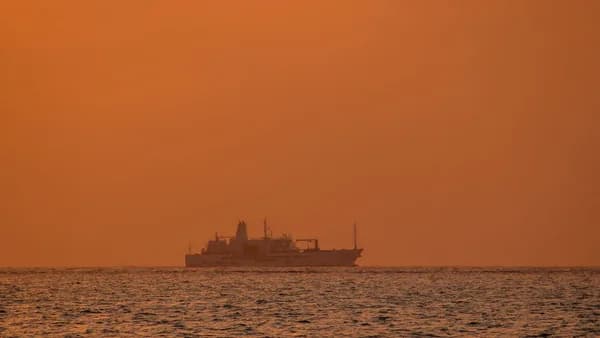
The Strait of Hormuz is a narrow waterway between Iran and Oman. At its tightest point, it is about 21 miles wide, with designated shipping lanes that are much narrower. Despite its size, it is the world’s most important oil chokepoint.
According to the US Energy Information Administration, about 20 million to 21 million barrels per day of crude oil, condensate, and petroleum products have moved through Hormuz in recent years. That is close to 20% of global petroleum liquids consumption. The strait is also critical for liquefied natural gas exports, particularly from Qatar, one of the world’s largest LNG suppliers.
Major Gulf producers—including Saudi Arabia, Iraq, Kuwait, the United Arab Emirates, Qatar, and Iran itself—depend on Hormuz to reach global buyers. Some alternative routes exist, such as Saudi Arabia’s East-West pipeline to the Red Sea and the UAE’s pipeline to Fujairah, which bypasses Hormuz. But those routes cannot replace the full volume that normally moves through the strait.
That is why threats involving Hormuz tend to move markets quickly. A full closure is still considered a low-probability but high-impact scenario. More likely disruptions—such as inspections, seizures, military incidents, higher insurance premiums, or disputed fees—can still raise costs and delay cargoes.
Details and Scope of the New US Sanctions on Iran
Recent US sanctions on Iran have focused on oil exports, shipping networks, front companies, brokers, tanker operators, and financial facilitators that help Tehran move crude and petroleum products despite restrictions. Washington has also targeted entities tied to Iran’s drone and missile programs, as well as groups accused of supporting regional militant activity.
The key point for Hormuz toll payments is that the US can use secondary sanctions. These measures allow Washington to penalize non-US companies if they conduct significant transactions with sanctioned Iranian entities. In practice, a shipping company, insurer, trader, bank, or port-services provider that helps process a disputed Iranian transit fee could risk losing access to the US financial system.
The US has not recognized any Iranian right to impose a unilateral toll on ships passing through the Strait of Hormuz. Under widely accepted principles of international maritime law, straits used for international navigation are subject to transit passage rights. Coastal states can enforce certain safety and environmental rules, but they cannot arbitrarily block lawful passage or impose discriminatory charges that effectively restrict navigation.
This makes the compliance issue especially complicated. If Iran attempts to collect a fee through port authorities, banks, maritime agencies, or military-linked bodies, firms would need to determine whether the counterparty is sanctioned. In many cases, the safest course for global banks and insurers would be to refuse involvement.
Implications of US Warnings Against Hormuz Toll Payments for Global Trade
The US message is straightforward: companies that help Iran collect unauthorized Hormuz-related payments may face penalties. That creates a difficult choice for shipowners and cargo buyers. Paying a toll could trigger sanctions risk. Refusing to pay could expose a vessel to harassment, delay, or seizure if tensions escalate.
The impact would be felt most sharply by major Asian oil buyers, including China, India, Japan, and South Korea, as well as European companies exposed to Gulf energy flows. Even when cargoes are not destined for the US, the global oil trade is deeply tied to dollar financing, Western maritime insurance, and international banking channels. A sanctions breach can therefore affect a company far beyond a single shipment.
Shipping firms may respond by increasing due diligence, rerouting where possible, demanding higher freight rates, or requiring stronger legal protections from charterers. Insurers may raise war-risk premiums for vessels entering the Gulf. Banks may scrutinize any payment linked to Iranian maritime authorities, even if the payment is described as an administrative fee.
The result is uncertainty. Global trade does not need a full blockade to feel pressure. Delays, unclear rules, higher compliance costs, and fear of enforcement can all slow transactions and raise prices. For energy markets, the perception of risk can be almost as important as the disruption itself.
Analyzing the Broader Impact on Global Oil Prices and Market Stability
Oil prices are highly sensitive to headlines involving the Strait of Hormuz. Traders know that a large share of global supply passes through a narrow and politically tense corridor. When tensions rise, markets often price in a risk premium, even before any physical barrels are lost.
A disputed toll regime would likely add to that premium. If shipowners face higher insurance costs, legal uncertainty, or possible sanctions exposure, those costs may be passed through to oil buyers. Refiners could pay more for Gulf crude, and consumers could eventually see higher prices for gasoline, diesel, jet fuel, and petrochemical products.
The largest price moves would likely come from a direct disruption: vessel seizures, attacks on tankers, mines, or a military confrontation. But smaller frictions can still matter. A slowdown in tanker traffic, more inspections, or temporary avoidance of the region could tighten supply chains and create short-term price spikes.
There are limits to how much oil can be rerouted. Saudi Arabia and the UAE have some bypass capacity, but Iraq, Kuwait, Qatar, and others remain heavily dependent on Hormuz. Strategic petroleum reserves could help calm markets in an emergency, but they are not a long-term substitute for uninterrupted Gulf exports.
For investors, the main takeaway is volatility. Energy equities, tanker stocks, oil futures, airline shares, and inflation-sensitive assets can all react to Hormuz-related developments. The risk is not only that oil prices rise, but that uncertainty makes hedging and planning more expensive.
Diplomatic Challenges and Prospects for Resolving US-Iran Tensions
US-Iran relations remain strained by disputes over Iran’s nuclear program, sanctions relief, regional security, drone and missile development, and support for armed groups across the Middle East. The Hormuz issue adds another layer to an already difficult relationship.
Iran has long used its geography as leverage. Its officials have periodically warned that if Iran cannot export oil freely, others in the Gulf may not be able to do so safely either. The US and its partners, meanwhile, have repeatedly said freedom of navigation through Hormuz is a core security interest.
A negotiated solution would likely require more than a narrow shipping agreement. Iran wants sanctions relief and recognition of its economic interests. The US wants limits on Iran’s nuclear and military activities, as well as a halt to attacks or threats against shipping. Gulf states want stability but also need to avoid being pulled into a larger conflict.
Smaller confidence-building steps could help. These might include maritime deconfliction channels, clearer rules for commercial shipping, regional security talks, or third-party mediation through Gulf or European governments. But mistrust is high, and domestic politics on both sides make compromise difficult.
For now, the most likely path is continued pressure: US sanctions and warnings on one side, Iranian threats and leverage tactics on the other. That keeps Hormuz a recurring flashpoint for energy markets.
Conclusion: Navigating the Complexities of US-Iran Sanctions and Global Energy Markets
US sanctions on Iran and warnings against any Hormuz toll payments highlight how closely geopolitics and finance are connected in global energy markets. The Strait of Hormuz is too important for traders, governments, insurers, and investors to ignore. Even limited disruption or legal uncertainty can raise costs across the oil and shipping industries.
Companies operating near the Gulf need strong sanctions screening, clear payment controls, and contingency plans for vessel delays or higher insurance costs. Oil importers need to watch both physical supply risks and financial restrictions. Investors should expect continued volatility whenever US-Iran tensions flare.
The central issue remains unchanged: Hormuz is a narrow waterway with outsized economic importance. As long as US-Iran tensions remain unresolved, the risk of sanctions, shipping disruptions, and oil-price shocks will stay firmly on the market’s radar.
⚠️ Disclaimer: This article is for informational purposes only and does not constitute financial advice. Always do your own research before making investment decisions.
Why It Matters
- The Strait of Hormuz carries roughly one-fifth of global oil consumption and is vital for LNG exports.
- US sanctions create major compliance risks for any company helping Iran collect disputed transit payments.
- Even without a full blockade, higher insurance costs, delays, or legal uncertainty can push energy prices higher.