Updated: This article has been refreshed to reflect the latest oil-market context, including sustained U.S. crude export strength, higher non-OPEC supply, continued OPEC+ management, and the fact that Middle East shipping risks have raised volatility without producing a lasting $150 WTI breakout.
Why $150 per Barrel WTI Oil Prices in 2026 Look Less Plausible
Oil bulls betting on $150 WTI in 2026 still need a very specific setup: a major, sustained supply outage that inventories, spare capacity, and U.S. exports cannot offset. That is possible in theory, but it is no longer the base case. The old super-spike narrative—built on Middle East disruption, shale exhaustion, and panic buying—has been weakened by a more flexible global crude system.
The market has not become risk-free. The Red Sea shipping crisis, Iran-Israel tensions, Russia sanctions, and OPEC+ supply discipline have all kept a geopolitical premium in crude. But headline risk has not translated into a durable loss of barrels on the scale needed to push WTI to $150 and keep it there.
The bigger structural story is supply resilience. U.S. crude exports remain above 4 million barrels per day, U.S. production is near record levels, and new barrels from the Americas—especially Brazil, Guyana, Canada, and the Permian Basin—have reduced the market’s dependence on any single chokepoint. Unless a true black swan event removes several million barrels per day for an extended period, $150 WTI in 2026 remains a tail-risk scenario rather than a mainstream forecast.
Quantifying the Impact: How U.S. Oil Exports Are Shaping Global Supply Dynamics
The U.S. has become one of the most important pressure valves in the global crude market. Since the crude export ban was lifted in 2015, American crude exports have surged from near zero to more than 4 million barrels per day. EIA data show U.S. crude exports averaged roughly 4.1 million barrels per day in 2023, with a monthly record near 4.6 million barrels per day in December 2023. Export volumes remained historically high through 2024, supported by strong Gulf Coast infrastructure and steady demand from Europe and Asia.
This matters because U.S. barrels are flexible. The Permian Basin remains the engine of American supply, with output above 6 million barrels per day in recent EIA estimates. Total U.S. crude production has hovered near record territory, around 13 million barrels per day, giving refiners and traders a large non-OPEC source of supply when disruptions hit elsewhere.
The export system has also matured. Gulf Coast terminals, pipeline expansions, and improved access to very large crude carriers have made it easier to move U.S. light sweet crude into global markets. European refiners turned heavily to U.S. crude after Russia’s invasion of Ukraine, while Asian buyers continue to use American barrels as a hedge against Middle East and Russian supply risk.
That does not mean shale can instantly replace every lost barrel. Capital discipline, service-cost inflation, and investor pressure have slowed the old boom-at-any-price model. Still, the presence of a large, responsive U.S. export machine makes extreme price spikes harder to sustain. A brief jump is always possible; a durable $150 WTI market requires a much deeper supply shock.
The Strait of Hormuz: Risk Remains, But the Market Has Not Broken
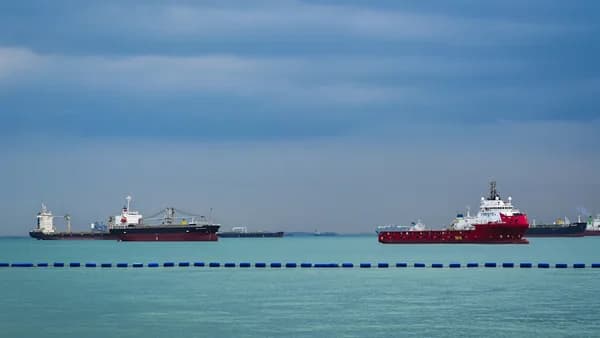
The Strait of Hormuz remains the most important oil chokepoint in the world. Roughly one-fifth of global petroleum liquids consumption moves through the waterway, making it a permanent source of risk premium. Any serious closure would be a major event for crude, LNG, insurance markets, and global inflation.
What has changed is not that Hormuz is “safe.” It is that markets have become more practiced at pricing episodic tension without assuming immediate catastrophe. The Saudi-Iran diplomatic thaw reduced some regional pressure, but the broader Middle East backdrop has remained volatile. The Israel-Hamas war, Houthi attacks on Red Sea shipping, Iran-linked maritime incidents, and direct Iran-Israel escalation in 2024 all reminded traders that geopolitical risk is real.
Yet even with those shocks, oil did not sustain a $150 move. Tankers rerouted, insurance costs rose, and Brent/WTI risk premiums widened at times, but the core physical market continued to function. Hormuz was not closed, Gulf exports continued, and U.S. and Atlantic Basin supply helped cushion buyers.
The key point for 2026 is that Hormuz remains a trigger, not a forecast. A blockade or prolonged military conflict could change the price outlook quickly. But absent an actual, sustained interruption to flows, geopolitical headlines alone are unlikely to carry WTI to $150.
Diverse Stakeholder Perspectives on Oil Price Stability Through 2026
OPEC+ is still central to the price outlook, but its role has shifted. Rather than engineering a runaway bull market, the group has focused on defending price floors through production cuts while avoiding demand destruction. Saudi Arabia and its partners have repeatedly shown willingness to withhold supply, but they also face a delicate balance: prices too low strain budgets, while prices too high accelerate efficiency gains, substitution, and political pressure from consuming nations.
U.S. shale producers are operating with more discipline than in the 2010s. Breakevens vary widely by operator and acreage, but core Permian projects remain competitive well below $90 WTI. Public producers are prioritizing cash flow, buybacks, dividends, and balance-sheet strength over reckless volume growth. That caps the pace of expansion, but it also makes the sector more durable when prices soften.
Major consuming nations are hedging aggressively. China and India continue to buy discounted or diversified supply when available, while Europe has rebuilt crude sourcing after cutting reliance on Russian barrels. Refiners now manage a more complex trade map, but they also have more optionality than during past crises.
Most mainstream oil-price forecasts cluster far below $150. Banks, energy consultancies, and official agencies have generally framed 2026 as a market shaped by OPEC+ discipline, moderate demand growth, and strong non-OPEC supply—not a straight-line super-spike. Forecasts can be wrong, but the consensus reflects a market with more buffers than in previous shock cycles.
Historical Oil Price Surges: Lessons from Past Crises and Their Relevance Today
Oil has reached extreme levels before, but past spikes usually required a powerful combination of physical disruption, financial stress, and fear. The 1973 OPEC embargo reshaped energy politics. Iraq’s invasion of Kuwait in 1990 sent prices sharply higher. In 2008, WTI touched about $147 before collapsing during the financial crisis. In 2022, Brent briefly approached $140 after Russia invaded Ukraine, only to retreat as alternate trade flows emerged and demand fears rose.
The lesson is not that oil cannot spike. It can. The lesson is that lasting super-spikes require more than scary headlines. They require a sustained imbalance that buyers cannot solve through inventories, rerouting, substitution, spare capacity, or new supply.
Today’s market is more diversified. OPEC still has enormous influence, but non-OPEC supply has grown. The U.S. is a major exporter, Brazil and Guyana are adding offshore barrels, Canada has expanded export flexibility, and global inventories provide a cushion even when they are not abundant. Strategic petroleum reserves are lower in some countries than before the 2022 releases, but commercial stocks and diversified flows still reduce the odds of a 1970s-style supply panic.
A move to $150 WTI would likely require a major outage involving one or more of the world’s largest suppliers or a direct disruption to critical shipping lanes. Without that, history suggests spikes may fade as physical barrels find new routes.
What Stabilized Oil Prices Mean for Energy Markets and Consumers in 2026
For energy companies, a range-bound oil market supports steadier capital planning. Instead of chasing every price rally with aggressive drilling, producers can focus on efficiency, well productivity, debt reduction, and shareholder returns. Large integrated companies have leaned into dividends, buybacks, and selective upstream investment rather than assuming a permanent price boom.
For consumers, the main benefit is lower inflation volatility. Gasoline and diesel prices remain sensitive to refinery outages, taxes, seasonal demand, and regional supply constraints, but a crude market below super-spike levels reduces pressure on household budgets. Oil is still a major input for transportation, agriculture, petrochemicals, and freight, so avoiding a $150 WTI shock matters for broader inflation.
For central banks and governments, oil stability helps. The 2022 energy shock complicated monetary policy and strained fiscal budgets, especially in import-dependent economies. A less explosive crude market gives policymakers more room to manage rates, subsidies, and currency pressure.
Renewables and electrification also benefit from predictability. Extreme oil prices can accelerate EV interest, but they can also disrupt budgets and supply chains. A steadier energy market allows utilities, automakers, and governments to plan long-term investment in solar, wind, storage, grid upgrades, and electric transport without constantly reacting to fuel-price emergencies.
Forecasting Oil Market Trends Beyond 2026: Risks and Opportunities Ahead
The oil market beyond 2026 is likely to remain volatile, but not necessarily explosive. The biggest stabilizing forces are U.S. exports, broader non-OPEC growth, OPEC+ spare capacity, and slower demand growth in some major economies. The biggest upside risks are geopolitical: a Hormuz disruption, deeper Russia-related supply losses, attacks on energy infrastructure, or a wider Middle East conflict.
Demand is another uncertainty. China’s growth path, India’s consumption rise, petrochemical demand, aviation recovery, EV adoption, and efficiency policies will all shape the balance. The IEA has argued that global oil-demand growth is set to slow later this decade, while OPEC has maintained a more bullish long-term demand view. That disagreement itself is important: investors should expect a market pulled between energy-transition pressure and still-growing demand in emerging economies.
For traders, the opportunity may be less about betting on a single $150 headline and more about regional dislocations: light sweet versus heavy sour crude, Atlantic Basin versus Asia flows, refinery margins, freight costs, and sanctions-driven arbitrage. For producers, the opportunity is disciplined growth. For consumers, it is hedging when prices are favorable rather than waiting for a crisis.
The bottom line is straightforward: $150 WTI is not impossible, but it requires a severe and sustained shock. In the current structure, rising U.S. exports and diversified supply make panic-driven super-spikes harder to sustain.
⚠️ Disclaimer: This article is for informational purposes only and does not constitute financial advice. Always do your own research before making investment decisions.
The Bottom Line
- U.S. crude exports remain a major stabilizing force in global oil markets.
- Hormuz and Middle East risks are still real, but recent disruptions have not produced a sustained $150 WTI breakout.
- A $150 WTI scenario in 2026 would likely require a major physical supply outage, not just geopolitical tension.