Why Trump’s Legal Battles Are Unintentionally Securing Powell’s Fed Leadership
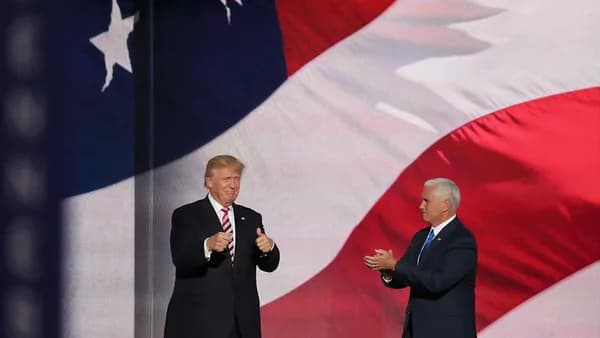
Jerome Powell’s chair at the Federal Reserve stays warm not because he’s untouchable, but because Donald Trump’s legal drama is freezing the nomination process in place. As Trump fights on multiple judicial fronts—from felony convictions to ongoing federal cases—his campaign’s bandwidth to push through key Fed appointments is stretched to the brink. The White House has yet to formally nominate a successor, and the Senate, already a battlefield, won’t touch the issue with a ten-foot pole while the presumptive Republican nominee is in court or distracted by legal strategy.
The result: Powell, whose term as Chair ends in 2026 but whose Board seat could be replaced sooner, enjoys a kind of accidental job security. That continuity is no small advantage in a year where inflation expectations, rate-cut timing, and the Fed’s balance sheet are all under a microscope. While markets digest every dot-plot and press conference, the lack of immediate turnover at the Fed’s top means fewer surprises for investors and less policy whiplash in a volatile election season, according to CryptoBriefing.
How Senate Resistance to Warsh Jeopardizes Federal Reserve Independence
Christopher Warsh’s stalled confirmation is less about his credentials and more about the political trench warfare gripping the Senate. Warsh, a former Fed governor and White House advisor, should be a plausible nominee on paper. But the Senate Banking Committee remains deeply divided, with key Democrats viewing Warsh as too hawkish and Republicans calculating the optics of supporting a Trump-aligned pick while the former president is under legal fire.
The confirmation logjam is political, not procedural. Since the 1970s, the Senate has generally deferred to the president’s Fed picks, rejecting only a handful. Now, every potential nominee is a proxy for bigger partisan fights—abortion, regulation, even crypto policy. This weaponization of the confirmation process undermines the very idea that the Fed should operate above the political fray.
When the world’s reserve currency is at stake, credibility isn’t a luxury; it’s collateral. Any hint that central bank appointments are just another chip in the partisan casino shakes global confidence. This year, with the S&P 500 up 14% through June and Treasury yields whipsawing on every inflation print, even a whisper of Fed instability can spark outsized reactions. Investors remember 2018, when Trump’s public attacks on Powell tanked market trust and contributed to a $5 trillion equity drawdown over the fourth quarter. Politicizing appointments risks rerunning that tape.
The Consequences of Undermining Federal Reserve Autonomy on Market Stability
Tying the Fed’s staffing to the president’s court schedule or the Senate’s mood is a recipe for policy inconsistency. The Fed’s dual mandate—stable prices and maximum employment—relies on a measure of insulation from day-to-day political brawls. When that buffer evaporates, so does predictability.
History offers sobering lessons. Richard Nixon’s pressure on then-Chairman Arthur Burns to goose the economy ahead of the 1972 election sparked an inflationary spiral that haunted the U.S. for a decade. More recently, Turkey’s president sacked multiple central bank heads for resisting rate cuts; the lira lost over 80% of its value against the dollar since 2018, and inflation topped 65% year-on-year in early 2024.
The U.S. isn’t Turkey, but the signal matters. If markets sense that Fed leadership is a political bargaining chip—vulnerable to the whims of whoever controls the Senate or the White House—risk premiums rise. That means higher borrowing costs for businesses, more volatility in equities, and a weaker hand for the dollar globally. In May, the CBOE Volatility Index (VIX) spiked 25% in a single week after Powell’s dovish remarks were promptly contradicted by Fed governors seen as more politically sensitive. A consistent central bank message is already hard enough; political crossfire makes it impossible.
Addressing the Argument That Political Oversight Ensures Accountability
Some will argue that Senate scrutiny is essential, that only democratic oversight prevents the Fed from drifting into technocratic arrogance or regulatory capture. That argument isn’t wrong—central banks need transparency and accountability. But there’s a difference between oversight and hostage-taking.
The Fed is already one of the most heavily audited institutions in Washington, with regular reporting to Congress, public minutes, and open votes. The Senate’s “advice and consent” role is supposed to filter for competence, not enforce political loyalty tests. When every nominee is treated like a Supreme Court justice—grilled for ideology, not expertise—the process guarantees gridlock, not accountability.
Too much politicization erodes the Fed’s ability to act quickly during crisis. In 2008, Ben Bernanke’s swift decision-making stabilized markets. Imagine that same scenario with a leadership vacuum because the Senate blocked every plausible nominee out of partisan spite. Accountability must not come at the price of paralysis.
Why Protecting Federal Reserve Independence Is Crucial for America’s Economic Future
The U.S. economy depends on a central bank that can act decisively, communicate clearly, and adapt independently. Letting confirmation battles or presidential legal woes dictate Fed leadership is shortsighted and dangerous.
Congress should consider statutory reforms to insulate Fed appointments from election-year brinkmanship—extending board terms, staggering appointments, or introducing supermajority thresholds for removal. Clearer red lines on politicized interference would also help: codifying norms that have been eroded in recent cycles.
The stakes are real. The next recession, the next inflation shock, the next financial panic—each will test whether the Fed can steer policy without political handcuffs. Investors, businesses, and ordinary Americans deserve a central bank that serves the economy, not the whims of whichever party holds power or whichever candidate is tied up in court. The time to rebuild that wall of independence is now—before the next crisis exposes just how fragile it has become.
⚠️ Disclaimer: This article is for informational purposes only and does not constitute financial advice. Always do your own research before making investment decisions.
Impact Analysis
- Powell’s continued leadership provides stability for financial markets during a turbulent election year.
- Senate resistance to Warsh highlights growing politicization of Fed appointments and risks to central bank independence.
- Trump’s legal battles are indirectly shaping the pace and direction of U.S. monetary policy leadership.