Why Trump’s Push for Rapid Rate Cuts Challenges Economic Norms
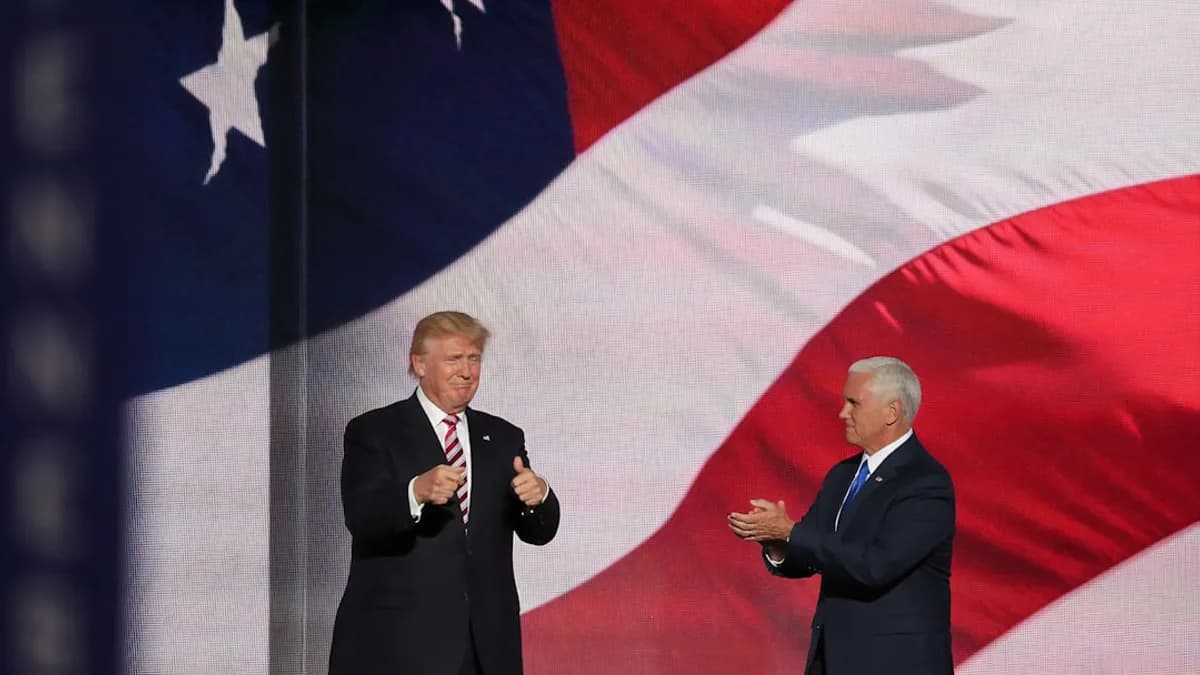
Donald Trump isn’t just calling for lower interest rates—he’s demanding the Federal Reserve act fast, in open defiance of decades-long norms that shield monetary policy from partisan wrangling. If the Fed capitulates, it risks upending the principle of central bank independence that’s been the backbone of U.S. market credibility since the Volcker era. Trump’s call echoes his earlier presidency, but the timing is more provocative: inflation is sticky, the labor market is solid, and the economy isn’t in crisis mode. Rapid cuts now would signal a shift from data-driven policy to politically expedient moves.
The Fed’s independence isn’t just a philosophical stance—it’s a practical one. Markets price U.S. Treasuries and the dollar based on the assumption that rate decisions respond to economic signals, not election timelines. Undermining this trust can spark volatility, drive up risk premiums, and threaten foreign investment. Trump’s pressure, as reported by Yahoo Finance, isn’t just a headline—it’s a stress test for the institutional backbone of American finance. If the Fed starts acting as an extension of the White House, global investors may question the reliability of U.S. monetary policy, a concern that could ripple far beyond Wall Street.
Dissecting the Data: Economic Indicators Behind the Call for Rate Cuts
Trump’s demand comes at a moment when the numbers hardly scream for rescue. Q1 2024 GDP growth clocked in at 1.6%, down from the previous quarter but still positive. Unemployment sits at 3.9%, barely above last year’s lows. Inflation, measured by CPI, is running at 3.3%—above the Fed’s 2% target, but hardly a crisis. This isn’t 2008, when rate cuts were triage for a collapsing system. Nor is it 2020, when COVID triggered unprecedented stimulus.
Bond markets aren’t buying the urgency. After Trump’s comments, the yield on the 10-year Treasury slipped just 0.02%, reflecting skepticism that the Fed will rush to cut. Futures pricing for rate cuts has shifted throughout 2024; as of mid-June, markets expect one or two cuts by year-end, not the rapid-fire slashing Trump wants. The Fed’s dot plot still forecasts rates above 4% into 2025.
Equities initially ticked higher on rate cut speculation, but the rally faded as investors weighed inflation risks. The S&P 500 is up 15% YTD, but volatility indexes remain subdued, suggesting traders don’t anticipate wild policy swings. Mortgage rates hover near 7%, not the 4% levels seen during emergency easing cycles. The data points to a cooling but resilient economy—not one in need of aggressive stimulus. Trump’s call is more about political optics than macro fundamentals.
Diverse Stakeholder Reactions to Trump’s Demand for Faster Rate Cuts
Federal Reserve officials aren’t mincing words. Chair Jerome Powell has repeatedly stressed that policy moves will hinge on economic data, not political noise. Former Vice Chair Richard Clarida warned that “politicizing the Fed could destabilize markets and undermine confidence.” The central bank’s credibility rests on its ability to ignore White House pressure—something Powell’s team is keen to defend.
Wall Street is split. Hedge fund managers eye rate cuts as fuel for asset prices, but fixed-income strategists warn that premature easing could stoke inflation. Bank CEOs see stable rates as crucial for risk management; JPMorgan’s Jamie Dimon cautioned against “overreacting to political demands.” Business leaders in capital-intensive sectors welcome cheaper borrowing, but worry that erratic policy could complicate planning.
Political analysts see Trump’s demand as a calculated move. By blaming the Fed for any economic slowdown, he sets up a scapegoat if growth stumbles before the election. The tactic isn’t new—presidents have long tried to shape economic narratives. But the explicitness and timing raise questions about the durability of norms that keep monetary decisions above partisan fights.
Historical Lessons: Comparing Trump’s Rate Cut Push to Past Presidential Interventions
Trump’s pressure isn’t unprecedented, but history shows it’s risky. Lyndon Johnson famously browbeat Fed Chair William McChesney Martin in 1965, pushing for easier money ahead of his Great Society programs. Nixon went further, leaning on Arthur Burns to cut rates before the 1972 election—fueling the stagflation that haunted the decade. The result: runaway inflation, battered credibility, and a Fed forced to hike rates ruthlessly under Volcker.
Reagan’s team pressured Paul Volcker to ease rates in the early 1980s, but Volcker held firm, cementing the Fed’s reputation for independence. Clinton and Obama kept their distance, rarely commenting publicly on Fed decisions. Trump’s own presidency saw frequent tweets berating Powell, but the Fed resisted, holding rates steady until COVID forced a pivot.
The lesson? Political interference can spark short-term gains but often triggers longer-term pain. When the Fed’s autonomy is compromised, markets react with uncertainty, inflation expectations rise, and global investors look elsewhere. Powell’s current stance echoes Volcker’s—resist the pressure, stick to the data. But Trump’s campaign turns up the heat in a way that could test historical limits.
What Rapid Rate Cuts Could Mean for Businesses and Consumers
If the Fed caves and cuts rates quickly, some sectors would cheer. Borrowing costs for businesses would drop, unlocking capital for expansion. Homebuyers could see mortgage rates fall, boosting real estate activity. Credit card APRs might decline, offering relief to consumers burdened by debt. Stock prices would likely surge in the short term as cheap money flows into risk assets.
But the risks are real. Lower rates could reignite inflation, especially if supply chains remain tight and wage growth persists. Asset bubbles are a threat—look at tech stocks or housing in 2021, when easy money fueled speculative frenzies. Savers, especially retirees, would suffer as yields on deposits and bonds shrink. The dollar could weaken, making imports costlier and complicating trade for U.S. businesses.
The impact isn’t uniform. Small businesses reliant on loans stand to benefit, but fixed-income investors lose out. Young borrowers gain, older savers lose. If inflation jumps, cost-of-living pressures hit lower-income households hardest. Rapid rate cuts would be a blunt tool in an economy that’s still digesting post-pandemic shifts. The Fed’s challenge: stimulus without destabilization.
Predicting the Future: How Trump’s Rate Cut Demands Might Shape Monetary Policy
The Fed faces a dilemma. Ignore Trump’s demands and risk political blowback—or cave and risk credibility. Powell’s public statements suggest the Fed will stick to its mandate, keeping rates steady until inflation clearly cools. But if Trump wins in November and steps up the pressure, the calculus could shift. Some Fed governors might feel compelled to “pre-empt” economic weakness, especially if markets tumble.
Long-term, repeated political interference could erode the Fed’s institutional firewall. Future presidents may see public pressure as fair game, making rate decisions a bargaining chip. The result: a central bank less trusted by investors, more vulnerable to inflation shocks, and less effective at steering the economy.
Markets will watch for signs of Fed wavering. If bond yields rise, equity volatility spikes, or the dollar weakens, it’ll signal lost confidence. The likely scenario: the Fed resists in 2024, but faces a tougher fight in 2025 if Trump returns. Investors should prepare for higher risk premiums, more policy uncertainty, and a central bank forced to defend its autonomy—possibly at the cost of short-term economic gains. The next six months will reveal whether Fed independence is durable or just tradition.
⚠️ Disclaimer: This article is for informational purposes only and does not constitute financial advice. Always do your own research before making investment decisions.
Impact Analysis
- Rapid rate cuts under political pressure threaten the Fed’s independence, risking market credibility.
- Current economic data does not justify urgent cuts, raising concerns about shifting to election-driven policy.
- Undermining central bank trust could lead to market volatility and reduced foreign investment in U.S. assets.