Why Tesla Remains a Compelling Investment Despite Market Volatility
Tesla is still the most consequential auto and energy company in the world—a position that makes it a buy, no matter how choppy the market gets. Forget the headlines about missed delivery targets or CEO antics: Tesla’s dominance in electric vehicles isn’t just intact, it’s expanding. In 2023, Tesla captured more than 50% of the U.S. EV market and delivered 1.8 million vehicles globally, dwarfing rivals like Ford and GM, who are still years behind in scale and software. The company isn’t just selling cars—it’s selling a vision of a future powered by renewables and autonomy. That’s why its market cap hovers above $550 billion even after a bruising year for tech stocks, according to Yahoo Finance.
Tesla’s bets on energy storage, solar, and AI-powered driving are maturing at the exact moment global policy is forcing an industry shift. Growth isn’t limited to California or Berlin: Tesla is pushing into India, Southeast Asia, and Latin America, where its Supercharger network and localized manufacturing will put it miles ahead of slow-moving incumbents. Investors searching for the next Apple or Amazon should look here. The risk isn’t in buying Tesla—it’s in missing the next phase of its expansion.
Tesla’s Financial Performance and Growth Trajectory Support Long-Term Gains
Tesla’s Q1 2024 earnings underwhelmed Wall Street, but zoom out and the trajectory is hard to dispute. Revenue hit $81.5 billion in 2023, up from $53.8 billion in 2021—a 51% jump in two years. Operating margins, while compressed from pandemic highs, remain industry-leading at 9.2%, compared to Toyota’s 7.7% and GM’s 6.8%. The company’s free cash flow, $2.1 billion in 2023, gives it the war chest to weather downturns and outspend rivals on R&D and capacity.
Profitability is only part of the equation. Tesla’s capex strategy is a bet on future dominance. The gigafactories in Texas, Shanghai, and Berlin are not just assembly plants—they’re vertically integrated hubs for battery, powertrain, and software innovation. By controlling the battery supply chain, Tesla has slashed costs per kWh by over 50% since 2017, making it the only major automaker that can profitably sell EVs at scale. That’s why even as EV demand cools in Europe and China, Tesla’s margins and production flexibility will buffer it against cyclical pain.
Analysts like ARK Invest’s Cathie Wood see Tesla’s energy business as the next giant profit engine, projecting it could eclipse auto revenues by 2030. Powerwall and Megapack deployments jumped 125% year-over-year in Q4 2023, locking in recurring revenue streams that most automakers can’t touch. Bottom line: Tesla’s financials aren’t about quarterly beats—they’re about setting up for exponential growth as global electrification accelerates.
Innovative Technologies and Expansion Strategies Bolster Tesla’s Market Dominance
No automaker—or energy company—innovates or executes at Tesla’s speed. The company’s Full Self-Driving (FSD) beta now collects over 1 million miles of real-world driving data per hour, feeding neural nets that are years ahead of what legacy OEMs can deploy. While regulatory hurdles remain, Tesla’s AI stack is unique: it owns the data, the chips (Dojo supercomputer), and the in-house software. Even a modest advance in FSD could unlock billions in high-margin software revenue, making Tesla less like Ford and more like Apple.
Tesla Energy is finally hitting its stride. Megapack projects for utilities and Powerwall adoption in the residential market are surging. In 2023, Tesla deployed 14.7 GWh of energy storage—more than the next three competitors combined. The solar roof hasn’t replaced asphalt shingles (yet), but the company’s ability to bundle solar, storage, and EV charging makes it the only player offering a true end-to-end clean energy solution.
Expansion isn’t just geographic. Tesla Insurance is quietly rolling out in more U.S. states, using real-time driving data to underwrite policies and undercut traditional insurers by up to 30%. The Supercharger network—now open to Ford, GM, and Rivian EVs—cements Tesla’s role as the default fast-charging standard in North America. Every Supercharger is a tollbooth on the electrification highway, generating recurring revenue and data.
Addressing Risks: Why Concerns About Tesla’s Valuation and Competition Are Overstated
Skeptics love to harp on Tesla’s valuation. At 70x forward earnings, the stock isn’t cheap. But price alone isn’t a thesis—growth and margin expansion are. Bears point to BYD’s rise in China and the flood of new EV models from legacy brands. The reality: most competitors are bleeding cash on EVs, lack software DNA, and rely on third-party supply chains. BYD is formidable in China, but it lacks Tesla’s global brand and Western regulatory access.
Competition drives innovation, but Tesla’s first-mover advantage is durable. Brand loyalty remains off the charts: Tesla’s retention rate is over 80%, the highest in the industry. The company’s pace of innovation and vertical integration mean it can cut prices and still make money, while rivals are stuck with margin-eroding incentives. Regulatory credits, once a crutch, are now a rounding error in Tesla’s bottom line.
The counterargument: regulatory risk, especially around FSD safety and CEO distractions, could spook investors. But the sheer scale and optionality of Tesla’s business—autos, energy, software—mean that even if one bet falters, others will pick up the slack. The company has weathered bigger storms.
Why Investors Should Act Now to Capitalize on Tesla’s Future Growth Potential
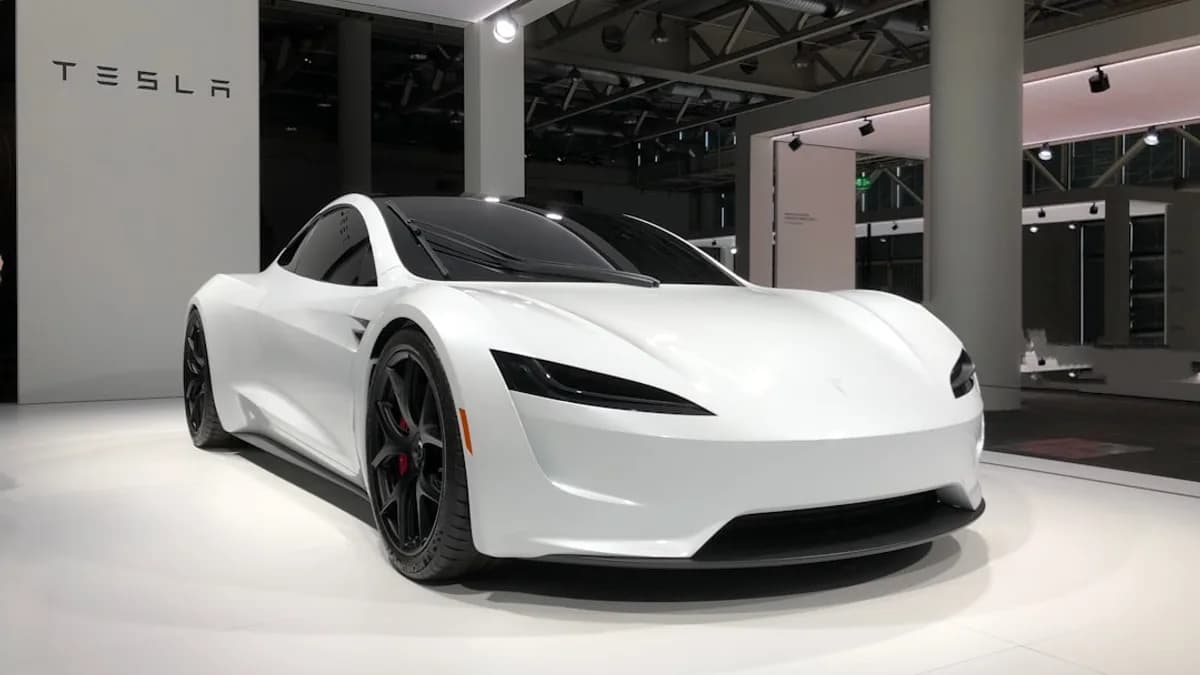
Tesla is the rare stock that offers both short-term upside from new product cycles (Cybertruck, next-gen Roadster) and long-term optionality in AI, energy, and insurance. The energy transition isn’t waiting for market sentiment to calm down. Every quarter Tesla ships more batteries, scales FSD, and inks new Supercharger deals, its moat widens.
Waiting for a “better entry” is a bet against innovation and scale. Investors who ignored Amazon’s high valuation in 2010 or Apple’s in 2008 missed generational wealth creation. The smartest move now is to buy Tesla on dips, keep a long horizon, and let the compounding work. The energy and transportation revolutions will have a default winner—Tesla is still outpacing the field.
⚠️ Disclaimer: This article is for informational purposes only and does not constitute financial advice. Always do your own research before making investment decisions.
The Bottom Line
- Tesla’s dominance in the EV market positions it as a leader in the automotive industry’s future.
- Strong financial performance and industry-leading margins support Tesla’s long-term growth potential.
- Global expansion and investments in energy and autonomy make Tesla a compelling choice for forward-looking investors.