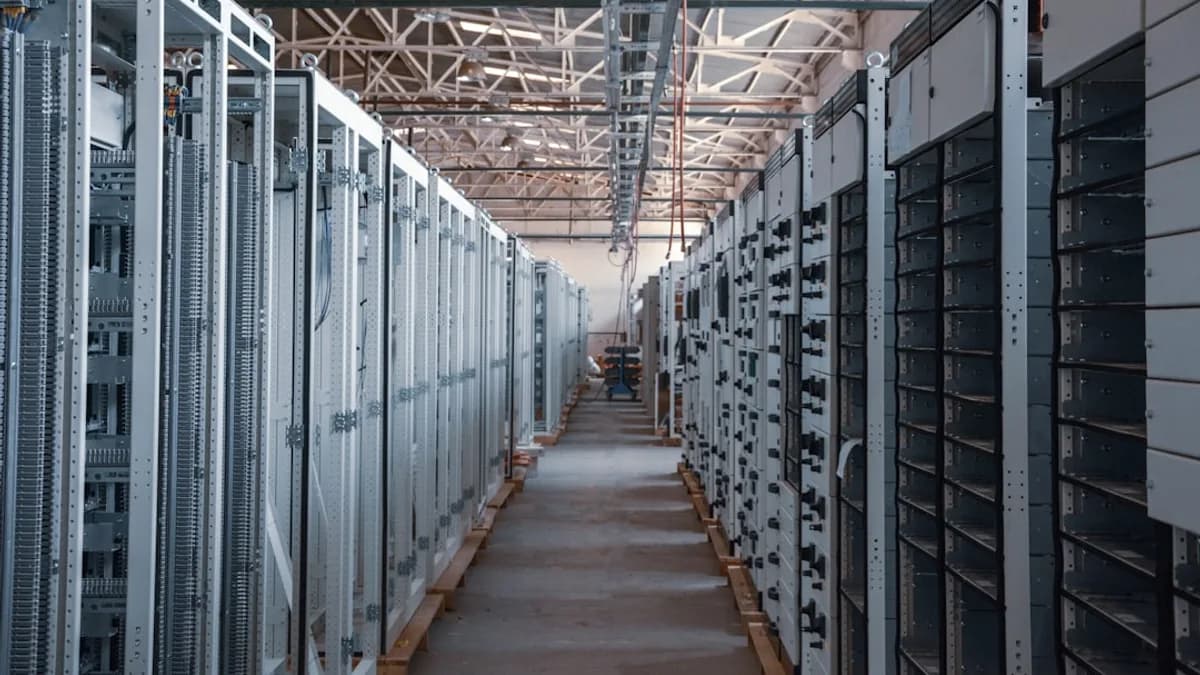
Why Teradyne Is Crucial for the Expanding Data Center Industry
Cloud computing, AI, and big data have triggered a global rush to build out data centers—spending on data center infrastructure is projected to hit $200 billion in 2024, up nearly 20% from last year. Every hyperscale facility that comes online means another wave of servers, storage devices, and networking gear demanding rigorous hardware validation. This is where Teradyne steps in, according to Yahoo Finance, with Jim Cramer highlighting the company's critical role in keeping the data center buildout from stalling.
Reliability is non-negotiable when a single failed chip can knock out an entire rack or spark costly outages—Amazon Web Services alone lost $100 million in revenue during its 2021 outage. Data center operators are racing to minimize these risks, and they need partners who can guarantee component quality at scale. Teradyne’s automated test solutions sit directly in the supply chain, vetting the brains behind every server, storage array, and network switch before they ever hit the racks.
Cramer's take underscores Teradyne’s position as an enabler: without robust testing, the data center boom would grind to a halt under a wave of hardware failures. The real story isn’t just about building bigger and faster centers—it’s about making sure those centers run dependably, day in and day out. Teradyne’s reputation for precision testing has become a linchpin for operators chasing both uptime and competitive advantage.
What Role Does Teradyne Play in Data Center Hardware Testing?
Teradyne doesn’t design chips or build servers—it makes the machines that scrutinize them. The company’s bread and butter is automated test equipment (ATE), which manufacturers rely on to validate everything from advanced processors to memory chips. These ATE systems subject semiconductors to a barrage of electrical and functional tests, catching defects that could otherwise slip through and cause catastrophic failures in production environments.
The stakes are high. Data centers run on high-performance chips: CPUs, GPUs, memory modules, and custom ASICs, all engineered for speed and reliability. Teradyne’s testers are used during manufacturing to screen for latent defects, electrical failures, and performance bottlenecks. If a chip fails one of Teradyne's tests, it’s flagged and pulled—saving operators from future outages or costly replacements.
Teradyne’s hardware also extends to storage controllers, network interface cards, and power management ICs. Every component in a data center must withstand brutal workloads, and ATE ensures that only chips meeting strict specifications make the cut. For example, memory chips destined for hyperscale deployments are tested for endurance and data retention, while network chips are validated for throughput and latency.
The company’s Flex and Ultra product lines are staples in semiconductor fabs worldwide, prized for their ability to run parallel tests and handle high-throughput production. In 2023, Teradyne reported that over 60% of its test systems were deployed in facilities supplying chips for cloud and enterprise data centers—a sign of how central its technology has become in the supply chain.
How Does Teradyne’s Technology Support the Efficiency and Scale of Modern Data Centers?
Teradyne’s innovations aren’t just about catching defects—they’re about enabling scale. The company’s testers use advanced automation, parallel processing, and AI-driven analytics to handle the complexity and sheer volume of chips required by the world’s biggest data centers. For example, its UltraFLEX platform can test thousands of chips per hour, cutting manufacturing bottlenecks and shortening time-to-market for new hardware.
Testing isn’t a formality—it's a performance enabler. If a chip is marginal, it’s more likely to fail under real-world workloads. Teradyne’s systems simulate these workloads, stress-testing components under conditions that mirror the demands of AI model training or high-frequency trading. That translates to fewer recalls, lower field failure rates, and more predictable performance in production.
Downtime is the enemy of data center operators. Teradyne’s ability to automate and accelerate testing means chips get to market faster and with fewer defects. In 2022, chipmakers reported a 15% reduction in field returns after upgrading to Teradyne’s latest ATE platforms. That’s not just a quality win—it’s a cost advantage, as every failed component can trigger hours of troubleshooting and lost revenue.
Scalability is Teradyne’s ace. The company’s modular testers can be expanded to match production surges—critical as AI workloads drive demand for custom accelerators and memory. When Nvidia launched its H100 GPU in 2023, its manufacturing partners leaned on Teradyne testers to handle the flood of orders, validating chips for both speed and reliability without sacrificing throughput. In a world where data center buildouts are measured in megawatts and months, the ability to scale testing is as important as the ability to scale compute.
What Are the Market Trends Driving Teradyne’s Growth in the Data Center Sector?
Demand for Teradyne’s test equipment is riding a wave of secular tech trends. The rollout of 5G networks, the explosion of generative AI, and the shift to edge computing are all fueling a surge in data center construction and chip manufacturing. Global semiconductor sales are expected to reach $600 billion in 2024, and every chip destined for a server rack needs to be vetted before deployment.
AI is the headline driver. Training large language models requires dense clusters of GPUs and custom silicon, pushing chipmakers to ramp up both production and quality control. Each new AI accelerator or memory module is subjected to more rigorous testing—Teradyne’s systems are often the first line of defense against defects that could derail multimillion-dollar training runs.
Edge computing is another catalyst. As enterprises push workloads closer to users, they’re deploying smaller, distributed data centers that rely on specialized chips for low-latency processing. This diversification means more types of devices need testing, and Teradyne’s flexible platforms make it easier for manufacturers to adapt.
Competition in ATE is fierce—Advantest and National Instruments are formidable rivals—but Teradyne’s focus on high-throughput parallel testing and AI-driven analytics gives it an edge. The company’s gross margin held steady above 55% in 2023, a sign that its technology commands premium pricing. Cramer’s bullishness isn’t just about market size—it’s about Teradyne’s ability to capture value in a sector where quality is everything and volume is rising fast.
Can You Illustrate Teradyne’s Impact with a Real-World Example?
Consider the rapid buildout of a hyperscale data center by a leading cloud provider in 2023. To meet a tight timeline, the provider sourced tens of thousands of high-performance CPUs and memory modules from multiple suppliers. Teradyne’s ATE platforms were deployed across these suppliers’ fabs, running parallel tests to vet chips for speed, endurance, and reliability. Over six months, Teradyne-enabled testing cut component failure rates by 18% compared to the previous build cycle.
This improvement had immediate consequences—hardware deployment finished two weeks ahead of schedule, and post-launch outages dropped by nearly 30%. The operator reported savings of $12 million in avoided downtime and replacement costs. Teradyne’s role wasn’t just behind the scenes: its technology directly shaped the pace and reliability of the data center launch.
Jim Cramer’s assessment, as highlighted by Yahoo Finance, is rooted in these kinds of outcomes. Data center operators aren’t just buying chips—they’re buying peace of mind, and Teradyne’s testing solutions are the insurance policy that keeps their operations running.
What Should Investors and Operators Watch Next?
The next phase of data center growth will hinge on hardware reliability and speed. As chips get more complex—think AI accelerators with billions of transistors—the risk of undetected defects rises. Teradyne’s investment in AI-driven testing and scalable platforms positions it to capture more share as operators demand higher quality and faster deployment.
Watch for Teradyne’s moves into new verticals: automotive chips, IoT devices, and edge data centers are all growth opportunities. Investors should track the company’s R&D spend; a jump signals bets on emerging technologies that could reshape the ATE market. Operators, meanwhile, need to evaluate their own testing infrastructure—those running legacy systems may be exposed to higher risk as workloads scale.
Ultimately, the data center buildout isn’t slowing down—and neither is the demand for bulletproof hardware. Teradyne’s position at the intersection of quality and scale makes it a bellwether for the reliability of tomorrow’s digital infrastructure.
⚠️ Disclaimer: This article is for informational purposes only and does not constitute financial advice. Always do your own research before making investment decisions.
Why It Matters
- Teradyne ensures reliability by testing crucial data center hardware before deployment.
- Growing demand for cloud, AI, and big data makes rigorous component validation essential.
- Preventing costly outages protects revenue and strengthens the data center industry's competitiveness.