Introduction: Market Reaction to Geopolitical Developments
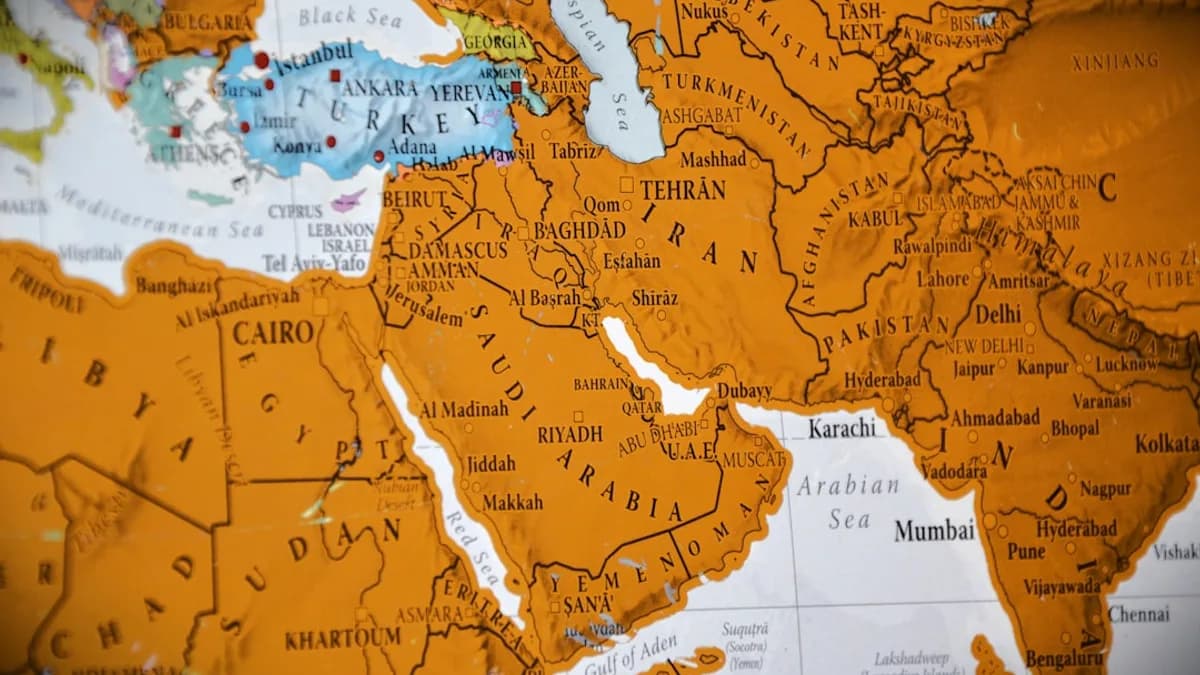
Global markets remain highly sensitive to geopolitical developments, particularly those emanating from the Middle East. The latest catalyst came from former President Donald Trump, who stated that the Iran war "should be ending pretty soon," injecting a dose of optimism into the financial markets [Source: Source]. In the immediate aftermath, U.S. stock futures ticked higher, with early gains seen across major indices such as the S&P 500, Dow Jones Industrial Average, and Nasdaq Composite. This reaction highlights the market’s responsiveness to shifts in geopolitical narratives and underscores the interplay between international tensions and investor sentiment.
Traders and analysts are weighing the implications of Trump’s comments against a backdrop of strong market momentum, persistent record highs, and ongoing concerns about global stability. As investors digest these developments, the focus remains on balancing short-term reactions with longer-term economic fundamentals and strategic positioning.
Trump’s Statement and Its Implications for the Iran Conflict
Former President Trump’s recent assertion that the Iran conflict “should be ending pretty soon” has reverberated across financial markets and diplomatic circles alike [Source: Source]. While Trump is no longer in office, his statements often capture significant media attention and can influence market psychology, especially when addressing issues as consequential as Middle Eastern stability.
Trump’s comment leaves room for interpretation. Some market participants view it as a sign of behind-the-scenes diplomatic progress or de-escalation, potentially reducing the risk premium associated with the region. Others are more skeptical, noting that without concrete evidence of a ceasefire or formal negotiation, such pronouncements may be more rhetorical than substantive.
If the Iran conflict does indeed move toward resolution, several positive scenarios could unfold. A reduction in hostilities would likely ease fears over energy supply disruptions, lower the geopolitical risk premium embedded in global markets, and bolster investor confidence in emerging markets within the region. Conversely, if the statement proves premature or unfounded, markets may be vulnerable to renewed volatility should tensions flare up again.
For now, Trump’s statement appears to have provided a psychological lift for investors searching for clarity amid a landscape defined by both economic opportunity and geopolitical risk. The durability and credibility of this optimism, however, will depend on subsequent developments and the extent to which diplomatic efforts can deliver tangible results [Source: Source].
Stock Market Response: Mixed Trading and Record Highs
The initial response to the latest geopolitical news was a modest uptick in U.S. stock futures, but trading has since evolved into a more nuanced pattern. The S&P 500, Dow, and Nasdaq futures all opened higher, reflecting relief over the prospect of a de-escalating Iran conflict [Source: Source]. However, as the trading day progressed, these indices exhibited mixed movements, with some sectors outperforming while others lagged.
This pattern of mixed trading comes against a backdrop of Wall Street’s remarkable resilience. U.S. equities have repeatedly set new record highs in recent months, powered by robust corporate earnings, steady economic growth, and an investor base willing to look past short-term uncertainties [Source: AP News]. The market’s ability to absorb geopolitical shocks and resume upward momentum has been a defining feature of the current cycle.
Recent analyses echo this theme of cautious optimism. Yardeni QuickTakes described the market’s mood as viewing “the champagne glass… more than half full,” emphasizing prevailing optimism despite periodic global stressors [Source: Yardeni QuickTakes]. Meanwhile, Barron’s highlighted that the U.S. economy has passed “another ‘stress test,’” with the equity markets poised to add to their record highs. This resilience is attributed to solid fundamentals, strong liquidity, and an economic environment that continues to support risk-taking [Source: Barron's].
Yet, the mixed trading observed following Trump’s comments also reflects ongoing investor caution. While hopes for an Iran conflict resolution have buoyed sentiment, market participants remain attuned to the potential for sudden reversals. Defensive positioning in some sectors, alongside continued buying in growth-oriented stocks, indicates a marketplace still parsing the balance between risk and reward.
Oil Market Dynamics Following Geopolitical News
The energy sector, particularly oil, is acutely sensitive to developments in the Middle East. Trump’s statement about a potential end to the Iran conflict led to a notable decline in oil prices, as traders reassessed the likelihood of supply disruptions. Brent crude and West Texas Intermediate (WTI) both edged lower, reflecting reduced concerns about an escalation that could threaten key oil transit routes or production facilities [Source: Source].
Historically, geopolitical tensions involving Iran—one of the world’s largest oil producers—have fueled volatility in global energy markets. Every hint of conflict or de-escalation can prompt swift reactions in oil prices, with ripple effects across industries ranging from transportation to manufacturing.
For investors and companies sensitive to energy costs, such volatility underscores the importance of risk management and diversification. While a diplomatic breakthrough in Iran could stabilize oil prices and benefit energy-intensive sectors, any reversal or renewed conflict could quickly reverse those gains. As such, the oil market remains a key barometer for the broader economic impact of geopolitical news.
Broader Economic Context and Investor Sentiment
Despite persistent geopolitical risks, the U.S. economy has demonstrated remarkable resilience, which in turn has supported sustained market optimism. Economic indicators such as robust job growth, solid consumer spending, and healthy corporate earnings have provided a sturdy foundation for equities [Source: Barron's]. This economic strength has enabled investors to weather periodic shocks—ranging from trade disputes to military conflicts—without derailing the market’s upward trajectory.
Stress tests and other risk assessments play a crucial role in shaping investor confidence. Recent analyses cited by Barron’s suggest that the U.S. economy has “passed another ‘stress test,’” affirming its ability to withstand external shocks [Source: Barron's]. These positive assessments, combined with ongoing central bank support and ample liquidity, have fostered a risk-on environment even as headlines around Iran and other hotspots command attention.
Nevertheless, risks remain. A sudden reversal in the Iran situation, unexpected policy shifts, or a deterioration in economic fundamentals could quickly alter the investment landscape. As a result, many analysts are urging investors to maintain a balanced approach, emphasizing diversification and vigilance in the face of evolving global dynamics.
Opportunities abound for those able to navigate these complexities. Sectors with lower sensitivity to geopolitical risks, or those poised to benefit from stable energy prices, may offer attractive risk-adjusted returns. At the same time, ongoing monitoring of economic indicators and diplomatic developments will remain essential for prudent portfolio management.
Conclusion: Navigating Markets Amid Geopolitical Uncertainty
The market’s reaction to former President Trump’s comments on the Iran conflict underscores the delicate interplay between geopolitical developments and investor sentiment. While hopes for an imminent resolution have provided a lift to stock futures and eased oil prices, the path forward remains uncertain [Source: Source].
As recent trading patterns demonstrate, markets are capable of absorbing global shocks and resuming their upward march—provided the underlying economic fundamentals remain sound. For investors, this environment calls for a strategic approach that balances optimism with caution, incorporating both macroeconomic indicators and the latest geopolitical news into decision-making.
Ultimately, navigating markets amid uncertainty requires a steady focus on fundamentals, a diversified portfolio, and a willingness to adapt as new information emerges. As the situation in Iran evolves, staying informed and agile will be key to capitalizing on opportunities while effectively managing risk.
⚠️ Disclaimer: This article is for informational purposes only and does not constitute financial advice. Always do your own research before making investment decisions.