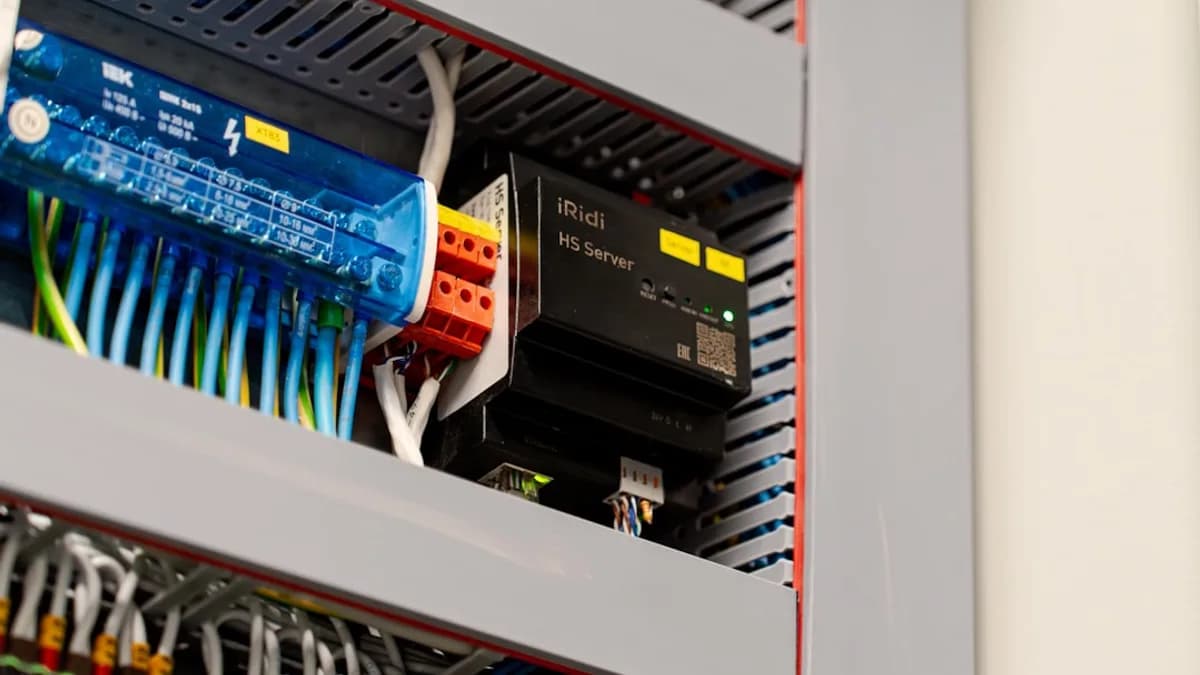
Why Data Center Expansion Could Be a Game-Changer for Littelfuse’s Growth Trajectory
Hyperscale data center construction isn’t just reshaping cloud infrastructure—it’s quietly redrawing the supply chain map for component makers. Littelfuse, best known for circuit protection and power management devices, stands directly in the path of this expansion. Global data center spending is projected to top $200 billion by 2024, with a CAGR near 9% for the rest of the decade, fueled by AI workload deployment and the surge in edge computing. That spells outsized demand for everything from high-capacity fuses to power semiconductors—core Littelfuse products.
The company’s portfolio reads like a checklist for modern data center needs. Its high-voltage fuses protect server racks and critical cooling systems, while its semiconductor offerings help manage power distribution at scale. Littelfuse’s focus on reliability—think arc flash mitigation and fast-acting protection—aligns perfectly with hyperscale operators who view downtime as existential risk. As hyperscalers and colocation providers race to build out new facilities, even incremental improvements in component reliability or efficiency can translate into millions in avoided outages or energy costs.
Strategically, Littelfuse isn’t chasing trend hype. It’s targeting durable infrastructure growth. Data center demand fits the company’s long-term playbook: stable, repeat business, with room for margin expansion as customers upgrade to more robust protection. According to Yahoo Finance, management sees data centers as a “growth vector” that complements its historical strengths in industrial and automotive. The real test is whether Littelfuse can convert this tailwind into sustained revenue—and avoid being boxed out by bigger or more specialized rivals.
Quantifying Littelfuse’s Exposure to Data Center Market Opportunities Through Financial Metrics
Numbers paint a more nuanced picture. Littelfuse posted $2.1 billion in revenue for 2023, with its electronics segment accounting for roughly 46%—about $966 million. Industrial applications, which include data center infrastructure, contributed around 29% ($609 million) of total sales. While the company doesn’t break out data center-specific figures, analysts estimate that at least 15% of electronics and industrial segment revenue—over $230 million—ties directly to data center projects, from power semiconductors to circuit protection.
Growth rates here outpace the rest of Littelfuse’s portfolio. Electronics division sales jumped 10% year-over-year, compared to 6% for automotive. Industrial growth, driven partly by data center upgrades, clocked in at 8%. Compare that to industry benchmarks: companies like Eaton and Schneider Electric, both major suppliers to data centers, reported segment growth in the 7-11% range for 2023. Littelfuse’s margins are slightly higher, with gross margin at 38% versus 36% for Eaton’s electrical segment—a sign that its products command pricing power, likely due to reliability and technical differentiation.
Capital expenditure trends add another layer. Littelfuse boosted R&D spending by 14% last year, channeling funds into high-performance semiconductors and protection devices for critical infrastructure. This isn’t scattershot innovation—it’s targeted at the highest-growth vertical. If data center demand continues its current trajectory, Littelfuse could see its data center-related revenue rise to 20% of total sales by 2026, eclipsing legacy segments and setting up a new growth engine.
Diverse Stakeholder Perspectives on Littelfuse’s Position in the Data Center Ecosystem
Industry analysts see Littelfuse as a “stealth beneficiary” of data center buildouts, but warn of competitive crosswinds. Morningstar’s coverage notes that while Littelfuse enjoys brand trust for reliability, bigger players like ABB and Siemens are ramping up their own data center-specific offerings, potentially crowding the field. Littelfuse’s edge lies in technical specialization—its fast-acting fuses and custom semiconductors address pain points that generic components can’t, especially in high-density server environments.
Management is bullish but measured. CEO Deepak Nayar stated in recent earnings calls that “mission-critical infrastructure” is the company’s priority, with data centers called out as “strategic customers.” Littelfuse is pursuing direct partnerships with hyperscale operators, seeking to embed its solutions early in the design phase. This is a step up from simply being a catalog supplier—it’s an attempt to lock in long-term contracts and influence specifications, which can drive higher margins and recurring revenue.
Customers and partners offer a more granular perspective. Feedback from major integrators, including Schneider Electric and Vertiv, points to Littelfuse’s “consistent quality” and “responsive engineering support” as differentiators. In an industry where downtime costs can run $7,000 per minute, small reliability gains matter. However, some customers note the company’s limited product breadth compared to conglomerates, suggesting Littelfuse may need to expand its range to fully capture the data center wave. The consensus: Littelfuse is trusted, but must scale up to match the opportunity.
Tracing Littelfuse’s Historical Growth Patterns Amid Shifting Technology Demands
Littelfuse has reinvented itself before. In the 2000s, it was primarily a supplier to automotive and consumer electronics, riding the boom in circuit protection as devices proliferated. The pivot to industrial and electronics came in the mid-2010s, driven by acquisitions (like IXYS for power semiconductors) and strategic investments in R&D. Revenue doubled from $800 million in 2010 to $1.6 billion in 2018, fueled by diversification and entry into higher-margin markets.
Past growth drivers—automotive electrification, consumer device miniaturization—were cyclic and exposed to macro shocks. Data center demand, in contrast, offers more resilient, multi-year growth. When cloud adoption accelerated in 2020, Littelfuse’s industrial and electronics segments outperformed, cushioning the impact from automotive slowdowns. The company’s ability to pivot toward emerging trends, without abandoning legacy strengths, is its hallmark. The question is whether this playbook will scale amid the larger, more complex demands of hyperscale infrastructure.
What Littelfuse’s Data Center Focus Means for Investors and Industry Competitors
Investors are recalibrating expectations. Littelfuse’s stock trades at a forward P/E of 21, slightly above the industrial average but below peers with heavier data center exposure, like Eaton (P/E 24) or Schneider Electric (P/E 22). If data center-driven growth materializes, Littelfuse could close the valuation gap, especially given its superior margins and capital discipline. But the market is wary—data center construction is cyclical, and supply chain bottlenecks (think power semiconductors) could throttle growth.
Competitive pressures are intensifying. ABB, Siemens, and even upstarts like Vicor are chasing the same hyperscale dollars, each touting differentiated power solutions. Littelfuse’s strength is its focus: it doesn’t try to do everything, instead zeroing in on protection and power management for high-density applications. That said, scale matters. If it can’t match breadth or price with larger rivals, Littelfuse risks being relegated to niche status.
Supply chain partnerships could tip the balance. Littelfuse’s history of working closely with integrators and OEMs positions it well for joint innovation—developing custom protection solutions tailored to specific data center architectures. This approach, if scaled, could secure flagship contracts and deepen moat against generic component suppliers. Investors should watch for signs of partnership-driven growth, not just headline revenue numbers.
Forecasting Littelfuse’s Growth Potential Amid Accelerating Data Center Demand
If global data center construction sustains its pace, Littelfuse could see annual revenue from the sector climb to $400 million by 2026—a near doubling from current estimates. Market share could expand from 3% to 5% in the data center component supply market, translating to incremental margin gains and higher recurring revenue. But risks lurk. Semiconductor shortages, particularly for high-voltage applications, could crimp supply. Rising input costs may squeeze margins if Littelfuse can’t pass them on.
The wildcard is technological upheaval. As AI workloads push power densities higher, data centers will require more advanced protection and thermal management. Littelfuse’s R&D bets on next-gen semiconductors and fast-acting fuses are well-timed, but execution is key. Failure to innovate or scale production could see the company outpaced by rivals with deeper pockets or broader portfolios.
Strategically, Littelfuse should double down on partnership-driven design wins—collaborating with hyperscalers and integrators to embed its products early. Expanding its product breadth, either through acquisition or targeted R&D, will be essential to capture larger contracts. Investors betting on Littelfuse aren’t just buying a circuit protection company—they’re wagering on its ability to ride the data center supercycle, convert technical trust into market share, and outmaneuver bigger, slower rivals. If management delivers, expect the stock to break out of its industrial cohort and command a premium valuation by 2026. If not, Littelfuse risks being just another supplier in the shadow of giants.
⚠️ Disclaimer: This article is for informational purposes only and does not constitute financial advice. Always do your own research before making investment decisions.
The Bottom Line
- Littelfuse stands to benefit from the booming data center market, projected to reach $200 billion in spending by 2024.
- Its circuit protection and power management products are essential for reliability in hyperscale and edge computing facilities.
- If Littelfuse can leverage this demand, it could see sustained revenue growth and margin expansion amid rising competition.