Updated: This article has been refreshed to remove stale May/June price references, clarify that a move toward $90 oil is a risk scenario rather than a certainty, and add current context on the Strait of Hormuz, OPEC+ capacity, inflation, and market behavior during recent Iran-related escalations.
Iran’s Conflict Puts Global Oil Supply Chains on Edge
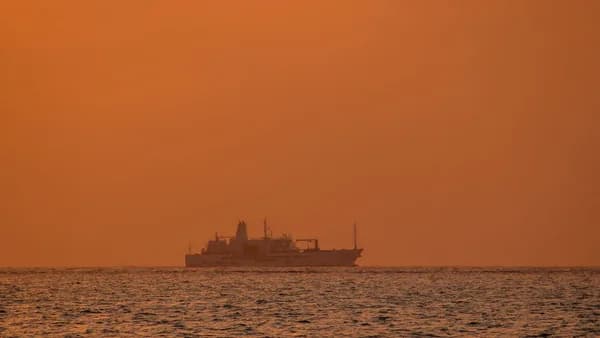
A serious military incident in or near the Strait of Hormuz could still jolt global energy markets within hours. The waterway remains one of the world’s most important oil chokepoints, carrying roughly 20 million barrels per day of crude, condensate, and refined products — about one-fifth of global petroleum liquids consumption and close to a third of seaborne oil trade. That is why every escalation involving Iran quickly becomes an oil-market story.
Iran is not a marginal producer. Despite sanctions, it has continued pumping more than 3 million barrels per day of crude and remains one of the world’s largest holders of proven oil reserves. Its location gives it strategic leverage: tankers moving from Saudi Arabia, Iraq, Kuwait, the UAE, Qatar, and Iran itself often pass through Hormuz before reaching Asian and European buyers.
The immediate market fear is not simply that Iran’s own barrels disappear. The bigger risk is disruption to regional shipping, insurance, ports, or production infrastructure. Missile launches, drone attacks, naval harassment, or threats to close Hormuz can all raise tanker-insurance premiums and force shippers to slow, reroute, or delay cargoes. Even without a physical blockade, higher risk costs can tighten supply and lift prices.
History supports that caution. The 1979 Iranian Revolution, the Iran-Iraq War, the 1990 Gulf War, and the 2019 attacks on Saudi oil facilities all showed how quickly Middle East security shocks can feed into oil prices, inflation expectations, and central-bank policy.
Quantifying the Surge: Oil Price Data, Forecasts, and Speculation
The earlier call for Brent crude to push toward $90 by the end of June should now be read as a conflict-risk scenario, not a guaranteed base case. Oil markets have repeatedly shown the same pattern during Iran-related escalations: prices jump on headlines, volatility rises, and then the move fades if energy infrastructure and shipping lanes remain open.
That does not make the risk insignificant. Brent can move several dollars per barrel in a single session when traders believe Hormuz traffic, Gulf production, or export terminals could be threatened. A direct hit on tankers or major infrastructure would likely trigger a much sharper repricing than rhetoric alone.
There is precedent. After the U.S. strike that killed Iranian General Qasem Soleimani in January 2020, Brent rose quickly before retreating as both sides avoided a broader war. In September 2019, attacks on Saudi Arabia’s Abqaiq and Khurais facilities temporarily knocked out about 5% of global supply and caused one of the largest one-day oil price spikes in decades.
Today’s market is shaped by three competing forces. First, geopolitical risk can add a premium to crude. Second, non-OPEC supply — especially from the U.S., Brazil, Canada, and Guyana — provides more cushioning than in past oil shocks. Third, OPEC+ policy remains a swing factor: spare capacity exists, but it is concentrated in a few Gulf producers, and governments may be reluctant to deploy it unless a disruption is severe.
Speculation amplifies every headline. Hedge funds, commodity desks, and algorithmic traders can rapidly add long positions when conflict risk rises. But if diplomacy holds and cargoes keep moving, those same positions can unwind just as quickly.
Stakeholder Perspectives: Producers, Consumers, and Analysts Clash
Oil-producing nations face a familiar dilemma. Higher prices boost revenues, but a sustained spike risks demand destruction, political pressure from consuming nations, and renewed inflation. Saudi Arabia and other Gulf producers generally prefer stability: prices high enough to support fiscal plans, but not so high that they damage global growth or accelerate the shift away from oil.
Iran’s position is more complicated. Sanctions limit its formal access to global markets, but higher prices can increase the value of the barrels it does sell, especially to Asian buyers. At the same time, open disruption of Hormuz would risk military retaliation and could damage Iran’s own export routes.
Major consumers — the U.S., China, India, Japan, South Korea, and the EU — have less tolerance for a prolonged oil shock. China and India are especially exposed as large importers, while Europe remains sensitive after the Russia-Ukraine energy crisis. The U.S. is a major producer, but consumers still feel higher crude prices through gasoline, diesel, aviation fuel, and freight costs.
The Strategic Petroleum Reserve can help smooth short-term shocks, but it is not a permanent solution to a large supply disruption. After major releases in 2022, the U.S. began refilling the SPR gradually, leaving policymakers with less flexibility than before the pandemic and Russia-Ukraine price shocks.
Analysts remain divided. A contained conflict usually supports a moderate risk premium. A direct threat to Hormuz, Saudi production, Iraqi exports, or UAE ports could push Brent toward or above $90. A prolonged regional war could put $100 oil back into serious discussion.
Historical Lessons: Oil Price Shocks and Their Aftermath
Oil markets usually react fastest when three conditions overlap: physical disruption, limited spare capacity, and strong demand. The most severe historical shocks had all three.
The Iranian Revolution cut exports sharply and helped drive the late-1970s oil shock. The Iran-Iraq War then kept Gulf energy security under pressure for years. The 1990 Gulf War caused a rapid price surge after Iraq invaded Kuwait, though coordinated strategic releases and increased production elsewhere eventually stabilized markets.
More recent shocks have been shorter-lived. The 2019 Saudi attacks were severe, but repairs happened faster than expected and prices retreated. The 2020 Soleimani crisis lifted crude briefly, then faded. The lesson is clear: oil prices respond violently to the possibility of disruption, but sustained rallies usually require actual supply losses or credible evidence that shipping routes will remain impaired.
That distinction matters now. Markets can price in a Hormuz risk premium quickly, but they will not necessarily hold $90-plus oil unless cargo flows are delayed, insurance costs remain elevated, or OPEC+ capacity proves insufficient.
Inflation and Central Bank Policy: A Tightrope Walk
A sustained oil-price rise feeds directly into headline inflation and indirectly into food, freight, manufacturing, and airline costs. A common rule of thumb is that a $10 increase in crude can add roughly 0.2 to 0.4 percentage points to inflation, depending on exchange rates, taxes, fuel subsidies, and how long the move lasts.
That creates a policy problem. Central banks can look through temporary energy spikes, but they cannot ignore a persistent rise that changes consumer expectations or wage demands. For the Federal Reserve, European Central Bank, and emerging-market central banks, oil-driven inflation complicates any plan to cut rates or keep policy loose.
Emerging markets are often hit hardest. Importers such as India and Turkey face higher current-account pressure when oil rises. Governments with fuel subsidies must either absorb the fiscal cost or pass increases to consumers. Currency weakness can magnify the shock by making dollar-priced oil even more expensive.
The worst-case macro outcome remains stagflation: weaker growth combined with sticky inflation. That is not the base case, but a prolonged Gulf disruption would make it more plausible.
Businesses and Consumers: Rising Costs, Real-World Strain
For businesses, crude prices are not an abstract benchmark. Airlines feel higher jet-fuel costs. Trucking firms and shipping companies face higher diesel bills. Chemical producers, manufacturers, retailers, and farmers all absorb energy costs through production and logistics.
A move toward $90 Brent would not hit every consumer equally. U.S. gasoline prices depend heavily on refinery margins, taxes, inventories, and seasonal demand. Europe typically sees a smaller percentage swing at the pump because taxes make up a larger share of fuel prices, but households and firms still feel higher transport and heating costs. In Asia, governments may intervene through subsidies or price controls, shifting the burden to public finances.
Businesses generally respond in three ways: hedge fuel exposure, pass costs to customers, or reduce activity. Airlines may increase surcharges, logistics firms may adjust contracts, and retailers may raise prices selectively. Consumers often respond by cutting discretionary spending, delaying travel, or switching to cheaper alternatives.
The longer oil stays elevated, the more these second-round effects matter.
Scenarios for Oil Markets and Geopolitical Stability
Three paths stand out.
Best case: Diplomacy contains the conflict, shipping remains uninterrupted, and oil’s risk premium fades. Brent stabilizes below the high-stress range, and inflation concerns ease.
Worst case: Direct attacks hit tankers, export terminals, refineries, or production infrastructure. Hormuz traffic slows materially or insurers pull coverage. Brent breaks above $90 and could test $100 if the disruption is prolonged.
Most likely: Markets face recurring headline risk, but no sustained closure of major routes. Prices remain volatile, with temporary spikes on escalation and pullbacks when supply continues flowing.
Longer term, the Iran conflict underscores a persistent vulnerability: global oil demand has diversified, but critical supply routes remain concentrated. Renewables, LNG, storage, and non-OPEC production reduce some exposure, yet they do not eliminate the geopolitical importance of the Persian Gulf.
For investors and businesses, the key is not assuming one fixed price target. It is preparing for volatility, monitoring physical supply indicators, and distinguishing between headline risk and actual disruption.
⚠️ Disclaimer: This article is for informational purposes only and does not constitute financial advice. Always do your own research before making investment decisions.
The Bottom Line
- Iran-related tensions continue to pose a major risk to the Strait of Hormuz, one of the world’s most important oil chokepoints.
- A move toward $90 Brent is plausible if conflict threatens shipping or production, but it depends on actual disruption.
- Higher oil prices would pressure inflation, central-bank policy, business costs, and consumer budgets worldwide.