Introduction: The High-Stakes Senate Hearing for Fed Nominee Kevin Warsh
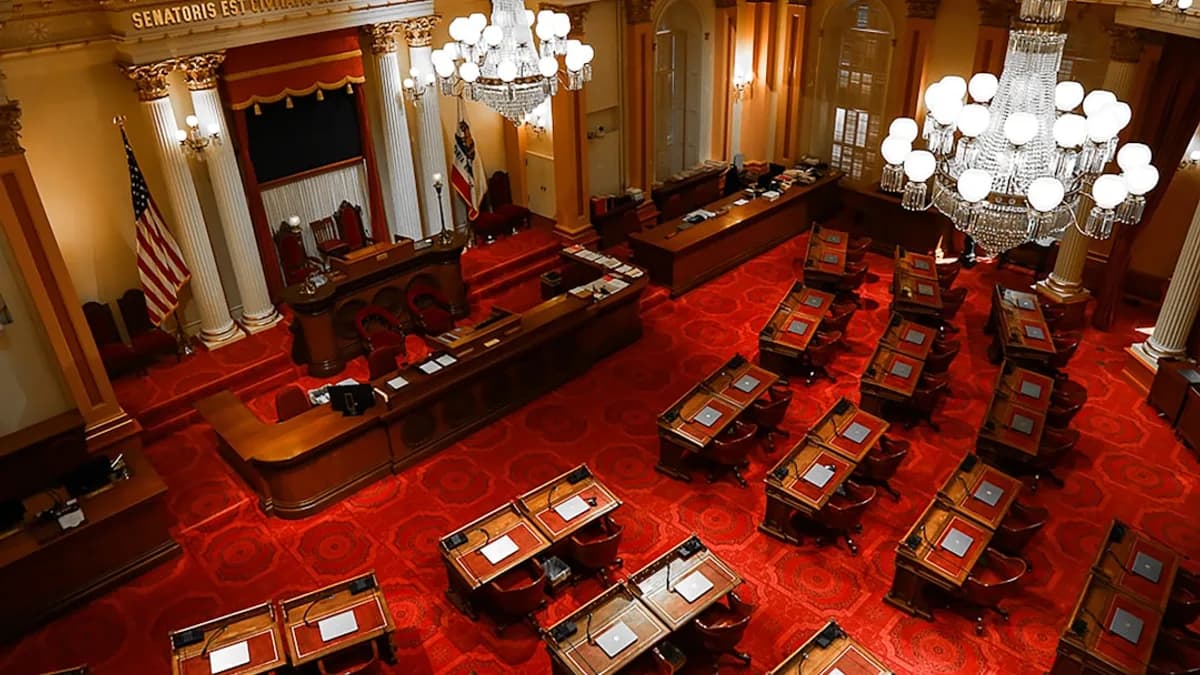
Few appointments in Washington carry the global weight of a Federal Reserve Chair nomination. This week, Kevin Warsh faces the crucible of a Senate confirmation hearing—an event that will shape not just the trajectory of U.S. economic policy, but potentially the pulse of global markets for years to come. Warsh, a former Fed governor and adviser during the 2008 financial crisis, is no stranger to high-pressure environments. Yet the “monetary policy road test” before lawmakers is far more than a personal examination. It’s a referendum on the future direction of the world’s most powerful central bank at a time of persistent inflation, rising political polarization, and unprecedented market uncertainty [Source: Source].
With investors, economists, and ordinary Americans watching closely, the Senate panel’s scrutiny of Warsh will offer early clues about whether his brand of monetary stewardship will chart a steady course—or risk further turbulence.
Kevin Warsh’s Monetary Policy Philosophy: Independence and Limitations
At the heart of Warsh’s testimony is a doctrine that has long animated central bankers: the independence of monetary policy. Warsh’s insistence that “monetary policy must remain independent, but the Fed must 'stay in its lane'” captures a delicate balancing act [Source: Source]. On one hand, he echoes the orthodoxy that has shielded the Fed from short-term political pressures—an independence that, historically, has helped stabilize markets and anchor inflation expectations through turbulent times.
However, Warsh’s assertion that the Fed should “stay in its lane” signals a potentially narrower interpretation of the central bank’s mandate. In an era when the Fed has been called upon to address issues from climate risk to economic inequality, this philosophy could be seen as a call to refocus on core objectives: price stability and maximum employment. This approach may resonate with those wary of “mission creep,” arguing that a central bank distracted by non-traditional goals risks losing credibility and effectiveness.
Yet, economic reality rarely fits neatly within prescribed lanes. The COVID-19 pandemic underscored how interconnected monetary policy is with fiscal actions, labor markets, and even public health. The Fed’s extraordinary interventions—massive asset purchases, emergency lending—blurred boundaries out of necessity. Warsh’s preference for a more restrained Fed could help restore guardrails, but it might also limit the institution’s flexibility in the face of complex, systemic shocks. The challenge for Warsh, and for the Senate panel, is to determine whether a return to “lane discipline” would safeguard the Fed’s legitimacy or leave it ill-equipped for the messy realities of 21st-century crisis management.
The Wealth Factor: How Warsh’s Personal Finances Could Influence Perceptions
A different kind of scrutiny awaits Warsh: the public and media focus on his personal wealth. In an age of rising populism and skepticism toward elites, Warsh’s financial background is both a badge of expertise and a lightning rod for criticism [Source: Source]. Some argue that his substantial assets could create conflicts of interest, especially given the Fed’s influence over markets and the potential for policy decisions to affect personal holdings.
Critics contend that such affluence may insulate policymakers from the economic hardships faced by ordinary Americans, potentially biasing decisions toward the interests of Wall Street over Main Street. While there is no evidence that Warsh’s wealth has influenced his previous policy stances, optics matter—especially for an institution whose credibility hinges on public trust.
Transparency and rigorous ethics safeguards will be essential. Warsh’s confirmation process will almost certainly probe the extent of his financial disclosures and how he plans to recuse himself from decisions where conflicts might arise. Ultimately, the Senate’s willingness to hold nominees to the highest ethical standards is as critical to the Fed’s legitimacy as any monetary doctrine.
Potential Impact on Treasury Bonds and Financial Markets
Perhaps nowhere is the anticipation around Warsh’s nomination more acute than in the Treasury bond market. Bloomberg’s description of Warsh as the “next catalyst for Treasury bonds” underscores the stakes: any suggestion of a policy shift could rattle yields and investor sentiment [Source: Source].
Warsh’s record suggests a more hawkish tilt compared to recent Fed chairs. He has previously warned against leaving monetary policy too loose for too long, raising the prospect of a faster pace of rate hikes or a more aggressive unwinding of the Fed’s balance sheet. For Treasury investors, even hints of tighter policy can trigger sell-offs, driving up yields and, by extension, borrowing costs across the economy.
This potential for volatility extends beyond Treasuries. Risk assets—from equities to emerging market debt—are highly sensitive to U.S. monetary policy. A Warsh-led Fed that signals a harder line on inflation could bolster the dollar and attract global capital, but also risk choking off the recovery if tightening moves too quickly. Conversely, markets might welcome greater clarity and predictability if Warsh commits to a rules-based framework.
History offers a cautionary tale: in 2013, the so-called “taper tantrum” erupted when then-Chair Ben Bernanke merely hinted at slowing asset purchases. Bond yields surged, and capital fled emerging markets. Warsh’s challenge will be to communicate policy adjustments with precision, minimizing disruption while ensuring the Fed remains ahead of inflationary risks.
Broader Implications for the Federal Reserve’s Role and Global Economy
The implications of Warsh’s potential leadership extend well beyond Wall Street. CNN’s analysis highlights the global reverberations of any shift in the Fed’s approach [Source: Source]. As the steward of the world’s reserve currency, the Fed’s choices influence not just U.S. growth and inflation, but also global capital flows, exchange rates, and the financial stability of emerging economies.
A more conservative, “lane-staying” Fed might signal to international markets a return to textbook central banking—focused laser-like on inflation and employment, less on unconventional interventions. This could restore a sense of normalcy for some, but it also risks underestimating the interconnectedness of today’s crises. Currency volatility, geopolitical shocks, and climate risks now routinely spill over borders; a Fed that is too rigid could find itself perpetually reacting to, rather than shaping, global economic dynamics.
Yet, there are opportunities. If Warsh can combine a disciplined approach with a willingness to adapt when systemic risks emerge, he might strike the balance that has eluded central bankers since the financial crisis. The world will be watching for signals: will Warsh’s Fed lean into innovation, or retrench into orthodoxy? The answer will help chart the course not just for the U.S., but for a global economy hungry for stability.
Conclusion: Weighing the Prospects of Kevin Warsh’s Fed Leadership
Kevin Warsh’s Senate hearing is more than a personal milestone—it is a stress test for the future of U.S. monetary policy. His commitment to independence and restraint offers a counterpoint to recent years of activist central banking, but his wealth and perceived distance from everyday economic realities demand heightened transparency and trust [Source: Source].
Warsh’s confirmation would signal a pivotal moment: a possible recalibration of the Fed’s mission and methods at a time when economic and geopolitical risks remain acute. The Senate’s vetting process must probe not just Warsh’s technical competence, but also his capacity to bridge the worlds of finance, policy, and public accountability. In the end, the effectiveness of Warsh’s tenure—should he be confirmed—will rest on his ability to navigate the Fed’s dual mandate with both discipline and agility.
Ultimately, leadership at the Fed is not just about steering the economy through calm waters, but about managing storms with foresight and resolve. The Senate’s deliberation is an opportunity to ensure that the next Fed chair is equal to that challenge—and that the institution itself remains a bulwark of trust in uncertain times.
⚠️ Disclaimer: This article is for informational purposes only and does not constitute financial advice. Always do your own research before making investment decisions.