Why Carlyle Group’s Recent Performance Raises Questions About Its Growth Trajectory
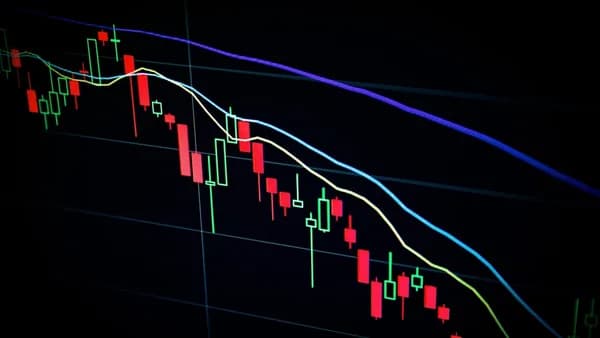
Carlyle Group’s stock has slumped nearly 15% since its Q1 earnings, despite management trumpeting ambitious long-term targets. The disconnect isn’t just about numbers—it’s about a credibility gap opening between the private equity giant and the market. Investors aren’t buying the “just wait and see” narrative. The company reported adjusted earnings per share of $0.98, missing consensus estimates by almost 5%. That’s not catastrophic, but in an environment where rivals like Blackstone and KKR are beating the street, it signals trouble.
The market expected more. Carlyle’s AUM nudged up to $426 billion, but that growth failed to translate into the kind of fee-related earnings that drive stock upside. The stock’s underperformance isn’t a one-off: over the past twelve months, CG has lagged the S&P 500 by more than 20 percentage points. Investors who bought in for the promise of outsized returns in alternative assets are starting to question whether Carlyle’s engine has lost a gear.
Momentum, in private equity, isn’t measured only by headline AUM. Fee-related earnings, fundraising velocity, and deployment pace are the real signals. Carlyle’s recent results show cracks: fundraising slowed, deal activity stumbled, and the stock’s tepid reaction reflects the market’s skepticism about management’s ability to deliver on its bullish forecasts. As Yahoo Finance reports, optimism about the firm’s long-term targets isn’t enough to overcome disappointment in its short-term execution.
Crunching the Numbers: Carlyle Group’s Financial Metrics and Growth Indicators
Carlyle’s assets under management (AUM) hit $426 billion this quarter, up 8% year-over-year. But the rate of growth has slowed: two years ago, annual AUM increases ran closer to 15%. Fee-related earnings (FRE) dropped to $170 million, a 6% decline from the previous quarter, while distributable earnings—a key metric for PE investors—fell to $280 million, 12% off last year’s pace. Revenue for Q1 clocked in at $1.1 billion, flat compared to the same quarter in 2023.
Profit margins tell a similar story. Carlyle’s operating margin slid to 27%, down from 31% twelve months ago. The company’s cost base is creeping up, partly due to increased compensation and technology investments, but also because deal-making has been sluggish. Compare this to Blackstone, whose operating margin remains north of 40%, and the gap becomes obvious.
Long-term targets remain ambitious: management expects AUM to surpass $500 billion by 2027 and FRE to rebound strongly. But these projections look increasingly optimistic given the current pace. The discrepancy between short-term performance and long-term promises is glaring. If fundraising continues to stall and exits remain sparse, Carlyle risks missing those targets—leaving investors stuck with a stock that underdelivers while competitors surge.
Diverse Stakeholder Views: How Investors, Analysts, and Management Perceive Carlyle’s Future
Analysts are divided. Bank of America recently downgraded CG to “neutral,” citing concerns about fundraising headwinds and lackluster fee growth. Goldman Sachs remains cautiously optimistic, pointing to the company’s diversified platform and potential in credit and real assets, but notes that execution risk is elevated. Consensus price targets cluster around $39—barely above current levels, signaling muted expectations.
Investor sentiment has soured. On recent earnings calls, institutional shareholders pressed management on the slow pace of capital deployment and the lagging performance fee pipeline. Many want clarity on how Carlyle will ramp up deal activity in a market where valuations have stalled and competition is fierce.
Management, for its part, is sticking to the script. CEO Harvey Schwartz touts the firm’s “resilient model,” highlighting new fundraising initiatives and expansion into infrastructure and private credit. He insists momentum will return as market conditions stabilize and dry powder gets put to work. But the gap between management’s optimism and investor skepticism is widening. If Carlyle can’t deliver tangible results in the next two quarters, shareholder patience will wear thin.
Tracing Carlyle’s Historical Growth: Lessons from Past Market Cycles and Strategic Shifts
A decade ago, Carlyle was the breakout star of private equity. Its 2014 IPO marked a turning point, pushing AUM past $200 billion and giving it firepower to compete with giants. The firm rode the post-GFC recovery by aggressively scaling its buyout and real assets franchises, posting double-digit annual growth in both AUM and fee earnings through 2017.
During the 2020 pandemic shock, Carlyle pivoted quickly—accelerating investments in credit, distressed assets, and infrastructure. That move paid off: the firm’s credit portfolio doubled in two years, and its flexible deployment strategy insulated it from the worst of the market drawdown. But the post-pandemic era has exposed new challenges. Fundraising velocity slowed as institutional investors grew more selective. Competition from Blackstone and Apollo surged, especially in alternatives like private credit.
Strategic pivots haven’t always landed. The expansion into global real estate, for example, delivered strong AUM growth but weaker margins. When Carlyle tried to ramp up its tech and growth equity arm, deal sourcing lagged expectations. The lesson: Carlyle’s success has depended on timing market cycles and executing pivots with precision. When execution falters, momentum slips—and the stock reflects it.
What Carlyle Group’s Current Challenges Mean for Private Equity Investors and the Broader Market
Carlyle’s stalling momentum isn’t just its own problem—it signals headwinds for the broader private equity sector. Investors are watching fee-related earnings as a proxy for industry health. If Carlyle struggles to turn AUM growth into real profits, rivals face the same challenge. The slowdown in fundraising and deal activity points to tighter capital markets and increased skepticism among institutional allocators.
For investors considering exposure to CG, the risks are clear. The stock’s recent underperformance, lack of near-term catalysts, and rising cost base make it less attractive than peers. On the flip side, if Carlyle can execute its strategic pivots—especially in private credit and infrastructure—there is upside. These segments are growing faster than traditional buyouts and could drive a rebound in fee earnings.
Carlyle’s performance also shapes sector dynamics. If it continues to lag, competitors may poach talent, win mandates, and outpace in fundraising. Conversely, a turnaround would reinforce the firm’s ability to navigate cycles and innovate in alternatives. Either way, the market is recalibrating expectations for what “momentum” means in private equity—and Carlyle is the bellwether.
Forecasting Carlyle Group’s Path Forward: Strategic Moves and Market Conditions to Watch
Carlyle needs a reset. Expect strategic responses: accelerating fundraising in private credit, ramping up infrastructure deals, and possibly divesting underperforming business units. Management is likely to push for more aggressive deal sourcing, targeting sectors where competition is less fierce and margins can improve. A renewed focus on technology and data-driven investment strategies could help offset rising costs.
Market conditions will dictate the pace. If interest rates remain elevated and public market volatility persists, fundraising will stay sluggish. But a thaw in capital markets or a rebound in M&A activity would give Carlyle the tailwind it needs. Watch for signals: a spike in capital deployed, increased exits, and a return to double-digit fee earnings growth. These would mark a true momentum comeback.
Over the next 1-3 years, two scenarios stand out. If Carlyle executes on its strategic pivots and capital markets recover, AUM could reach the $500 billion target, with fee-related earnings rebounding by 10-15% annually. The stock would likely close the gap with peers and regain investor confidence. If execution falters and market conditions stay tough, expect continued underperformance, with CG drifting as a value play rather than a growth engine. Investors should monitor quarterly fundraising, deployment rates, and margin trends—not just headline AUM—if they want to spot the inflection point early.
⚠️ Disclaimer: This article is for informational purposes only and does not constitute financial advice. Always do your own research before making investment decisions.
The Bottom Line
- Carlyle Group’s slowing growth and missed earnings are eroding investor confidence.
- Competitors like Blackstone and KKR are outperforming, highlighting Carlyle’s relative weakness.
- Stock underperformance signals market skepticism about management’s ability to deliver on long-term promises.