Why Stablecoins Are Shaping the Future of Digital Finance
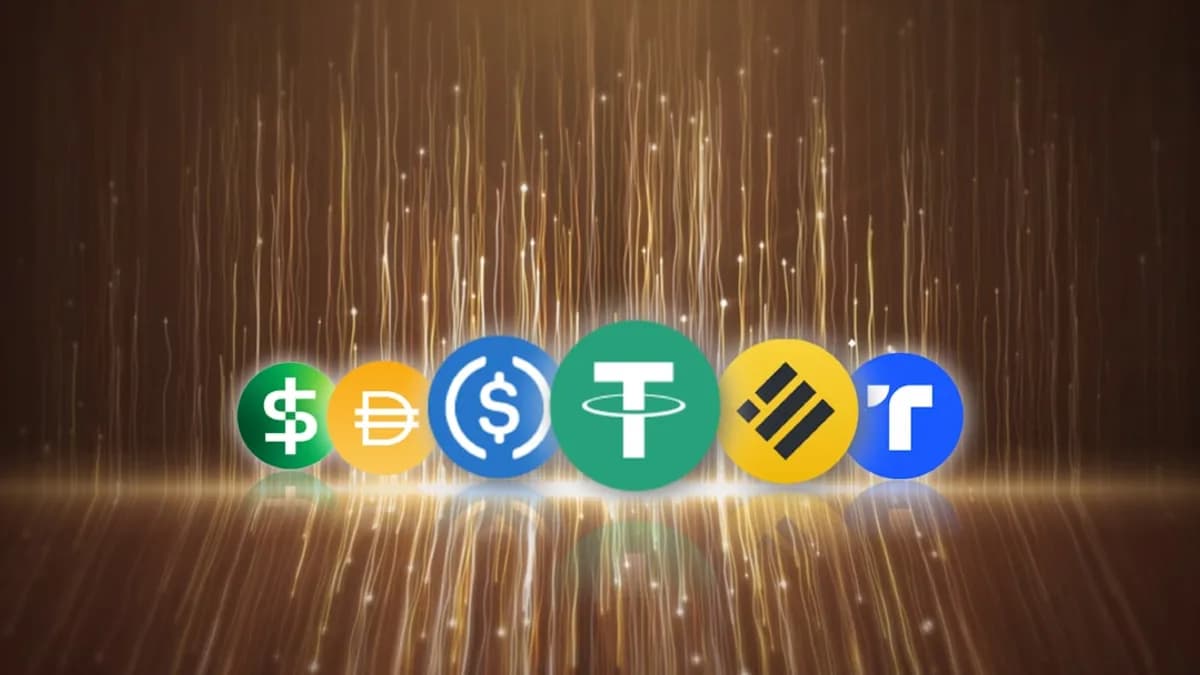
Nearly $150 billion in stablecoins now circulate across crypto networks—more than the market cap of many national currencies. Unlike Bitcoin or Ethereum, whose wild price swings make them unfit for day-to-day commerce, stablecoins are engineered for predictability. That’s why they’ve become the backbone of crypto trading, cross-border payments, and even payroll for remote workers. USDC and Tether (USDT) now settle billions in volume daily, dwarfing the activity of most decentralized coins. Stablecoins are no longer just a tool for speculators—they’re morphing into a mainstream medium for remittance, e-commerce, and even dollarization in countries with unstable currencies.
Businesses, from fintech startups to Fortune 500 giants, are integrating stablecoins for their speed and low transaction costs. Visa and Mastercard have piloted stablecoin settlement rails, while banks from Singapore to Switzerland are launching their own tokenized cash. For consumers, stablecoins turn crypto wallets into dollar accounts that don’t require a bank. This shift isn’t theoretical: El Salvador, Nigeria, and Turkey have seen surges in stablecoin adoption during currency crises.
Understanding how stablecoins work, and why they matter, is crucial as digital finance heads toward Consensus Miami 2026, where industry leaders will decide the next chapter for payment rails and regulation. With governments eyeing their own digital currencies, and regulators sharpening their stance, stablecoins are at the epicenter of the debate—according to CoinDesk.
What Are Stablecoins and How Do They Maintain Their Value Pegs?
Stablecoins are digital tokens designed to stay at a fixed price, usually $1, by linking their value to external assets. That makes them a stark contrast to typical cryptocurrencies, which can swing 10% in a single day. Stablecoins achieve their stability by "pegging" to assets like US dollars, euros, or gold—either by backing every token with reserves or via complex algorithms.
There are three main ways stablecoins maintain their peg:
- Fiat-collateralized: Each token is backed 1:1 by cash or equivalents held in a bank or trust. Tether (USDT), the largest stablecoin, claims to hold over $89 billion in reserves, mostly in dollars and short-term Treasuries. When you buy a USDT, the issuer puts $1 in its reserve; when you redeem, $1 comes out.
- Crypto-collateralized: These use other cryptocurrencies as backing, often over-collateralized to absorb volatility. MakerDAO’s DAI, for example, is minted by locking up more value in ETH or other tokens than the amount of DAI issued—typically 150% or more. If the collateral drops below a threshold, it’s liquidated to keep DAI stable.
- Algorithmic: These rely on code, not reserves, to keep price in line. The system expands or contracts supply based on demand, aiming to maintain the peg. TerraUSD (UST) was the most famous, but its collapse in 2022 exposed the risks: billions evaporated when the algorithm failed.
A basic fiat-backed example: If you deposit $1, you get one stablecoin. If you send that stablecoin to a friend, they can redeem it for $1 from the issuer, who burns the token and releases the cash. The peg works as long as users trust the issuer actually holds the reserves. If doubt creeps in—or reserves can’t be verified—the peg can break, sending prices off target.
How Do Reserves and Collateral Back Stablecoins to Ensure Stability?
Trust in stablecoins hinges on their reserves. If issuers claim their tokens are worth $1 but can’t prove it, panic can trigger a bank-run. That’s why transparency and reserve management are make-or-break.
- Fully backed stablecoins hold one dollar (or equivalent) for every token issued. Tether, for instance, reports a mix of cash, Treasuries, and even gold—claims audited quarterly. Circle’s USDC publishes monthly attestations from accounting firms, showing assets match outstanding coins. This gives users confidence their tokens are truly redeemable.
- Partially backed models hold less than 100% in reserves, often hoping not all users redeem at once. These are rare and prone to de-pegging, as seen with Fei Protocol, which struggled to maintain its $1 price amid redemptions.
- Unbacked or algorithmic stablecoins depend entirely on supply-demand dynamics. When confidence falters, as with TerraUSD, the peg can unravel quickly.
Transparency practices are evolving. Circle’s USDC, for example, posts monthly reserve breakdowns and audit reports, showing $29 billion in assets as of March 2026, mostly in Treasury bills. After public pressure, Tether started releasing quarterly reserve attestations, though critics point out they’re not full audits. The stablecoin sector is pushing for real-time, on-chain proofs of reserves—a feature promised by emerging players like Ethena’s USDe.
Mini case study: After USDC briefly de-pegged in March 2023 due to exposure to Silicon Valley Bank, Circle moved its reserves entirely to short-term Treasuries and introduced daily updates. The peg restored within days, showing how rapid disclosure and asset quality can calm markets. In contrast, TerraUSD’s opaque collateral and reliance on Luna token led to a $40 billion wipeout when the system failed.
What Are the Regulatory Challenges and Developments Impacting Stablecoins?
Stablecoins are under a regulatory microscope. US lawmakers, the EU, and Asian regulators have all floated new frameworks—some friendly, some restrictive. The US Treasury and SEC worry about consumer protection, market manipulation, and systemic risk. If a stablecoin with tens of billions in assets collapses, the fallout could rattle banks and payment systems.
Key concerns include:
- Consumer protection: Regulators want issuers to prove reserves, clarify redemption rights, and prevent fraud. The EU’s Markets in Crypto-Assets (MiCA) law, effective in 2026, mandates stablecoins publish audited reserve reports and limit non-euro stablecoin circulation.
- Financial stability: Treasury officials fear a mass redemption could force stablecoin issuers to dump Treasuries, impacting broader markets. The Financial Stability Oversight Council (FSOC) is considering labeling some stablecoin issuers as "systemically important," which would trigger tougher oversight.
- Anti-money laundering: Stablecoins are popular for cross-border transfers, but the same speed and privacy enable illicit flows. The US proposes requiring stablecoin issuers to comply with Bank Secrecy Act rules, including full KYC and suspicious activity monitoring.
Recent developments: In April 2026, the US House passed the Stablecoin Transparency Act, requiring monthly attestations and emergency asset freezes for non-compliant issuers. Singapore’s Payment Services Act added stablecoin-specific licensing. At Consensus Miami 2026, expect heated debate as industry giants and regulators negotiate the balance between innovation and safety.
Regulation is no longer a distant threat—it’s shaping how, where, and who can issue stablecoins. For investors and businesses, clarity means safer products; for issuers, it means higher costs and stricter compliance.
How Can Beginners Safely Use Stablecoins in Their Digital Finance Activities?
For newcomers, stablecoins are a gateway to digital dollars—if you know how to pick, store, and use them wisely. Start by choosing a stablecoin with clear reserve disclosures, frequent audits, and a proven track record. USDC and USDT dominate for liquidity, but alternatives like Pax Dollar (USDP) or TrueUSD (TUSD) offer more transparency.
To store stablecoins, use a reputable wallet—hardware wallets like Ledger or Trezor for maximum security, or trusted apps like Coinbase Wallet for convenience. Never share your private keys. When sending or receiving, double-check addresses and network (ERC-20 vs. TRC-20) to avoid lost funds.
Risks: The biggest is de-pegging, which happens when reserves are questioned or redemption is restricted. In March 2023, USDC dropped to $0.88 before recovering—those who panicked lost value. Mitigate by sticking to well-audited coins, avoiding algorithmic stablecoins unless you understand their mechanics, and checking reserve reports regularly.
Stay informed: Monitor issuer updates, audit reports, and regulatory news. Join official Telegram or Discord channels. As rules tighten, new requirements may affect how you redeem or use stablecoins. If you’re using stablecoins for payroll or remittance, make sure your recipients can also redeem or convert tokens easily.
What Happens Next for Stablecoins—and What Should You Watch For?
Stablecoins are moving from crypto niche to financial mainstream—and their next phase will be shaped by regulation, tech upgrades, and institutional adoption. Watch for:
- Regulatory clarity: Will the US and EU harmonize rules, or fragment the market with competing standards? This will dictate which stablecoins survive.
- Proof-of-reserve innovation: Real-time, on-chain audits could become mandatory, raising the bar for transparency.
- Central bank digital currencies (CBDCs): If governments launch their own digital dollars, stablecoins may face direct competition—or be integrated as payment rails.
For users and businesses, keep track of reserve updates, audit frequency, and new regulations. Don’t assume every $1 token is risk-free. As the industry converges in Miami, expect fierce debate over who controls digital dollars—and who benefits from their speed, reach, and stability. Stablecoins are rewriting the playbook for money, but the rules are still being drafted.
⚠️ Disclaimer: This article is for informational purposes only and does not constitute financial advice. Always do your own research before making investment decisions.
Why It Matters
- Stablecoins enable fast, low-cost transactions, transforming cross-border payments and commerce.
- They offer dollar-like stability for people in countries facing currency crises or inflation.
- Major financial institutions and governments are adopting stablecoins, signaling a shift in global finance.