Geopolitics Moves Bitcoin Faster Than Nasdaq—And Iran Just Proved It
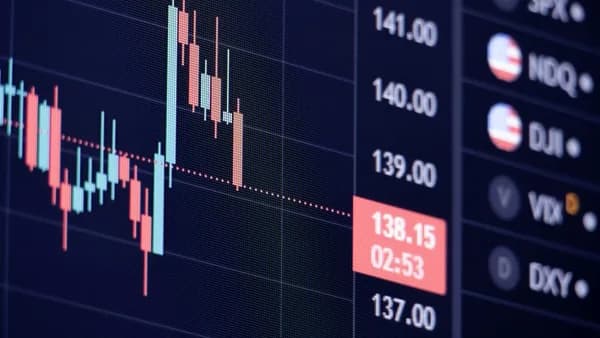
A single, unverified missile report was enough to jolt Bitcoin to $80,594, then slam it back down nearly $1,600 in minutes. This is not the first time a rumor has lit a fire under crypto, but the scale stands out: while equities barely twitched, BTC jumped 2% intraday as headlines from Iran’s Fars news agency claimed two missiles struck a U.S. warship—before the Pentagon shot down the story and Bitcoin retraced to $79,000. Oil, meanwhile, spiked 5%. The episode underscores how crypto reacts faster—and more violently—to geopolitical shocks than traditional assets, despite lacking the earnings, dividends, or military exposure that drive stocks.
What’s the mechanism? Fear and FOMO, mostly. Traders watching for “black swan” events know that major conflict can send fiat currencies (especially in emerging markets) tumbling. Bitcoin’s status as a decentralized, borderless asset makes it a logical hedge—or at least, the perception is strong enough to drive bids when missiles fly, real or not. The psychological feedback loop is clear: every fresh headline brings instant volatility, not just in BTC but across the crypto market. CoinDesk captured the immediate moves, but the deeper story is how crypto traders have turned news flow into their own volatility engine, with Twitter and Telegram amplifying every rumor.
Why Oil’s 5% Spike Was More Than Just a Side Effect
Oil’s surge—up 5% in the immediate aftermath—wasn’t just background noise. For crypto, it matters in two ways. First, rising energy costs threaten miners: higher oil means pricier electricity, squeezing margins for Bitcoin and Ethereum mining pools. Second, oil prices are a proxy for geopolitical risk. When WTI or Brent jump, investors start hunting for assets outside the reach of central banks and sanctions.
In practice, that means risk appetites shift: traders dump altcoins, which look fragile, and pile into Bitcoin, which they view as the digital equivalent of gold. Historically, oil and Bitcoin don’t track each other directly, but during moments of acute international tension, the correlation spikes. During the Russia-Ukraine crisis in early 2022, oil soared over 30% in a month, and Bitcoin’s price swings intensified, with daily moves twice the average of previous quarters.
Asset allocation pivots fast. When oil jumps, institutional players rebalance toward hard assets—commodities, gold, and increasingly, Bitcoin ETFs. Retail traders follow suit, amplifying the move. The Iran missile rumor triggered this playbook, with oil’s surge acting as a catalyst for the broader crypto volatility.
ETH, SOL, DOGE: Why Altcoins Cratered While Bitcoin Held Up
Bitcoin’s resilience contrasted sharply with the selloff in Ethereum, Solana, and Dogecoin. ETH dropped 4% from its session high, SOL tumbled 6%, and DOGE lost over 8%—all within two hours of the missile report. The divergence is rooted in three factors: liquidity, market cap, and investor psychology.
BTC’s $1.5 trillion market cap dwarfs ETH’s $470 billion and SOL’s $40 billion. When volatility hits, big money can move in and out of Bitcoin without slippage; altcoins, by contrast, can’t absorb panic selling without sharp price drops. Liquidity dries up, spreads widen, and bids disappear.
Sentiment also splits. Bitcoin is increasingly seen as a “safe haven” during geopolitical storms, a narrative reinforced by the launch of U.S. spot ETFs and institutional adoption. Altcoins lack this status—most are speculative tech plays, tied to DeFi or NFT markets. When uncertainty spikes, traders rotate out of ETH and SOL, fearing regulatory crackdowns or outages (as seen during past Solana network disruptions).
Investor profiles matter. Bitcoin holders skew more institutional, with large funds and ETFs driving volumes. ETH, SOL, and DOGE are dominated by retail traders, who are quicker to panic and sell when headlines turn ugly. This dynamic was clear in the aftermath of the Iran rumor: BTC stabilized, while altcoins kept sliding.
Data: Bitcoin Swings, Altcoins Crash—Numbers Tell the Real Story
The missile report triggered one of the sharpest intraday moves in months. Bitcoin surged from $78,100 to $80,594 in under 30 minutes, then dropped to $79,000 within the hour. Ethereum fell from $3,236 to $3,105, Solana from $176 to $164, and Dogecoin from $0.19 to $0.17—all before the U.S. denial hit markets.
Volatility metrics spiked: BTC’s one-hour realized volatility hit 6.2%, double its weekly average. ETH’s volatility surged to 8.7%, SOL’s to 12.4%, and DOGE’s to 15%. This pattern matches previous geopolitical shocks, but the scale was unusual—only the Russia-Ukraine invasion and the 2021 Kabul crisis saw similar crypto price swings.
Historical precedent backs this up. On February 24, 2022, when Russia invaded Ukraine, Bitcoin jumped 5% in the first two hours, then retreated as headlines clarified the scope. ETH and SOL saw even larger percentage drops, mirroring the current episode. Crypto markets are uniquely sensitive to real-time news, with social media amplifying moves.
A comparison: the S&P 500 moved just 0.4% during the Iran missile report, while gold rose 1.1%. Crypto’s outsized reaction confirms its role as both a volatility sink and a speculative hedge against international chaos.
Stakeholder Views: Traders Chase News, Analysts Debate Safe Haven Status, Governments Watch Warily
Traders love volatility—and geopolitical rumors are catnip. Many crypto day traders openly admit to scanning Telegram and Twitter for “event-driven” trades, buying into Bitcoin at the first sign of conflict and shorting altcoins they deem riskier. Some automated trading bots even scrape news wires for keywords like “missile” or “sanctions”, executing instant buys or sells.
Analysts are divided. Some argue Bitcoin’s reaction proves its safe haven status, pointing to its correlation with gold during crises. Others say the moves are purely speculative—driven by traders front-running ETF flows or hedging against fiat instability, not by any intrinsic value. Bank research desks have flagged the “headline sensitivity” of crypto as a risk factor for institutional portfolios, warning that volatility can spike on rumor alone.
Governments and regulators are watching with concern. The U.S. Treasury, SEC, and global financial watchdogs have repeatedly cited crypto’s ability to bypass capital controls during conflict. During the Russia-Ukraine war, $100 million in crypto donations flowed to Ukraine in days, bypassing traditional banking rails. This has sparked calls for tighter regulation, especially as more money moves through decentralized exchanges and privacy coins.
When Conflict Hits, Crypto Markets Repeat: Lessons from Past Shocks
Crypto’s response to geopolitical events is not random—it follows a pattern. During the 2017 North Korea missile tests, Bitcoin traded up 3% on launch days, then faded as news normalized. The 2019 U.S.-Iran drone strike saw BTC jump 5% overnight, with altcoins lagging. In each case, the rally was sharp but short-lived, with prices retracing as clarity emerged.
One recurring theme: Bitcoin outperforms altcoins during acute uncertainty, then loses its edge once the crisis subsides. Investors shift toward BTC for perceived safety, then rotate back into riskier assets as tensions fade. Volatility spikes, but does not sustain.
The Russia-Ukraine conflict reinforced this. Bitcoin surged as war broke out, but retraced as central banks and governments intervened. Altcoins suffered steeper declines, and their recovery lagged BTC by months. The lesson: crypto markets are reactive, but not immune to broader risk-off sentiment.
Iran Missile Rumor Is a Preview: Expect More Volatility, Regulation, and Strategic Shifts
The Iran missile episode signals a new phase for crypto markets. As geopolitical tensions escalate—whether in the Middle East, Asia, or Europe—expect Bitcoin to react first and fastest to breaking news. Volatility will remain elevated, with intraday swings of 2-5% increasingly common during high-conflict periods.
For investors, this means revisiting strategy. Portfolios that leaned heavily on altcoins may need to rebalance toward Bitcoin or stablecoins during geopolitical uncertainty. Diversification remains critical, but so does liquidity: assets with deep order books and institutional flows hold up better when panic hits.
Regulators are likely to step up scrutiny. Every new conflict brings fresh calls for oversight, especially as crypto’s role in cross-border payments and donations grows. Market infrastructure will need to adapt, with exchanges beefing up risk management and compliance. ETF issuers may face new disclosure requirements around geopolitical exposure.
The upshot: Crypto markets are now a frontline asset class during international crises—moving faster than stocks, commodities, or even gold. Investors who track global news, understand historical patterns, and manage risk in real time will have the edge. This is not a new paradigm, but an acceleration of what crypto has always been: a speculative mirror reflecting the world’s anxieties and ambitions, minute by minute.
⚠️ Disclaimer: This article is for informational purposes only and does not constitute financial advice. Always do your own research before making investment decisions.
The Bottom Line
- Crypto markets react faster and more violently to geopolitical rumors than traditional assets.
- Rising oil prices increase costs for crypto miners, impacting profitability.
- News-driven volatility in crypto highlights the influence of social media and global events on financial markets.