Why Bitcoin’s Near $80,000 Price Level Could Signal a Major Market Shift
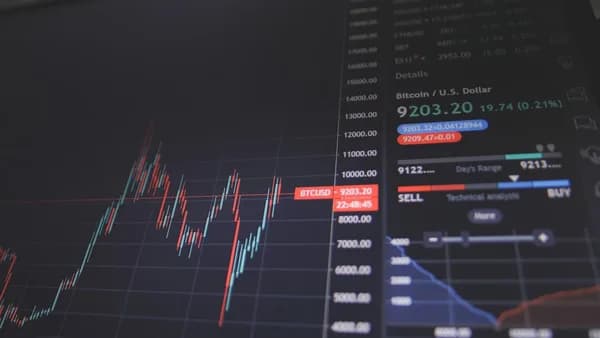
Bitcoin’s price hovering just under $80,000 isn’t simply another milestone—it’s a potential inflection point for digital assets and mainstream finance. The world’s largest cryptocurrency has never stayed this close to a round-number peak for so long without either surging past or sharply retracing, according to CoinDesk. This extended pause signals a tug-of-war between bullish momentum and profit-taking, with traders watching for signs of exhaustion or fresh buying.
Each time Bitcoin has approached major thresholds—$20,000 in 2017, $60,000 in early 2021—the market morphed. These levels act as psychological magnets, drawing speculative capital and headlines, and often reshaping investor behavior. The $80,000 mark is no exception: it’s become a global reference for risk appetite across crypto and traditional markets, setting the tone for what follows.
A breakout above $80,000 would do more than grab attention—it could unlock new flows from institutional investors, recalibrate algorithmic trading strategies, and even pressure central banks and regulators to revisit their stance on digital assets. Stagnation here, though, is more than a pause: it’s a test of conviction for bulls and a signal to short sellers that momentum may be waning. The broader crypto market, from Ethereum to Solana, often tracks Bitcoin’s lead, so this stall is reverberating across altcoin trading volumes and DeFi protocols.
For investors and traders, the $80,000 level isn’t just a price—it’s a litmus test for market direction, risk tolerance, and the next wave of capital allocation.
How Stock Market Trends and ETF Inflows Influence Bitcoin’s Potential Breakout
Bitcoin’s price doesn’t move in isolation. Over the past year, correlations between BTC and major equity indices like the S&P 500 and Nasdaq have tightened, with both rising nearly 20% since January 2026. Investors are treating Bitcoin as a risk-on asset, pouring in capital when equities rally and pulling back when volatility spikes. This is a shift from the “digital gold” narrative that dominated 2020-2022, when Bitcoin often moved counter to stocks.
ETF inflows are the other major force. US-listed Bitcoin ETFs saw net inflows of $1.2 billion in April alone, pushing total assets under management above $15 billion. Strong ETF inflows mean more institutional money is entering Bitcoin, adding liquidity and price stability. These flows aren’t just passive—they trigger hedging, arbitrage, and algorithmic trades that amplify price moves. When ETF demand spikes, market makers scramble to acquire spot Bitcoin, tightening supply and often nudging prices higher.
Right now, ETF inflows are outpacing outflows from risk-off assets like Treasuries and gold, suggesting investors are positioning for a risk rally. According to CoinDesk, institutional buyers are expanding allocations, betting that Bitcoin will soon break through resistance.
The stock market’s bullish tone and robust ETF participation are laying the groundwork for a breakout. If equities stay strong and ETF inflows persist, Bitcoin could snap its current plateau and ignite fresh momentum—a dynamic that’s already visible in options market pricing and leveraged futures volumes.
What Factors Are Keeping Bitcoin Stalled Near $80,000 Despite Positive Indicators?
Technical resistance is the first culprit. Bitcoin faces a cluster of sell orders between $79,500 and $80,200, with on-chain data showing nearly 18% of circulating supply acquired in this price zone. Many holders are eyeing exits to lock in gains, creating a ceiling as buy orders struggle to absorb selling pressure.
Market psychology compounds this: traders remember sharp reversals at previous milestones, especially after the $60,000 breakout in 2021 led to a swift 40% correction. Fear of repeating history keeps some buyers sidelined, waiting for a confirmed move rather than chasing momentum.
External factors aren’t helping. Regulatory uncertainty in the US and EU remains unresolved, with new rules for digital asset custody and taxation set for mid-2026. Macro signals, including unexpectedly strong US job numbers and sticky inflation, are fueling speculation that the Fed might hike rates. Higher rates typically sap risk appetite and could prompt capital to rotate out of crypto, at least temporarily.
Profit-taking is visible in transaction volumes: over $4.5 billion in BTC was moved to exchanges in the past week, according to Glassnode. This suggests traders are preparing for volatility, whether upward or downward. The result is a temporary plateau, even as ETF inflows and stocks hint at bullish potential.
How Could a Bitcoin Breakout Above $80,000 Impact Investors and the Crypto Market?
If Bitcoin punches through $80,000, volatility will surge. Options market data shows implied volatility jumping from 36% to 42% at strike prices above $80,000, signaling traders expect big moves. Historically, breakouts at round-number milestones trigger rapid price extensions—often 10-15% within days, as short sellers scramble to cover and momentum funds pile in.
Retail investors could see new opportunities, but risk rises too. FOMO-driven buying typically spikes after breakouts—when Bitcoin crossed $60,000, retail trading volumes doubled in a week, only to drop sharply as price pulled back. Institutional investors, meanwhile, may use the breakout as a trigger to rebalance portfolios, increasing allocations in crypto index funds or direct holdings.
A breakout would ripple through altcoins and DeFi. Ethereum’s price usually tracks Bitcoin’s direction, with a 0.85 correlation coefficient in recent months. If BTC surges, expect ETH and other majors to follow, potentially lifting the entire crypto market cap above $3 trillion for the first time since late 2025.
Regulatory scrutiny will intensify. Central banks and financial watchdogs tend to react when Bitcoin sets new highs—expect statements and perhaps new policy proposals. Adoption could accelerate: payment processors and fintechs often integrate Bitcoin support after major breakouts, seeking to capture fresh demand.
For investors, the opportunity is obvious—momentum trades, portfolio diversification, and heightened liquidity. The risk? Volatility, overextension, and the possibility of a sharp pullback if the breakout fizzles.
What Can We Learn from Past Bitcoin Price Plateaus and Breakouts Near Key Milestones?
Bitcoin’s history is littered with stalls at big round numbers—and what happens next is rarely random. In December 2017, BTC hovered around $19,000 for five days before exploding to $20,000, then crashing 30% in a week. Fast-forward to March 2021: after weeks at $59,000-$60,000, BTC shot to $64,000, triggering a six-week bull run and then a multi-month correction.
Patterns emerge: plateaus near milestones often precede either explosive breakouts or sudden reversals, rarely prolonged sideways drift. The longer the stall, the greater the pent-up momentum—both bullish and bearish. On-chain metrics like exchange inflows, wallet activity, and derivatives positioning tend to spike just before resolution.
Applying this to the current $80,000 level, traders should track not just price, but volumes, ETF flows, and regulatory headlines. Past plateaus resolved with a surge in volatility—meaning risk management is as crucial as chasing upside. Those who bought in anticipation often profited, but late entrants risked buying near the top.
The lesson: stalls at milestones are signals, not noise. They offer a window into shifting sentiment and market structure, and set the stage for the next major move.
What Should Investors Watch for as Bitcoin Tests $80,000?
Expect volatility to ratchet up. Monitor ETF inflows—if they accelerate, institutional momentum could tip the scales. Watch for regulatory headlines, especially from US and EU agencies, as policy shifts can spark sudden price moves. Keep an eye on exchange volumes and derivatives activity, which often foreshadow breakouts or reversals.
Risk management is the priority. Plateaus are not just pauses—they’re battlegrounds between conviction and caution. History shows that breakouts can be lucrative but also dangerous for latecomers. If Bitcoin clears $80,000 with sustained volume, the next stop could be $90,000 or more—but if sellers dominate, a sharp correction isn’t off the table.
For seasoned traders and long-term investors, this is the moment to refine strategies, set tight stops, and stay nimble. The $80,000 test isn’t just about price—it’s about the future role of crypto in mainstream finance.
⚠️ Disclaimer: This article is for informational purposes only and does not constitute financial advice. Always do your own research before making investment decisions.
The Bottom Line
- Bitcoin’s stall near $80,000 could mark a turning point for digital asset markets and mainstream finance.
- A breakout or retracement will impact institutional investment, trading strategies, and regulatory attention.
- The outcome at this price level will influence the direction and risk appetite across crypto and traditional markets.