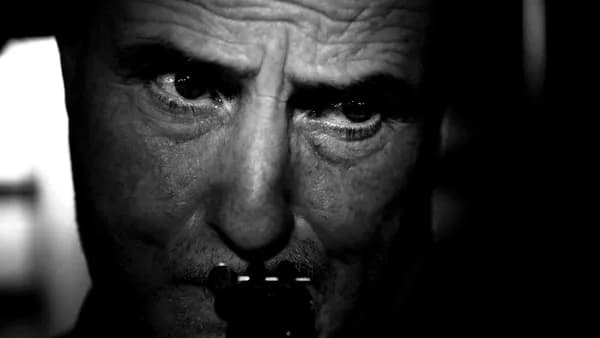
John Travolta’s first directing credit could have arrived as a forgotten vanity project; instead, Propeller One-Way Night Coach is landing on Apple TV with Cannes visibility, a family backstory, and a built-in search hook: Travolta did not just direct it — he adapted it from a 1997 children’s novel he wrote himself.
The film is now available to stream for Apple TV subscribers, according to 9to5Mac . That makes this release more than another celebrity title in the feed. It is a late-career reframing of John Travolta as writer, director, narrator, producer, and custodian of his own personal IP.
Travolta Turns a 1997 Children’s Novel Into a Streaming-Era Auteur Play
The easy read is “movie star makes directing debut.” The more useful read is narrower: Travolta is using Apple TV distribution to surface a project with roots far outside the usual streaming-content pipeline.
Propeller One-Way Night Coach is based on the children’s book of the same name that Travolta wrote in 1997. Deadline’s supplied reporting says the book was written for his son, Jett, who died in 2009 at 16. Yahoo’s supplied material adds that the film is also a tribute to Travolta’s mother and to the aviation fascination that shaped him from childhood.
That gives the project a different weight than a standard actor-for-hire directing assignment. Travolta is not stepping behind the camera to execute someone else’s prestige package. He is adapting his own family-linked material, narrating it, and casting his daughter Ella Bleu Travolta among the flight attendants in the story.
“Set in the golden age of aviation, a young airplane enthusiast, Jeff (played by newcomer Clark Shotwell), and his mother (Kelly Eviston-Quinnett) set off on a one-way cross-country odyssey to Hollywood,” Apple TV’s plot summary says, per 9to5Mac.
The tension is obvious. A deeply personal, mid-length aviation fable might have struggled to command a conventional theatrical rollout. On Apple TV, it becomes searchable, clickable, and newly legible to viewers who know Travolta first from Pulp Fiction, Face/Off, Grease, or Saturday Night Fever.
The Data Points Make This a Small Release With a Long Tail
The numbers here matter because they show how long this project has been in motion.
| Marker | Source-supported detail |
|---|---|
| Original book | Travolta wrote the children’s novel in 1997 |
| Film role | It marks Travolta’s directorial debut |
| Festival launch | The movie premiered at the 79th Cannes Film Festival |
| Apple TV access | 9to5Mac says Apple TV subscribers can now stream it |
| Subscription price | 9to5Mac lists Apple TV at $12.99 per month |
| Runtime context | Yahoo describes the film as “just around an hour in length” |
The practical shift is consumer friction. A viewer does not need to find a specialty screening, buy physical media, or track down a niche release. The film sits inside the same service where 9to5Mac lists Severance, The Studio, The Morning Show, Shrinking, and Silo as Apple TV draws.
That does not guarantee audience traction. The supplied sources do not say how Apple will position the movie inside the app, how much marketing it will receive, or whether viewers will treat it as a family film, a Travolta curiosity, or a Cannes footnote.
But the release does show the catalog logic. A recognizable name can carry a small film further than an anonymous title with the same premise. For more on Apple TV’s programming cadence, readers can compare this release with MLXIO’s coverage of Only 3 June Premieres Expose Apple TV's Retention Bet and the platform’s genre-facing momentum in Sci-Fi Shock Sends Sugar Season 2 Back to Apple TV.
From Movie Star to Director, but Not Through the Usual Door
Travolta’s directing debut arrives unusually late in a career already defined by multiple public eras: musical icon, action star, Tarantino-era comeback figure, and aviation obsessive. The supplied sources underline that aviation is not decoration here. Yahoo reports that Travolta grew up near LaGuardia Airport, sat in a cockpit for the first time at 15, received his pilot’s license at 22, and has logged more than 9,000 flying hours.
That makes Propeller One-Way Night Coach less like a career experiment and more like a personal archive finally turned into film.
The movie’s setting sharpens that point. Yahoo places the story in 1962, during a moment when flying is presented as glamorous and forward-looking. AppleInsider’s supplied material describes the trailer’s visual world as warm, polished, and deliberately nostalgic: model airplanes, stylized uniforms, oversized interiors, and cabins built around the romance of commercial aviation rather than modern airline realism.
The before-and-after is clean:
- Before: Travolta’s aviation identity lived mostly as biography — pilot credentials, aircraft fascination, public persona.
- After: That identity becomes the organizing principle of a film he wrote, directed, narrated, and produced.
- Before: The 1997 book was a personal children’s story.
- After: The Apple TV release turns it into a discoverable screen object with Cannes adjacency.
- Before: Travolta was the face of other directors’ worlds.
- After: He is asking viewers to enter his.
That is the real image reset. Not a reinvention away from Travolta’s past, but a consolidation of it.
Apple TV Gets a Celebrity Curiosity; Travolta Gets Distribution Without the Old Gatekeeping
Apple’s benefit is straightforward. Propeller One-Way Night Coach gives the service a title with a famous name, a Cannes premiere, a family-friendly premise, and a simple marketing sentence: John Travolta’s directorial debut.
Travolta’s benefit is just as clear. A personal, nostalgic, roughly hour-long aviation story can reach subscribers without needing to prove it can compete with franchise films or wide-release dramas. Streaming changes the threshold for what can be released meaningfully.
That does not mean the film becomes culturally large. AppleInsider’s supplied analysis describes it as smaller-scale than Apple’s bigger film projects, while Yahoo frames the drama as deliberately gentle: no major disasters, no sharp twists, and limited conventional tension. Viewers expecting action or complex plotting may find the film too slight.
The likely audience split is uneven:
- Travolta fans may read it as an intimate late-career statement.
- Families may respond to the child’s-eye view of travel and Hollywood dreams.
- Aviation enthusiasts may be drawn by the period detail and Travolta’s own flying history.
- Critics may judge it more harshly because Travolta holds so many credits on the project.
For Apple, the risk is novelty. A film can attract curiosity because of who made it, then fade if the conversation never moves beyond “Travolta directed this.”
Personal IP Is the Real Asset Apple Is Testing Here
The most interesting signal is not that Apple TV added another film. It is that a decades-old celebrity-originated children’s book can become streaming inventory with a clear hook.
That matters because personal IP has a different marketing profile than anonymous indie material. It comes with a backstory. It carries biographical stakes. It gives viewers a reason to sample even if the premise is modest.
In Travolta’s case, the layers are unusually dense: the 1997 book, the connection to his son, the aviation autobiography, the Cannes premiere, the surprise honorary Palme d’Or reported by 9to5Mac via Variety’s post, and his first directing credit after a long acting career.
The film may not become a mainstream breakout. The supplied sources give no viewership data, review consensus, or Apple performance indicators. But it can still become useful evidence of how streaming platforms extend the life of unusual star-driven work.
The next signal to watch is not box office. There may be none to parse. The stronger evidence would be whether Apple continues to surface similar legacy-star passion projects, whether Travolta’s film draws sustained critical attention after launch, and whether other veteran actors mine old books, scripts, or family-linked projects for streaming-era second lives.
The Bottom Line
- John Travolta’s directing debut gives Apple TV a celebrity-driven title with a personal backstory.
- The film reframes Travolta as a creator managing his own family-linked intellectual property.
- Its roots in Travolta’s 1997 children’s book add emotional context beyond a typical streaming release.