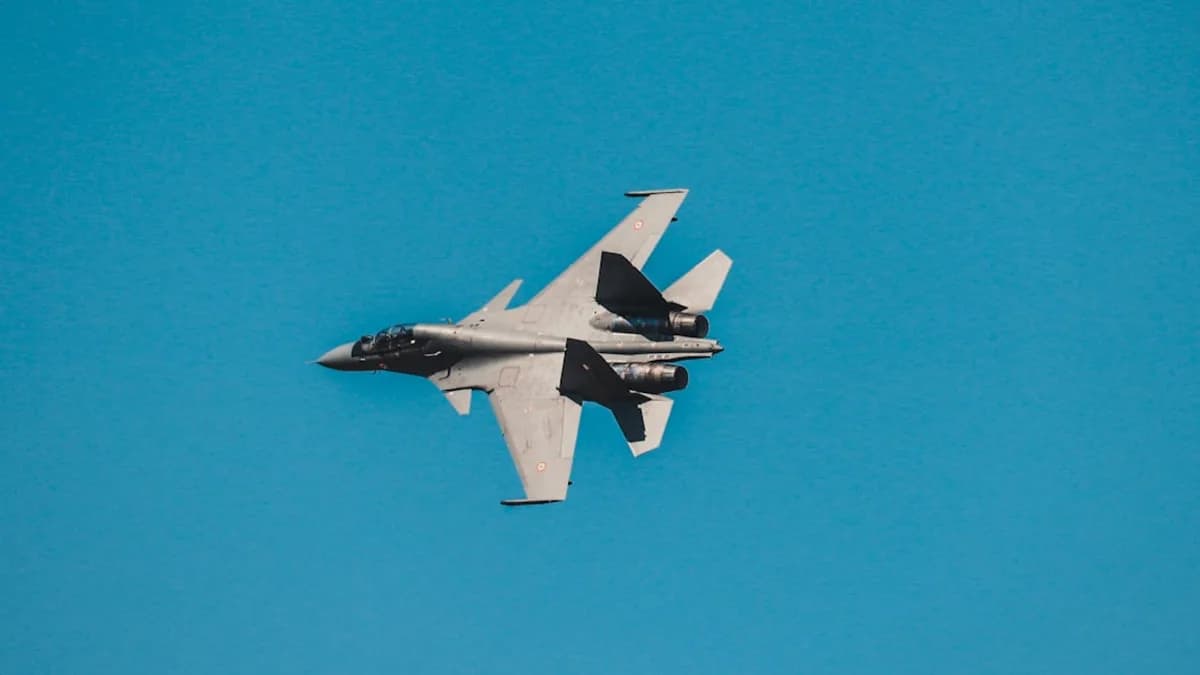
What if the US Navy’s most durable recruiting pitch was not an ad, a slogan, or a benefits package, but Tony Scott’s Top Gun?
That is the uncomfortable truth at the center of the film’s 40th anniversary. Top Gun is not merely a beloved action franchise. It is one of the most effective soft-power recruitment tools the Navy could hope for: a movie that turned service into speed, status, danger, belonging, and reinvention. The 1986 original pulled in $358 million globally and became the highest-grossing film of that year, according to Ars Technica. The 2022 sequel, Top Gun: Maverick, then proved the fantasy still had fuel.
Did Hollywood make the Navy’s most durable recruiting ad?
Yes — and its genius is that it rarely sounds like one.
The original Top Gun does not ask viewers to study policy, defend procurement budgets, or think through the consequences of combat. It drops them onto flight decks, into cockpits, and under orange skies. It sells the emotional package first: elite status, brotherhood, technical mastery, sexual confidence, and the chance to become someone sharper than the person you were before.
That is why the franchise works so well as recruitment mythology. The Navy is not presented as a bureaucracy. It is presented as an arena. You enter as talent. You leave as legend.
“I am dangerous.”
That line is laughably blunt. It is also the whole brand.
How did Tony Scott turn fighter pilots into pop-culture superheroes?
Scott made naval aviation look less like a job than a calling with a soundtrack.
The film was inspired by a 1983 article in California magazine about fighter pilots at Naval Air Station Miramar in San Diego, “Fightertown USA.” Producers Jerry Bruckheimer and Don Simpson brought in Jim Cash and Jack Epps Jr. for the screenplay. Epps sat in on declassified academy classes and took a flight aboard an F-14. Scott, then known mainly for The Hunger, got the job after shooting a Saab commercial featuring a car racing a Saab 37 Viggen fighter jet.
That origin matters. Top Gun was built from image, motion, and appetite. The leather jackets, motorcycles, volleyball, bar songs, call signs, rivalries, and sunsets did not decorate the story. They were the story.
The school itself became an elite-club fantasy. Maverick, Goose, Iceman, Jester, and Viper made the Navy feel like a place where identity is forged through competition. The movie’s technical inaccuracies and protocol violations almost become secondary because the emotional accuracy, for recruiting purposes, is devastatingly effective: it captures the desire to be chosen.
Why didn’t the Navy need a hard sell?
Because Top Gun sold the dream before anyone could question the contract.
Ars Technica notes that the film’s “eye-popping flight sequences definitely boosted enlistment numbers for the US Navy.” NBC New York similarly says the movie sent Navy recruitment numbers “through the roof.” Neither source gives a precise figure, so the honest claim is not numerical. It is structural: the movie made naval aviation aspirational at mass scale.
Traditional recruitment advertising has to persuade. Top Gun immerses. It lets audiences feel the reward before they calculate the cost.
| Franchise element | Recruitment value |
|---|---|
| F-14 flight sequences | Makes skill and machinery feel glamorous |
| Call signs and rivalry | Turns service into identity and status |
| Goose and Maverick bond | Sells belonging, not just duty |
| Top Gun school | Frames the Navy as an elite filter |
| Carrier visuals | Makes institutional power look cinematic |
That is more powerful than a pitch. It attaches service to emotion, aesthetics, and personal ambition.
What did Maverick refresh for a different generation?
Top Gun: Maverick proved the old fantasy could still fly if it looked and felt physical.
The sequel arrived in 2022, more than three decades after the original, and grossed more than $1 billion worldwide, according to NBC New York. It was nominated for six Academy Awards, including best picture. AMC is bringing both films back to theaters for one week beginning May 13 for the anniversary, with the chain teasing:
“Feel the need again on 5/13.”
The practical lesson is clear. Spectacle ages better when audiences believe bodies and machines are actually under strain. Ars Technica praises the original’s aerial sequences as still the best thing about the film, and that same logic helped the sequel: the franchise’s power sits in flight, pressure, speed, and visible risk.
From an MLXIO media lens, this is also a reminder that production choices carry commercial meaning. The same audience instincts that reward tangible craft in blockbuster cinema show up across creator markets, where tools and formats shape trust. Readers tracking that shift can see it in Top Video Editing Software for Social Media Creators in 2026 and Top Creator Economy Platforms Crushing It for Niche Content in 2026. Presentation is not cosmetic. It changes what people believe.
What bargain sits behind the spectacle?
The strongest counterargument is simple: people can enjoy Top Gun without treating it as propaganda. That is true.
A movie can be thrilling, beautifully shot, emotionally satisfying, and ideologically useful at the same time. Scott’s craftsmanship deserves credit. Ars Technica details how much of the aerial footage was shot from a Learjet, with mounted cameras inside and outside F-14 cockpits. The Navy supplied aircraft, carriers, and crews. Flight deck footage captured normal operations. Future NASA astronaut Scott Altman performed the infamous “flipping the bird” maneuver and tower-buzzing moments.
But collaboration shapes visibility. The film celebrates courage, excellence, loyalty, and nerve. It spends far less time on institutional grind, trauma, geopolitical ambiguity, or anyone outside the heroic frame. That is not an accident unique to Top Gun. It is how recruitment fantasy works: show the afterburner, mute the aftermath.
The darker production fact also punctures the clean myth. Aerobatic pilot Art Scholl, who performed much of the in-flight camera work, died after he could not recover from a flat spin and crashed into the Pacific Ocean near Carlsbad, California. Neither his body nor the plane was recovered. Scott dedicated the film to him.
Why does Top Gun still work after its original moment passed?
Because it fused blockbuster cinema with military branding so tightly that the brand outlived the moment.
The plot specifics are less durable than the feeling. Maverick’s insubordination, Goose’s death, Iceman’s distrust, Charlie’s romance, and the final dogfight all serve a larger function: they turn the Navy into a stage for self-actualization. That is why even dated elements remain culturally sticky.
Some parts have aged badly. Ars Technica points to Charlie’s role being changed at the Navy’s request from a fellow officer to a civilian contractor/astrophysicist to avoid fraternization concerns. The famous bar serenade also plays differently now, especially when Maverick follows Charlie toward the ladies’ room. Ars notes that the US Department of Defense Office of Inspector General cited Top Gun’s influence as a contributing factor in the 1991 Tailhook scandal.
That does not erase the film’s achievement. It complicates it. The same movie that helped define modern action cool also exported a highly selective fantasy of military life.
How should viewers watch Top Gun now?
Watch it with admiration. Just do not mistake the afterburner for the whole truth.
The practical takeaway is not to scold audiences for enjoying Top Gun. Enjoy the flight sequences. Enjoy the swagger. Enjoy Val Kilmer’s Iceman, Anthony Edwards’ Goose, and Cruise finding the role that would help define him. But stay alert to what the films invite you to admire.
Top Gun at 40 deserves celebration and scrutiny because its greatest achievement was not just box office success. It made enlistment feel like destiny. If Top Gun 3 is indeed in the works, as NBC reports Paramount announced at CinemaCon, the question is not whether the jets will look spectacular.
They will.
The question is whether audiences can feel the thrill — and still see the frame around it.
Impact Analysis
- Top Gun shows how entertainment can shape public perception of military service more effectively than traditional recruiting.
- The film’s $358 million global box office in 1986 helped turn naval aviation into a mainstream pop-culture fantasy.
- Its lasting appeal highlights the power of Hollywood storytelling in selling identity, status, and belonging.