Updated: Adds clearer context around HBO’s confirmation, the timing of the Ginny Weasley recast, and why season 2 is the point where the change becomes more visible.
HBO’s Harry Potter reboot is facing an early continuity test before Ginny Weasley becomes central to the story.
Gracie Cochrane, who was cast as Ginny Weasley for season 1, will not return for season 2, according to Notebookcheck, which cites Deadline’s reporting and HBO confirmation. The stated reason is “unforeseen circumstances,” and HBO said it supports “the decision of Gracie Cochrane and her family.” No replacement has been announced in the cited reporting.
Why a Ginny Weasley Recast Could Become the First Real Test of the Harry Potter Series
For now, the change looks manageable. Ginny barely figures into the first book because she is still too young to attend Hogwarts. Notebookcheck notes that season 1 therefore has limited room to feature her, most likely around the King’s Cross scene where she accompanies her brothers to Platform 9¾.
That timing matters. A recast after one small appearance lands very differently from a recast after a character has already carried major plot weight.
What We Know: Cochrane is leaving after season 1. HBO has confirmed the departure. The stated reason is “unforeseen circumstances.” The role of Ginny Weasley will need a new actor for season 2.
MLXIO analysis: This is not just a casting footnote. It is an early stress test for how the new Harry Potter series handles continuity across a story designed to expand year by year. Ginny starts as a background family member. In The Chamber of Secrets, she becomes central to the plot. That makes season 2 the point where the character stops being incidental.
The calm fan response makes sense because audiences have not yet spent much screen time with Cochrane’s Ginny. The risk rises once the new actor arrives and the show asks viewers to accept her as part of the core Hogwarts story.
The Numbers Behind Ginny Weasley’s Bigger Role After Season 1
There are no reported audience metrics, contract figures, production budget numbers, or production-delay details in the available source material. The useful “math” here is narrative math.
Season 1 adapts Harry Potter and the Philosopher’s Stone. Ginny’s role is limited because she is not yet at Hogwarts. Season 2 moves into The Chamber of Secrets, where Ginny arrives at school and becomes central to the plot. That is the crucial break point.
Recasting after season 1 is therefore less disruptive than recasting after season 2 would be. Viewers can adjust before Ginny’s story function changes.
Why It Matters: In a season-by-season adaptation, even a small role is not really small if the source material already shows that the character later becomes important. Producers are not just casting for a brief first-year appearance. They are casting for future seasons, changing screen time, and a character arc that grows with the story.
That is especially complicated with young actors. The reporting does not detail the cause of Cochrane’s exit, and it would be wrong to speculate. But long-running productions built around children and teens naturally depend on family decisions, availability, age progression, schooling, and whether an actor can stay with a role as it expands.
Why Fans Are Staying Calm — for Now
The early reaction appears restrained. Notebookcheck points to Reddit users reacting calmly, including one comment: “Yeah, this is the best time to recast her. She has a much bigger role in the 2nd book.”
That response is logical. Ginny has not yet been anchored in the public imagination by the new series. A brief season 1 presence gives HBO more room to reset.
The original films also avoided major changes in central roles, apart from the unavoidable recasting of Albus Dumbledore after Richard Harris died following the second film. That history shapes expectations. Harry Potter fans are used to continuity, especially around core characters.
Still, calm can be fragile. The replacement actor has not been named in the cited reporting. Once HBO announces the new Ginny, scrutiny will shift from the fact of the recast to the choice itself: screen presence, fit with the Weasley family, and how well the actor carries Ginny’s larger season 2 material.
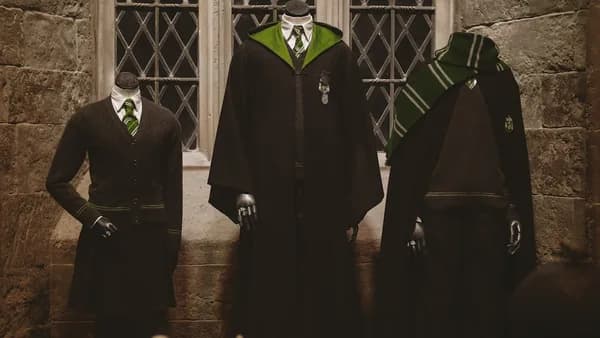
The same fan sensitivity has already surfaced around visual details in the reboot, including debate over HBO’s Hogwarts Legacy-inspired Harry Potter uniforms. Casting will draw even more attention because it affects performance, not just design.
Recasting Young Characters Has Always Been a Franchise Pressure Point
Notebookcheck frames the issue through franchise continuity. It argues that recasting a beloved character can frustrate viewers and cites Fantastic Beasts as an example of how replacing an important character can hurt a franchise.
The Harry Potter reboot is exposed to that pressure from the start because its format depends on time. The story ages its characters. The production must keep young performers available across multiple seasons while the roles grow more demanding.
That creates a different kind of casting risk from a one-off film. A child actor who appears briefly in one season may need to carry a much larger emotional and plot burden in the next. The job changes quickly.
MLXIO analysis: The safest moment to make this change is before the audience has built a strong attachment to the performance. HBO has that advantage here. It may not get the same grace if another recast happens after a character has already become central on screen.
Stakeholder Views: Producers, Actors, and Viewers Face Different Risks
For producers, this can be treated as a practical reset. The first season is still the low-disruption window for Ginny. If the replacement is cast before season 2 material becomes public, the show can fold the change into the next phase without making it the story.
For Cochrane, the public statements are careful and limited. Her family said: “Due to unforeseen circumstances Gracie has made the challenging decision to step away from her role as Ginny Weasley in the HBO Harry Potter series after season one.” They also said her time in the Harry Potter world was “truly wonderful” and that she is “very excited about the opportunities her future holds.”
For viewers, the trade-off is simple. Continuity matters. But so does having the right actor in place before Ginny’s role expands.
For HBO, the reputational issue is narrower but real. A single early recast does not signal instability by itself. But the reboot is being judged against a film series remembered for unusually stable casting across its central young roles. That comparison will follow every major casting decision.
What Is Still Unclear
The biggest unanswered question is the cause of the departure. The public explanation remains “unforeseen circumstances.” No further detail has been provided in the supplied reporting.
It is also unclear when HBO will announce the replacement, how much Ginny appears in season 1, and whether any already filmed material will be affected. The sources do not report reshoots, production delays, or changes to the season 1 release plan.
Another open question is tone. HBO can keep this contained with a clean announcement and a confident season 2 introduction. Or the recast can become a recurring fan debate if the new performance is revealed in a way that invites comparison before viewers see the full arc.
What To Watch: Season 2 Is Where the Recast Starts to Matter
The next signal is the replacement announcement. Watch how HBO frames it. A low-drama message focused on the new actor and Ginny’s role in The Chamber of Secrets would support the idea that this is an early adjustment, not a deeper production problem.
The real test comes once season 2 material appears. Ginny’s role grows from limited family presence to plot-critical character. If the new actor lands that shift, the season 1 recast may fade into trivia.
If fan scrutiny intensifies around the announcement, or if the show appears uncertain about how to present Ginny’s expanded role, the recast could become an early warning sign for the reboot’s long-term casting strategy. For now, HBO still has the best possible timing: the change is happening before Ginny becomes essential on screen.
The Bottom Line
- The Ginny Weasley recast is an early test of HBO’s ability to maintain continuity across a long-running Harry Potter adaptation.
- Ginny becomes much more important in season 2, making the replacement more visible to viewers.
- The change is less disruptive now because Gracie Cochrane’s version of Ginny has not yet had major screen time.
- HBO’s next key move is the replacement announcement and how confidently it positions the new actor before The Chamber of Secrets material arrives.