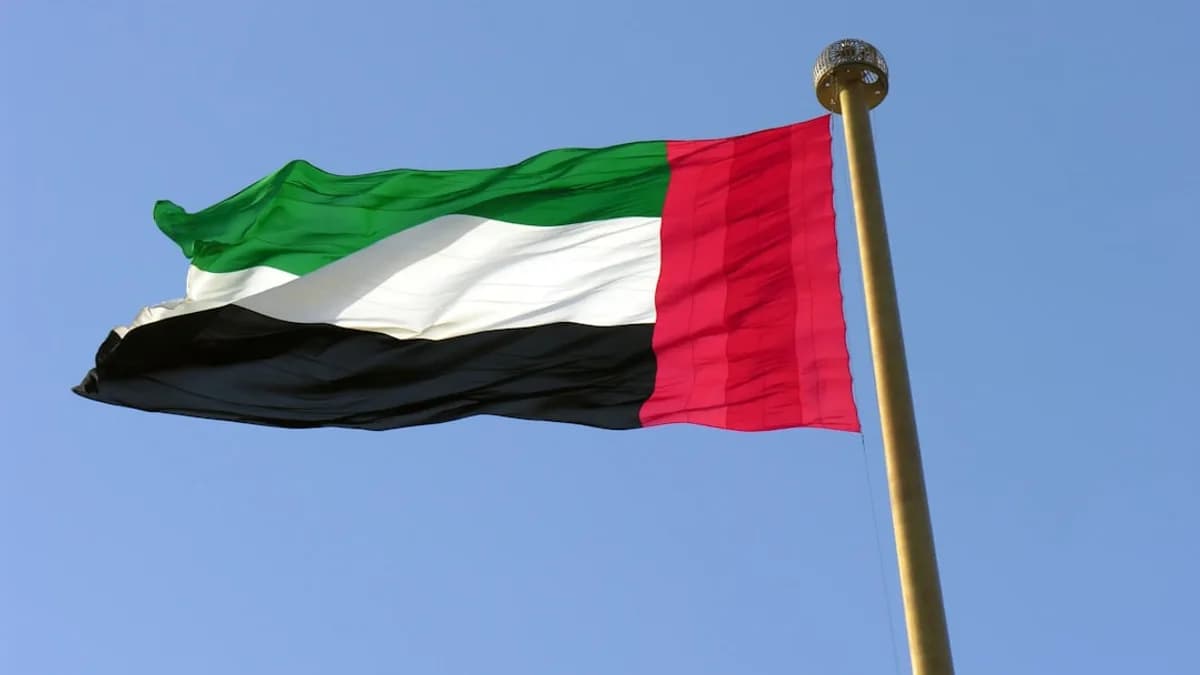
Why UAE’s Dual Exit from OPEC and OAPEC Signals a Strategic Shift in Global Oil Politics
UAE didn’t just walk away from OPEC — it slammed the door on OAPEC too, breaking decades-old norms of Arab oil exporter solidarity. This isn’t a tactical spat over quotas or market share. It’s a recalibration of power that could echo from Riyadh to Washington. By leaving both organizations nearly simultaneously, the UAE signals it no longer sees collective Arab oil bargaining as essential to its national interests. The timing is deliberate: the exits follow months of friction with Saudi Arabia and OPEC over production caps and pricing policy, and come as the UAE rapidly expands its own energy infrastructure and pivots toward global partnerships outside the Gulf bloc.
Most analysts focus on OPEC’s lost output, but the real story is geopolitical. The UAE’s departure challenges the notion that Arab oil exporters are a monolith. It exposes the cracks in an alliance that, for half a century, dictated terms to the world’s largest energy consumers. The UAE is betting that its growing technological sophistication, diversified economy, and new diplomatic relationships — from Asia to Europe — can insulate it from the risks of going solo. For context: OAPEC, founded in 1968, was meant to unify Arab oil policy and leverage collective power. The UAE’s exit is the first major defection since Egypt was suspended in 1979, and it’s far more consequential given Abu Dhabi’s rising production and financial clout.
According to Yahoo Finance, UAE officials frame the exits as “strategic realignment,” not just tactical disagreement. The subtext: they’re positioning for a world where cartel politics matter less than direct deals and flexible production.
Quantifying the Impact: UAE’s Oil Production and Market Share Post-Alliance Exits
Numbers drive power in the oil world, and the UAE’s departure strips OPEC and OAPEC of a heavyweight. The UAE’s average daily crude production in 2023 hovered around 3.3 million barrels, making it the third-largest OPEC producer after Saudi Arabia and Iraq. That’s roughly 3.4% of global output, and 12% of OPEC’s collective production. In OAPEC, it accounted for an even larger share — over 15% of total output, given the smaller membership.
By exiting, the UAE removes a stabilizing force from both alliances. OPEC’s coordinated cuts or increases will now have less impact on global supply, especially with UAE free to set its own pace. The immediate risk: pricing volatility. Without UAE’s disciplined output, OPEC’s production targets lose credibility. The Brent benchmark already reacted — prices spiked 2.7% within days of the OPEC announcement, and analysts expect further swings as UAE opens its taps or brokers new deals.
OAPEC, always smaller and more regional, faces an existential threat. With UAE gone, its combined output drops by nearly one-sixth, eroding its ability to influence Arab oil policy or negotiate with outside powers. The UAE’s independence also means more unpredictability. Its production increases or cuts will now respond to market signals or bilateral deals, not cartel consensus. For global traders and energy planners, that means more guesswork — and more risk premiums baked into futures contracts.
Diverse Stakeholder Reactions to UAE’s Withdrawal from Arab Oil Exporter Alliances
UAE officials project confidence. Energy minister Suhail Al Mazrouei said the exits allow UAE to “pursue our own growth strategy” and “adapt to changing market realities.” Privately, Abu Dhabi insiders see this as liberation from Saudi dominance. UAE’s oil majors like ADNOC are already negotiating new export contracts with Asian and European buyers, and planning record investments in production and refining capacity — $150 billion over five years.
Saudi Arabia, predictably, is rattled. Riyadh’s response has been muted, but senior OPEC officials worry the UAE’s move could trigger a domino effect. Kuwait and Iraq have urged “restraint” and called for renewed dialogue. Egypt — still suspended from OAPEC — has quietly signaled interest in closer UAE cooperation, hinting at new regional alignments.
Global oil consumers are wary but pragmatic. India and China, both major UAE customers, welcomed the prospect of direct deals and more flexible supply. European energy companies see opportunity: less cartel discipline means more competitive pricing and faster negotiations. Investors, meanwhile, are hedging. Oil majors and trading houses are shifting more capital into UAE projects, betting Abu Dhabi will ramp up production and gain market share.
International energy organizations like the IEA warn of “potential supply instability,” but their tone is less alarmist than OPEC’s. The consensus: UAE’s independent stance could force faster adaptation in global oil markets, with new pricing mechanisms and bilateral agreements replacing cartel-driven quotas.
Tracing the Evolution of UAE’s Role in Arab Oil Alliances and Its Growing Independence
UAE wasn’t always a disruptor. It joined OPEC in 1967, just as the organization was consolidating its grip on global oil pricing. For decades, Abu Dhabi played the loyal ally, often siding with Saudi Arabia on production cuts and embargoes. OAPEC membership was even more symbolic — a commitment to Arab unity after the 1967 Six-Day War and a bulwark against Western oil majors.
But the cracks started showing in the 2010s. As UAE diversified its economy — pouring investments into tech, tourism, and renewable energy — its dependence on OPEC solidarity faded. The government launched Vision 2030 and National Energy Strategy plans, targeting lower oil revenue share and higher non-oil GDP. ADNOC, the state oil company, went global: joint ventures with BP, Total, and CNPC; new trading hubs in Singapore and London; and aggressive upstream investments.
Tensions with Saudi Arabia peaked in 2022-2023, when UAE pushed for higher production quotas to monetize its expanded capacity. Riyadh resisted, fearing price erosion. The resulting standoff exposed deep fissures: UAE wanted flexibility, Saudi Arabia wanted discipline. The OAPEC exit marks the final break. Unlike Egypt’s 1979 suspension, which was political, UAE’s move is economic and strategic — signaling confidence in its ability to thrive outside traditional alliances.
What UAE’s Exit Means for the Future of Arab Oil Exporter Collaboration and Regional Energy Dynamics
Arab oil exporter unity is now a myth. UAE’s departure from both OPEC and OAPEC raises the specter of fragmentation — not just for the Gulf, but for the wider Middle East. Cartel discipline relied on mutual trust and shared interests, but those have eroded as economic diversification and national ambitions take precedence. Saudi Arabia’s leadership is less secure, and smaller exporters like Kuwait, Libya, or Algeria may start questioning their own membership.
If fragmentation accelerates, regional energy cooperation could unravel. Joint infrastructure projects (pipelines, shipping terminals, refineries) may stall, and collective bargaining power with global consumers could dissipate. This opens the door for outside players — Russia, China, even Western oil majors — to strike bilateral deals and reshape the region’s energy map.
Global energy security faces new uncertainty. OPEC and OAPEC’s ability to manage supply shocks or price spikes weakens without UAE’s output and credibility. The risk isn’t just volatility: it’s the loss of a central coordinating mechanism. Some analysts argue this could hasten the transition to alternative energy, as consumers seek stability in renewables, LNG, or nuclear. But in the short term, instability could drive prices higher and trigger new investment in fossil fuel capacity.
Predicting the Next Moves: How UAE’s Exit Could Reshape Global Oil Markets and Alliances
UAE has options — and leverage. With its production capacity, financial muscle, and global partnerships, it could pursue bilateral deals with Asian giants (China, India), or join new blocs like the Shanghai Cooperation Organization’s energy group. Direct contracts, hedging arrangements, and joint ventures with Western oil majors are already underway. Expect Abu Dhabi to market itself as a “reliable, flexible supplier,” aiming to capture market share from less nimble rivals.
OPEC and OAPEC face hard choices. Saudi Arabia may try to woo UAE back or tighten discipline among remaining members, but both strategies have limits. If further defections occur, OPEC could shrink to a symbolic body, echoing its faded influence in the 1980s after the Iran-Iraq war and Mexico’s exit from coordinated quotas. OAPEC’s survival is in question; without UAE, its bargaining power and relevance are severely diminished.
Long-term, oil prices will likely see more volatility, but also faster price discovery as cartel coordination fades. Supply chains may become more fragmented, with UAE-driven exports bypassing traditional Gulf routes. Geopolitical alignments could shift: UAE’s independence may attract investment and diplomatic interest from China, Russia, and the EU, while Saudi Arabia doubles down on its own production and diversification plans.
The next twelve months will be decisive. If UAE’s solo strategy delivers higher revenues and stable markets, expect other Gulf producers to rethink their cartel loyalties. If instability spikes, Riyadh may try to rebuild alliances or clamp down harder. In either scenario, the era of Arab oil exporter unity is over — and the world will need new mechanisms to manage energy supply, pricing, and security.
Impact Analysis
- The UAE’s exit signals a weakening of collective Arab oil exporter influence on global markets.
- It could lead to more flexible, independent oil deals and challenge the dominance of traditional cartels.
- This strategic shift may reshape geopolitical alliances and energy policy beyond the Gulf region.