Starlink’s Breakthrough Speed Improvements Prove SpaceX’s Market Leadership
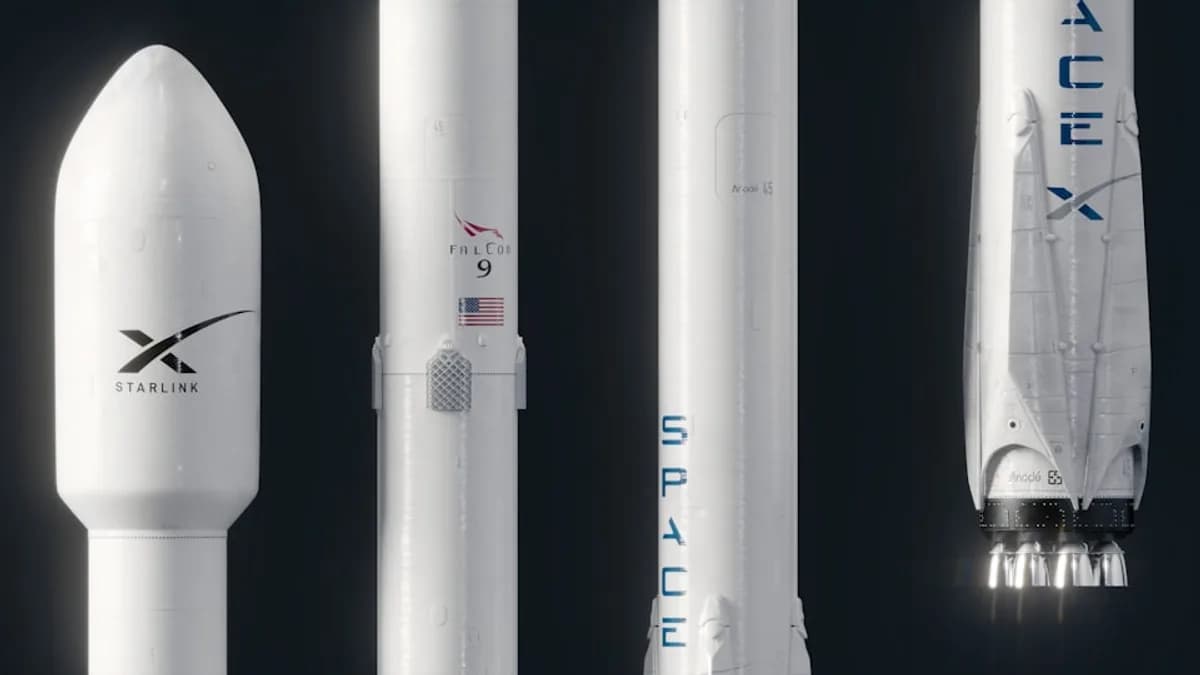
Starlink just delivered median download speeds topping 100 Mbps in multiple U.S. states—a leap that shatters many rural fixed-line benchmarks and cements SpaceX’s dominance in satellite internet. In the latest Ookla Speedtest data, Starlink posted 25% year-on-year speed gains, with some users clocking over 150 Mbps during peak hours. For remote households, that’s the difference between buffering Zoom calls and seamless streaming; for SpaceX, it’s validation that low Earth orbit constellations can finally outpace legacy rural ISPs.
These improvements aren’t incremental. Starlink’s latency now regularly dips below 50ms, closing the gap with wired broadband and leaving geostationary satellite rivals in the dust. The user experience for rural families, small businesses, and digital nomads is fundamentally changing. Starlink’s network upgrades—more satellites, improved antenna designs, and smarter routing algorithms—are paying off. The service now supports over 2.5 million customers globally, up from 1.5 million last year, and that exponential growth is driving real revenue. As Notebookcheck reports, these speed milestones arrive just as SpaceX edges closer to a long-awaited IPO. The message for public investors: Starlink isn’t just viable—it’s setting the pace.
Why Starlink’s Success Underscores the Importance of Continued FCC Support
Defunding SpaceX’s rural internet initiative isn’t just short-sighted—it risks dooming millions to digital isolation. The FCC pulled over $885 million in Rural Digital Opportunity Fund (RDOF) subsidies from SpaceX in 2022, citing uncertainty about service reliability and coverage. Yet the data now contradicts those doubts. Starlink’s rapid speed improvements and expanding footprint prove that satellite can meet, and often exceed, the FCC’s own broadband targets.
FCC support isn’t a handout for SpaceX; it’s an investment in rural resilience. Fiber and cable deployments routinely stall in sparsely populated regions. Laying a single mile of fiber can cost $27,000 or more, according to industry estimates, while Starlink’s satellites require zero new ground infrastructure for each added user. For many rural communities, Starlink is the only provider offering triple-digit megabit speeds. The FCC’s stated mission is universal service—connecting every American—and Starlink is delivering where terrestrial ISPs won’t.
The argument that SpaceX can “go it alone” ignores the economics of rural broadband. Private capital flows to cities and suburbs, not ranches and reservations. With over 14 million Americans still lacking fixed broadband, the digital divide is a national economic liability. Small towns lose access to telehealth, distance learning, and remote work opportunities—services that Starlink can restore overnight. Defunding SpaceX sends a signal that the FCC’s commitment to rural America is negotiable, even as Starlink’s progress makes their mission more attainable than ever.
The Economic and Strategic Risks of Defunding SpaceX’s Rural Internet Initiative
Cutting SpaceX out of rural broadband funding doesn’t just hurt one company—it undermines U.S. competitiveness. Strip away FCC support, and hundreds of thousands of rural households face higher costs or outright disconnection. Starlink’s standard residential plan currently sits at $120/month, already a stretch for many rural families. Subsidies help close that affordability gap. Without them, the digital divide widens, locking rural economies out of the 21st century.
Starlink’s rivals—Viasat, HughesNet, and a handful of LEO startups—don’t match its speed or coverage. Defunding SpaceX dampens competitive pressure, slowing innovation across the sector. We saw this with rural DSL: when public funding dried up, speeds stagnated for a decade. The satellite broadband market is at a similar crossroads. Supporting Starlink forces competitors to accelerate their own upgrades, benefiting all users.
There’s a strategic angle, too. Starlink’s constellation is not just an internet service; it’s a critical technology for defense, disaster response, and national security. The Pentagon has already tapped Starlink for field communications in Ukraine and other conflict zones. Weakening its commercial base also risks ceding ground to foreign players—OneWeb (now majority owned by Eutelsat) and China’s Guowang project are racing to copy SpaceX’s model. If the U.S. kneecaps its own market leader, it hands rivals a geopolitical gift.
Addressing FCC’s Concerns: Acknowledging the Counterarguments Against Starlink Funding
Regulators aren’t wrong to worry about fair competition or efficient use of public funds. The FCC’s main objections—concerns about long-term performance, potential overbuild, and the risk of crowding out smaller ISPs—deserve scrutiny. Some rural advocates argue that fiber, while more expensive up front, delivers higher long-term capacity and reliability. Others fear that concentrating subsidies on a single company could stifle local innovation.
But the facts on the ground have shifted. Starlink’s network has scaled at a pace unmatched by any rural fiber project. Real-world speed tests now show Starlink exceeding the FCC’s 100/20 Mbps standard in most areas. A blanket ban on satellite funding ignores the diversity of rural America—what works in Iowa cornfields won’t work in Alaskan tundra. The solution isn’t either/or. The FCC can set performance-based milestones, clawback provisions, and requirement for open access to ensure accountability. Targeted, technology-neutral subsidies can maximize coverage and value for taxpayers.
Supporting Starlink’s Growth Is Essential for America’s Digital Future and Space Industry Leadership
The FCC should restore funding for Starlink and make rural connectivity a national, bipartisan priority. SpaceX has proven that satellite broadband is no longer a last resort—it’s a lifeline, and a catalyst for economic development. Every dollar invested in rural internet multiplies across healthcare, education, and job creation. And every American connected by Starlink strengthens the country’s position in the emerging space economy.
Washington can’t afford to play small ball on broadband policy. The stakes—innovation, competitiveness, and opportunity—demand ambition. The FCC and Congress should back SpaceX’s rural push, update subsidy rules for the satellite era, and keep America’s digital frontier open for business.
The Bottom Line
- Starlink's speed and latency improvements are redefining rural internet access.
- SpaceX's market momentum strengthens its IPO prospects and investor confidence.
- FCC funding decisions could shape the future of connectivity for remote communities.