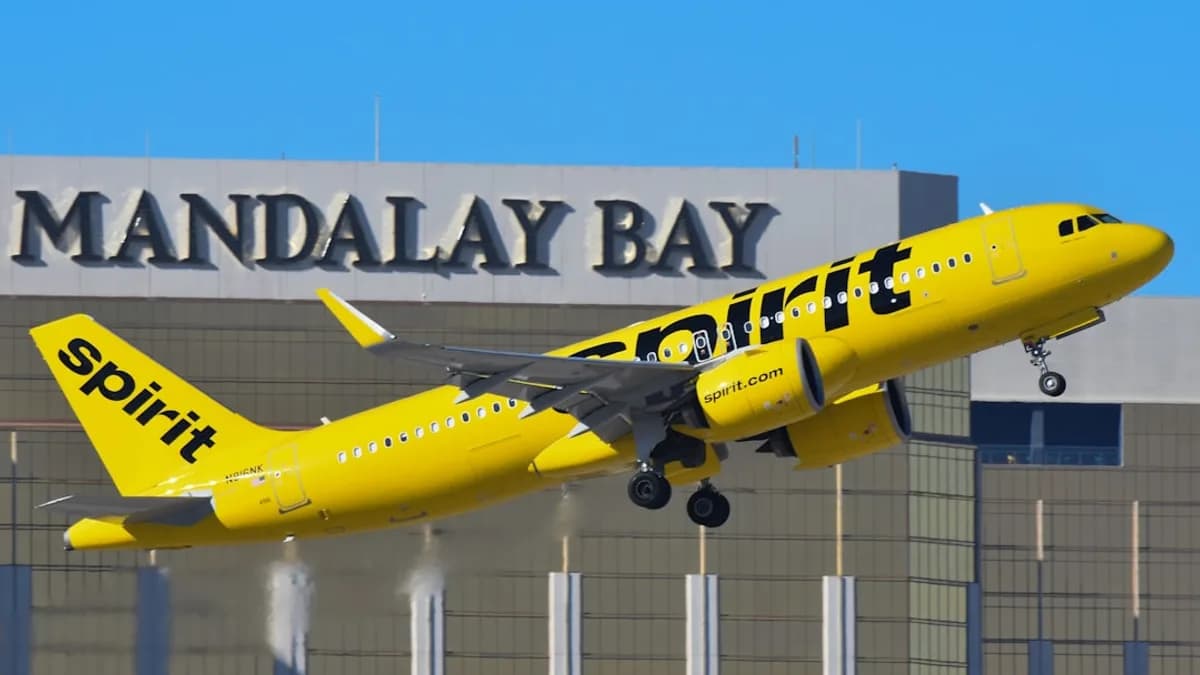
Why Spirit Airlines’ Collapse Signals a Shift in the U.S. Aviation Market
Spirit Airlines' liquidation isn’t just a casualty of bad balance sheets—it’s a symptom of deeper structural cracks in the U.S. airline industry. The failed bailout attempt underscores the limits of investor and government appetite for rescuing ultra-low-cost carriers, especially as macroeconomic headwinds intensify. With Spirit gone, a major player in the budget segment has vanished overnight, erasing a model that once forced legacy airlines to slash fares and rethink customer experience.
Spirit’s shutdown, confirmed after bailout negotiations collapsed, rattles the market by reducing capacity and eliminating a key source of price competition, according to CryptoBriefing. The company’s heavy reliance on discount fares and ancillary fees left it exposed as fuel prices surged and consumer demand softened. Geopolitical tensions, including disruptions in oil supply and ongoing conflicts, further squeezed margins, making Spirit’s business model untenable.
The demise of Spirit signals a turning point for ULCCs. These carriers once thrived in post-2008 recovery, leveraging nimble fleets and aggressive pricing. Now, heightened economic uncertainty and volatile fuel costs threaten their survival. Spirit’s collapse forces the industry to confront uncomfortable questions: Are ultra-low fares sustainable in a world of inflation and geopolitical risk? And will regulators tolerate fewer, larger airlines dominating the skies?
Quantifying the Fallout: Impact of Spirit Airlines’ Liquidation on Airfares and Market Dynamics
With Spirit gone, U.S. travelers face an immediate squeeze—not just on seat availability, but on their wallets. Before liquidation, Spirit controlled roughly 5% of the U.S. domestic market, operating over 600 daily flights across 80+ destinations. Its average fares consistently undercut competitors, with one-way tickets often $40–$80 below legacy carriers on comparable routes. In cities like Fort Lauderdale, Detroit, and Las Vegas, Spirit was the go-to for budget-conscious flyers, fueling a race to the bottom on prices.
Now, capacity shrinks overnight. Analysts expect fares on Spirit’s former routes to jump 15–30% in the next six months, especially in markets where only one or two major carriers remain. Delta, United, and American stand to gain pricing power, with little incentive to fill the gap with discounted seats. Southwest, the nearest peer in the low-cost space, faces its own cost pressures and isn’t positioned to absorb Spirit’s footprint wholesale.
Fuel volatility compounds the problem. Jet fuel prices have spiked over 20% year-to-date, driven by Middle East unrest and supply chain disruptions. For remaining carriers, higher operating costs will be passed directly to consumers—Spirit’s absence removes a crucial buffer against fare inflation. The last time a major ULCC exited, after the 2008 collapse of ATA and Aloha Airlines, average domestic fares rose 18% within a year, according to Bureau of Transportation Statistics data.
Airline industry consolidation is no longer just a theoretical risk; it’s an unfolding reality. Fewer players means less incentive for aggressive pricing, less innovation, and more market power for the giants.
Diverse Stakeholder Perspectives on Spirit Airlines’ Demise and Industry Consequences
Travelers lose twice: first, as fares climb; second, as the choice narrows. Budget flyers, especially in secondary cities, will feel the sting most acutely. For families and students who relied on Spirit’s $99 round-trip deals, alternatives will cost significantly more. Frequent flyers accustomed to Spirit’s à la carte pricing—paying only for what they need—must now contend with bundled fares and limited flexibility.
Airline executives see opportunity and risk. Legacy carriers quietly welcome Spirit’s exit, as it removes a fierce competitor and opens up profitable routes. Yet, some industry insiders warn that unchecked consolidation could backfire, drawing antitrust scrutiny and stifling innovation. “The ultra-low-cost model kept everyone honest,” one executive said. “Without it, the temptation to raise prices is real.”
Regulators face a dilemma. The Department of Transportation has resisted full-scale bailouts for ULCCs, citing market discipline and taxpayer risk. But Spirit’s collapse raises questions about whether existing policies are too hands-off. Lawmakers may push for new oversight or targeted relief to prevent further erosion of budget competition—especially as air travel plays a critical role in regional economies and consumer welfare.
Tracing the Evolution of Ultra-Low-Cost Carriers and What Spirit’s Fall Reveals About Industry Trends
Spirit’s trajectory mirrors the volatile history of U.S. aviation. ULCCs surged after the Great Recession, exploiting gaps left by bankrupt legacy carriers and a wave of mergers (Delta-Northwest, United-Continental). The playbook: bare-bones service, relentless cost-cutting, and fees for everything from carry-ons to seat selection. Spirit, Frontier, and Allegiant rode this model to rapid growth, capturing price-sensitive demand and reshaping industry norms.
But what worked in the 2010s faltered as inflation, labor costs, and fuel volatility returned. Consumers gravitated toward reliability and comfort, especially after pandemic disruptions made travel feel riskier. Spirit’s attempt to merge with JetBlue—blocked by antitrust regulators in 2023—was a desperate move to scale up and diversify, but it exposed the fragility of the ULCC model when demand and costs diverge.
History shows that airline exits and consolidations have lasting effects. After Eastern and Pan Am folded in the early 1990s, routes disappeared and fares soared. Each wave of mergers reduced competition, culminating in today’s “Big Four” dominance. Spirit’s liquidation is a fresh reminder: ULCCs can disrupt, but they’re vulnerable when economic tides turn.
What Spirit Airlines’ Shutdown Means for Travelers and the Broader U.S. Economy
The ripple effects go well beyond ticket prices. Higher airfares will dampen leisure travel, especially among cost-sensitive groups. The American Society of Travel Advisors predicts a 10% drop in domestic vacation bookings over the next year, as families and solo travelers reevaluate budgets. Business travel, already slow to recover post-pandemic, faces renewed headwinds as corporations cut spending amid uncertain economic signals.
Airline health is a leading indicator for recession risk. Spirit’s shutdown, paired with rising fares and declining bookings, signals weak consumer confidence and tightening household budgets. In 2008 and 2020, sharp contractions in air travel preceded broader economic downturns. If tourism and business travel shrink, hospitality, retail, and local economies will feel the pain.
Tourism boards in Florida, Nevada, and Michigan—regions where Spirit was a key inbound carrier—expect short-term declines in visitor numbers and spending. Hotel chains and car rental companies will need to adjust forecasts. The U.S. airline sector’s contraction threatens to amplify recession signals, especially if consumer demand doesn’t rebound or if fuel prices stay elevated.
Predicting the Future: How the U.S. Aviation Industry Could Adapt Post-Spirit Liquidation
Expect a scramble for Spirit’s assets and routes. Larger carriers will snap up lucrative slots, but the loss of ULCC capacity leaves a void that niche players may try to fill. Frontier, Allegiant, and new entrants could expand selectively, but only if they can weather fuel volatility and rising labor costs. If inflation persists, even surviving ULCCs may shift away from rock-bottom fares, focusing on ancillary revenue and operational efficiency.
Consolidation is the immediate trajectory. The Big Four—Delta, United, American, Southwest—will gain market share and pricing power, barring regulatory pushback. Lawmakers may revisit merger policies or consider targeted subsidies for regional carriers to preserve competition. The Department of Transportation could mandate slot divestitures or new pricing transparency rules, but history suggests regulatory intervention tends to lag market realities.
Long-term, the industry faces a crossroads. Geopolitical instability will keep fuel prices unpredictable, pushing airlines to rethink route networks and fleet investments. Consumer demand may splinter: price-sensitive travelers could shift to buses and trains, while higher-income flyers absorb cost hikes. If new ULCCs emerge, they’ll need fresh models—think flexible pricing, partnerships, or innovative tech—to survive.
Spirit’s liquidation isn’t just a footnote; it’s a harbinger. The U.S. aviation market is entering a new phase—less competition, higher fares, and greater vulnerability to global shocks. Unless regulators and new entrants act decisively, travelers should brace for fewer options and steeper prices, with ripple effects extending far beyond the runway.
Impact Analysis
- Spirit’s collapse reduces price competition, likely raising airfares for U.S. travelers.
- The shutdown signals vulnerability of ultra-low-cost carriers amid economic and geopolitical pressures.
- Fewer airlines may lead to less consumer choice and greater dominance by legacy carriers.