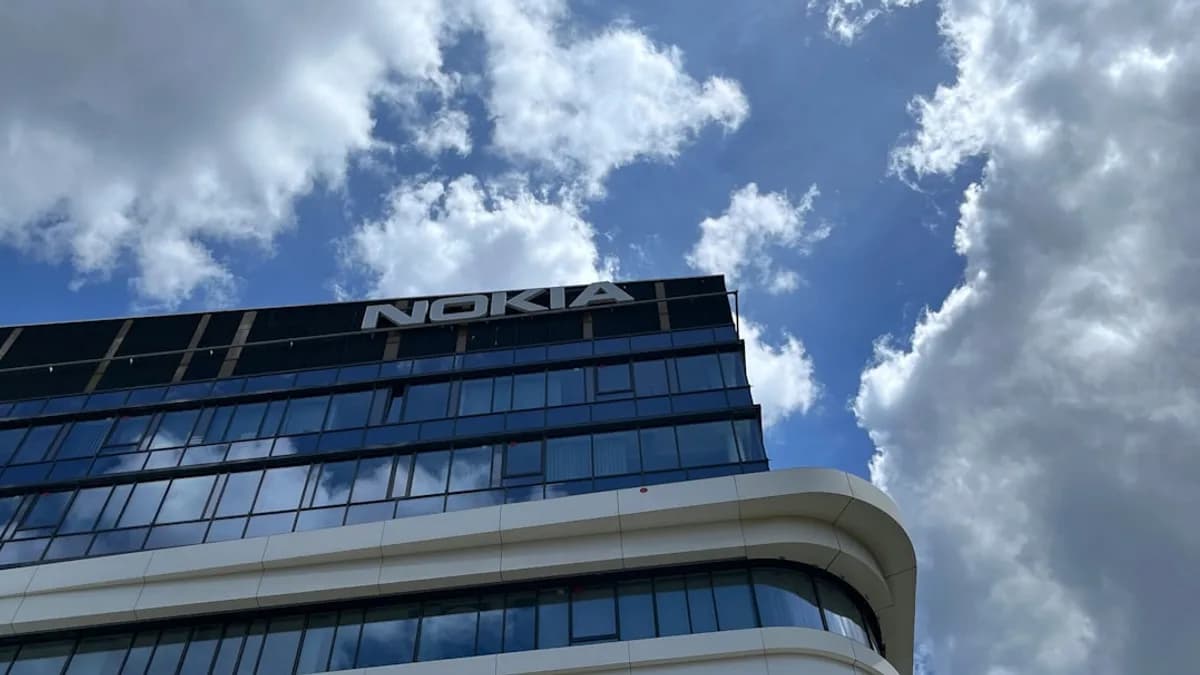
Why Nokia’s Divestment of Its Wi-Fi Box Business Signals a Strategic Shift
Nokia didn’t just offload a commodity product line—it cut loose from a low-margin, competitive slog to bet harder on its high-stakes future: network infrastructure, 5G, and enterprise tech. The sale of its Wi-Fi box business is less about cashing out, more about clearing the decks for a company that’s finally acting like it knows what it wants to be. Nokia’s move, as reported by Yahoo Finance, signals a break from the legacy consumer hardware playbook—a space where it was never a dominant force after the smartphone flameout—and a pivot to the business of building the backbone for tomorrow’s internet.
The home Wi-Fi market has turned into a brutal game: razor-thin margins, constant price wars, and little room for differentiation. Nokia’s routers and mesh devices were competent, but never category leaders against Netgear, TP-Link, or Google Nest. Instead of fighting for scraps, Nokia’s management is focusing on telco-grade solutions, private networks, and software-driven services—where recurring revenue, sticky contracts, and technical moat matter more. This isn’t just cost-cutting; it’s an attempt to reframe Nokia as an indispensable partner for carriers and enterprises chasing next-gen connectivity.
By trimming consumer-facing clutter, Nokia can direct R&D dollars to areas with higher barriers to entry: programmable networks, edge computing, and 5G integration. The divestment also fits with recent moves—like its investments in Open RAN and cloud-native network management—that signal a company chasing relevance, not nostalgia. If Nokia executes, it could finally shed its “legacy hardware” baggage and become a pure-play infrastructure innovator.
Financial Impact: How the Sale Boosted Nokia’s Market Valuation and Investor Confidence
Nokia’s stock surged nearly 8% on the day of the sale announcement, trading hands at €3.92 versus €3.63 the previous session—a jump worth over €1.6 billion in market cap. Investors didn’t just like the deal; they saw it as overdue. The transaction, reportedly valued at €175 million, won’t transform Nokia’s balance sheet, but it’s the signal that counts: management is willing to cut non-core assets to sharpen focus and profitability.
For a company that posted €22.3 billion in revenue last year but struggled to grow operating profit beyond 7%, the Wi-Fi box business wasn’t moving the needle. Analysts estimate it contributed less than 2% of annual revenue, with margins well below the group average. Shedding this unit is expected to improve Nokia’s EBIT margin by 30-40 basis points in 2024, according to J.P. Morgan research. More importantly, the freed-up working capital can be redeployed into R&D, M&A, or debt reduction—each more attractive to shareholders than propping up a stagnant product line.
Investor sentiment turned sharply positive, with Barclays upgrading Nokia’s outlook from “neutral” to “overweight.” The sale is viewed not just as a cash win, but as proof Nokia’s top brass is serious about discipline and focus—a narrative that’s been missing for years. The move also aligns with activist investor demands for tighter capital allocation and higher returns on invested capital, which, if sustained, could drive more institutional interest.
Stakeholder Perspectives: What Investors, Competitors, and Customers Are Saying
Investors see the sale as Nokia finally learning from its past, ditching consumer distractions to put everything behind its network ambitions. Many are betting this signals further divestments and a leaner, more predictable earnings profile. Some, like Finnish pension funds, have voiced concerns about Nokia’s shrinking diversification, but most institutional shareholders prefer focus over sprawling mediocrity.
Competitors are watching closely. Huawei and Cisco, both with sprawling portfolios, may feel pressure to streamline their own consumer hardware lines if Nokia’s strategy pays off. Conversely, Wi-Fi specialists like Netgear and TP-Link could scoop up market share in Europe and Asia, where Nokia’s brand carried weight among telecom partners.
For customers, the immediate impact is limited: Nokia has pledged ongoing support and warranty coverage for existing devices. The buyer, an unnamed European networking conglomerate, is expected to maintain service continuity—though long-term innovation and firmware upgrades may slow. Enterprise clients won’t notice; home users might, if future product lines shift away from Nokia’s familiar interface and support channels.
Tracing Nokia’s Wi-Fi Business Journey: From Market Entry to Strategic Exit
Nokia’s Wi-Fi box adventure began in 2018, a late entry in a market already packed with giants. The launch was meant to piggyback on the company’s reputation for reliability, but the timing was off. Consumer networking hardware had become commoditized, with price competition outpacing innovation. Nokia’s mesh routers earned solid reviews but rarely cracked the top three in global sales.
The company’s Wi-Fi boxes targeted telecom bundles, leveraging distribution through carrier partners instead of retail shelves. This gave Nokia a foothold in Europe and parts of Asia, but the model struggled in North America, where direct-to-consumer sales dominated. By 2021, the business faced mounting headwinds: supply chain snarls, chip shortages, and relentless margin pressure.
Industry-wide, Wi-Fi hardware has seen consolidation and exits. Linksys was acquired by Foxconn in 2018. Google’s Nest Wi-Fi line has stagnated. Even Cisco dumped its consumer-focused Linksys division, pivoting to enterprise only. Nokia’s exit mirrors this trend: the market rewards volume leaders or niche specialists, punishing generalists.
Key milestones: the launch of Nokia’s Beacon line in 2019; failed attempts to break into the smart home space in 2020; and the company’s internal review in 2022 that flagged Wi-Fi hardware as “non-core.” The final straw came with declining contract renewals and rising warranty costs. By 2023, the unit was hemorrhaging share. The sale is less surprise, more inevitability.
What Nokia’s Wi-Fi Business Sale Means for the Networking Industry and Consumers
The exit signals a fresh round of consolidation in consumer networking. With Nokia out, the field narrows to Netgear, TP-Link, and a handful of telco-branded OEMs. This could mean less price competition but more differentiation in features—especially as mesh networking and smart home integration become table stakes.
For consumers, there’s a tradeoff: fewer choices, but potentially faster innovation from specialists. Nokia’s Beacon devices, which bridged Wi-Fi 6 and mesh tech, set performance benchmarks—but lacked the software ecosystem and brand polish of Google or Amazon. The buyer may focus on carrier deals, leaving retail customers with fewer branded options.
Industry-wide, the deal could accelerate the push toward 5G-integrated home networking. Nokia’s departure frees it to double down on wireless-first solutions: private LTE/5G, edge compute, and programmable routers for enterprise. This leaves Wi-Fi hardware innovation to pure-play vendors, who may chase integration with smart home platforms and AI-driven optimization. The trend: networking hardware is splitting into two camps—telco-grade infrastructure and consumer-centric devices—with little overlap.
Mesh networking, once a buzzy differentiator, is now table stakes. The next battleground will be software—device management, security, and seamless upgrades—areas where Nokia’s legacy was thin. If the industry follows, hardware will become a commodity, with value shifting to services and integration.
Predicting Nokia’s Next Moves: Strategic Opportunities and Risks Ahead
Expect Nokia to pour freed capital into its bread-and-butter: 5G infrastructure, enterprise networking, and programmable software. The company has already ramped up investment in Open RAN, a fast-growing segment projected to hit $32 billion by 2026. Its partnership with Microsoft Azure for cloud-native network management is another sign it’s chasing bigger, stickier revenue streams.
Risks remain. Narrowing focus makes Nokia more vulnerable to swings in telco capex and regulatory changes. The company faces stiff competition from Huawei, Ericsson, and Cisco—all better capitalized and with deeper software stacks. If Nokia can’t out-innovate or out-integrate, it risks being boxed out of lucrative enterprise contracts.
On the upside, the divestment could unlock new agility. Nokia can chase faster innovation cycles, unburdened by legacy consumer support and retail channel headaches. R&D spending, currently at €4.2 billion annually, could tilt even harder toward AI-driven network management and private wireless—areas where value (and margins) are rising.
Prediction: Nokia will announce at least one major acquisition or partnership in edge computing or private 5G within the next twelve months. The Wi-Fi box sale is the opening act—a signal to investors that Nokia is done with commodity hardware and is ready to bet on the infrastructure that powers tomorrow’s connectivity. If it can execute, Nokia’s days as a “legacy” brand could finally be numbered. If not, the risks of being a mid-tier player in a winner-take-all market will come home fast.
The Bottom Line
- Nokia is focusing on high-margin network infrastructure and enterprise tech instead of low-margin consumer products.
- The divestment boosted investor confidence, as shown by an 8% surge in Nokia’s stock price.
- By reallocating resources, Nokia aims to become a key player in 5G and next-generation connectivity.