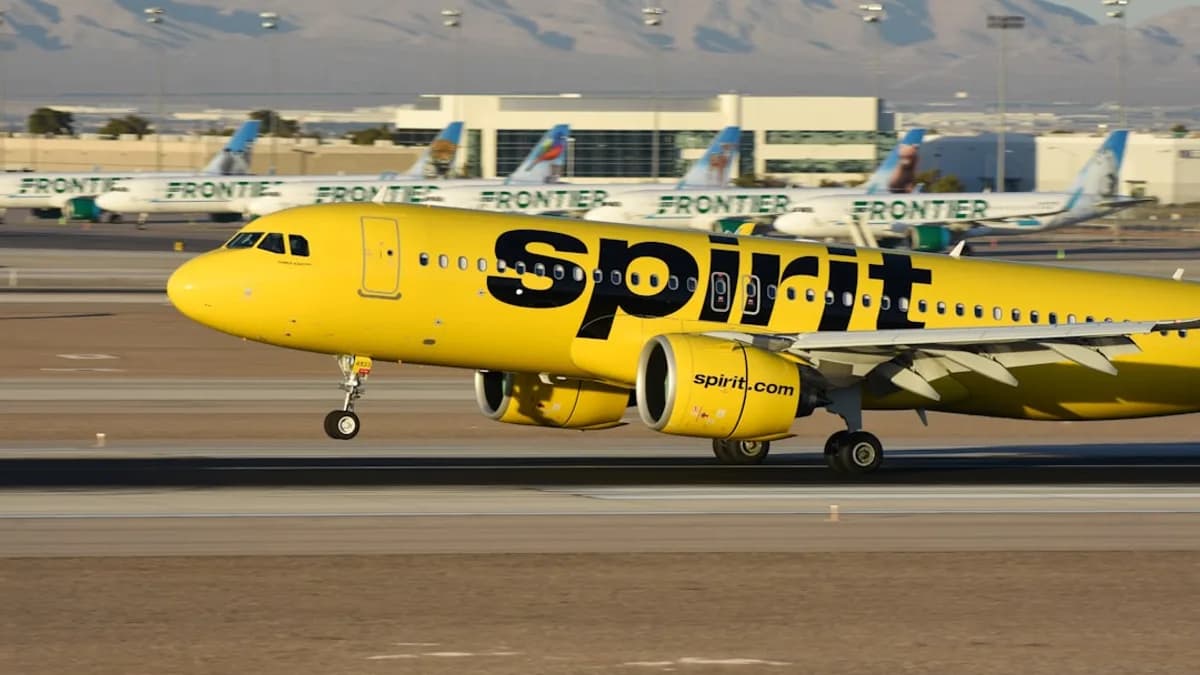
Spirit Airlines Shuts Down After 34 Years, Leaving 17,000 Employees Jobless
Spirit Airlines grounded its entire fleet and ceased all operations, abruptly ending a 34-year run as the dominant ultra-low-cost carrier in the U.S. The shutdown, announced late Sunday, sent shockwaves through the travel sector and left 17,000 employees without jobs overnight, according to Al Jazeera.
Founded in 1992, Spirit built its brand around rock-bottom fares and a no-frills approach. For years, the airline squeezed profit from high passenger volumes, charging extra for everything from carry-ons to seat selection. By 2022, it had grown to cover more than 85 destinations across North America and the Caribbean.
But the cracks had been widening for months. Quarterly losses topped $250 million by late 2025. Creditors balked at restructuring plans, and failed merger talks with JetBlue left Spirit exposed. The company cited “unsustainable financial losses” and “unmanageable operational costs” in its final statement to staff.
The abrupt collapse didn’t just erase a brand—it gutted a workforce larger than the entire U.S. railroad sector’s 2020 headcount. Employees received little warning, and many are still waiting on final paychecks and severance details.
How the Iran War Exacerbated Financial Struggles Leading to Spirit Airlines' Demise
The Iran war sent shock waves through global oil markets, pushing jet fuel prices above $145 per barrel—levels not seen since 2008. That spike decimated thin-margin carriers overnight. Spirit, which relied on volatile spot fuel purchases and lacked robust hedging, saw its operating costs soar by 40% in just four months.
While legacy airlines like Delta and American cushioned the blow with long-term fuel contracts and diversified revenue, Spirit’s business model left it dangerously exposed. Its average fare hovered near $60, but per-seat fuel costs doubled, wiping out any hope of profitability.
The Iran conflict also triggered insurance surcharges and airspace rerouting costs. Flights to Latin America, a key market for Spirit, suddenly had to detour around conflict zones, adding hours and burning more fuel. Meanwhile, consumer demand cratered as inflation and war jitters kept budget travelers at home.
Competition in the U.S. budget sector had already reached a boiling point. Frontier and Southwest slashed fares to capture Spirit’s market share, while new entrants like Breeze and Avelo cherry-picked profitable routes. The result: a price war Spirit couldn’t survive.
The broader economic backdrop only made things worse. U.S. GDP growth slowed to 1.1% in Q1 2026, and leisure travel bookings dropped 18% year-over-year. Airlines with flexible business models pivoted to premium or business routes; Spirit, built for volume, had no such fallback.
Spirit’s collapse isn’t just another airline bankruptcy. It marks the first time since Pan Am’s 1991 demise that a top-10 U.S. carrier vanished almost overnight, raising questions about the viability of the ultra-low-cost model in a world where geopolitical risk can torpedo operational budgets in a single quarter.
What’s Next for Former Spirit Airlines Employees and the Budget Airline Industry
Thousands of ex-Spirit staff—pilots, flight attendants, mechanics—are scrambling to find work in a sector suddenly flooded with experienced job seekers. Major airlines say they're hiring, but not at the scale or speed needed to absorb such a large workforce. Regional carriers and cargo operators may pick up some slack, but most roles will face fierce competition and downward pressure on wages.
For the budget airline segment, Spirit’s implosion is a cautionary tale. Investors are already pressing rivals to boost cash reserves and revisit hedging strategies. Frontier and Allegiant shares dropped 7% and 5% respectively in early Monday trading. Analysts warn that any further fuel price shocks could trigger more casualties among thinly capitalized carriers.
Regulators in Washington and at the Department of Transportation have so far signaled no appetite for bailouts, but are said to be monitoring for signs of anti-competitive behavior as surviving carriers snap up Spirit’s valuable airport slots. There’s talk of a possible emergency grant program for displaced workers, but nothing concrete has emerged.
Travelers face fewer choices and likely higher fares in the short term. Key Spirit routes—especially to Florida, the Caribbean, and underserved secondary cities—could see prices jump by 15-25% this summer as capacity shrinks and rivals consolidate.
The real test will be whether the ultra-low-cost model can adapt to a world where volatility, not stable growth, is the new normal. For now, the budget seat Spirit pioneered may be headed for a long layover.
Why It Matters
- Spirit Airlines' collapse eliminated a major ultra-low-cost travel option for U.S. consumers.
- The Iran war exposed vulnerabilities in business models dependent on cheap, volatile resources.
- 17,000 employees suddenly lost jobs, highlighting the human cost of industry disruptions.