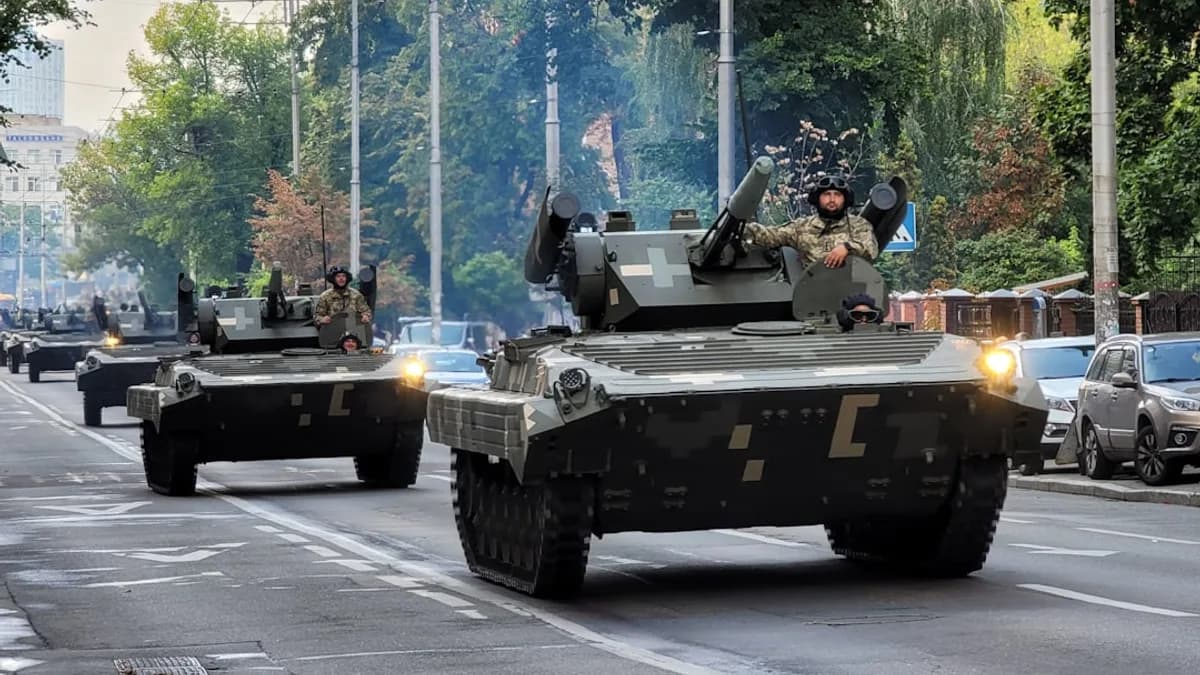
Russian Victory Day Muted by Ukrainian Drone Offensive
The most consequential development driving global searches and media coverage this week: Russia’s annual Victory Day parade in Moscow was sharply diminished, with no tanks on display and a somber public tone, as Ukrainian drone warfare intensified and Vladimir Putin’s war narrative faltered. Interest in this topic surged in tandem with reports of Ukrainian drone commander “Madyar” targeting Russian assets, triggering headlines across The Guardian, CNN, NPR, and the BBC. The cluster size and cross-outlet coverage signal a spike in consumer attention, especially as the event dovetailed with geopolitical flashpoints—Donald Trump’s call for a Russia-Ukraine ceasefire and the parade’s symbolism as Russia’s biggest patriotic holiday according to The Guardian.
Drone Warfare Disrupts Kremlin Optics and Military Posture
On-the-ground analysis reveals a Russian military leadership scrambling to protect optics and assets. This year’s Victory Day parade—the Kremlin’s annual show of military might—featured no tanks, a first since the dissolution of the Soviet Union. The absence, as reported by the BBC, signals acute equipment attrition and a defensive posture in the face of Ukrainian drone attacks. Ukrainian drone units, led by figures such as “Madyar,” are credited with ramping up pressure deep inside Russian-held territory, disrupting logistics, and forcing Russia to divert resources from the front lines to homeland defense according to The Guardian.
Victory Day as a Barometer of Russian Military Confidence
The parade’s muted tone and missing armor are more than symbolic setbacks. Victory Day traditionally projects Russian military prestige to domestic and international audiences. This year’s stripped-down ceremony, with visible cutbacks and heightened security, points to vulnerabilities in Russia’s supply chains and battlefield readiness. NPR and the New York Times both report public unease and a shift in official messaging, as the Kremlin distances itself from triumphalism and instead focuses on “solemn remembrance.” The optics of Moscow’s main event directly mirror battlefield realities.
Key Figures: “Madyar” and the Ukrainian Drone Offensive
Central to this disruption is “Madyar,” an alias for the Ukrainian drone commander whose operations have become a focal point for Western media. His units are credited with orchestrating precision strikes that have rattled Russian logistics and forced Moscow to reconsider parade security and public displays of force. The Guardian’s in-depth profile underscores “Madyar’s” role as both a tactical innovator and a propaganda counterweight to Russian narratives.
On the Russian side, Vladimir Putin’s leadership faces internal pressure to maintain morale and military credibility. The decision to scale down the Victory Day parade was not merely logistical but also political, reflecting the Kremlin’s recalculation in the face of persistent Ukrainian attacks. This dynamic has led to a visible split between public ceremony and military reality.
External Pressures: The Ceasefire Proposal
Complicating the narrative, Donald Trump’s announcement of a proposed three-day ceasefire between Russia and Ukraine injected further volatility into the news cycle. While the ceasefire proposal remains unratified and largely symbolic, its timing—coinciding with Russia’s flagship patriotic event—amplified scrutiny on the parade and Moscow’s ability to project strength according to CNN.
Strategic Setbacks: What the Parade’s Downscaling Signals for Russian Defense
The parade’s minimalism is a proxy for the state of Russian military resources. The BBC highlighted the absence of heavy armor as a sign that “the Ukraine war is not going to plan.” This is not merely a matter of parade optics; it signals supply chain disruptions, possible losses in the field, and a shift toward defensive tactics. The muted celebrations suggest a Kremlin less willing or able to project confidence, which has downstream effects on domestic morale and international perceptions.
Impact on Russian Society and Propaganda
NPR and the New York Times both note that the Kremlin’s new messaging—emphasizing remembrance over dominance—reflects broader anxieties. The absence of visible military triumphs on Victory Day, traditionally used to galvanize public support, may limit the state’s ability to rally the population behind the war effort. The shift from spectacle to sobriety is a calculated risk for Putin.
Industry and Geopolitical Implications: A Testing Moment for Defense and Security Markets
The immediate market impact is not measured in stock prices but in shifting defense priorities and procurement. Ukrainian drone success stories, led by “Madyar,” highlight the tactical advantages of inexpensive, high-impact unmanned systems—an insight not lost on Western and global defense firms. Expect increased demand for counter-drone technologies, electronic warfare systems, and battlefield intelligence platforms as both sides adapt.
Broader Geopolitical Ripples
A muted Victory Day and Ukraine’s successful drone campaign send signals to NATO, China, and arms markets worldwide: traditional Russian advantages in armored warfare are being eroded by innovative, asymmetric tactics. This recalibrates expectations for Russian military exports and may prompt allied militaries to accelerate investments in drone and counter-drone R&D.
Uncertainties and Early Signals: The Next 12 Months
Most forecasts hinge on two variables: Ukraine’s ability to sustain drone attacks at current intensity and Russia’s capacity to adapt militarily and politically. If “Madyar” and his teams maintain operational tempo, expect continued disruption of Russian logistics and further retrenchment in public military displays. Key evidence to watch:
- Frequency and effectiveness of Ukrainian drone strikes over the next year.
- Changes in Russian military doctrine, procurement, and public ceremonies.
- Shifts in propaganda tone and domestic morale as tracked by media and public opinion.
- International responses to the perceived vulnerabilities in Russian defense.
No single source forecasts a decisive shift within the next 12 months, but the evidence underscores a trend: Russia’s traditional military showpieces are under direct threat from evolving Ukrainian tactics, and the Kremlin’s public posture is already shifting in response. If current patterns hold, next year’s Victory Day may serve as an even starker referendum on Russia’s ability to project power—both at home and abroad as highlighted by the BBC.
For now, the technical, strategic, and symbolic dimensions of this year’s parade reveal more about the future of warfare—and Russian vulnerability—than any battlefield map.