McDonald’s Doubles Down on Value Menus as U.S. Consumers Flinch
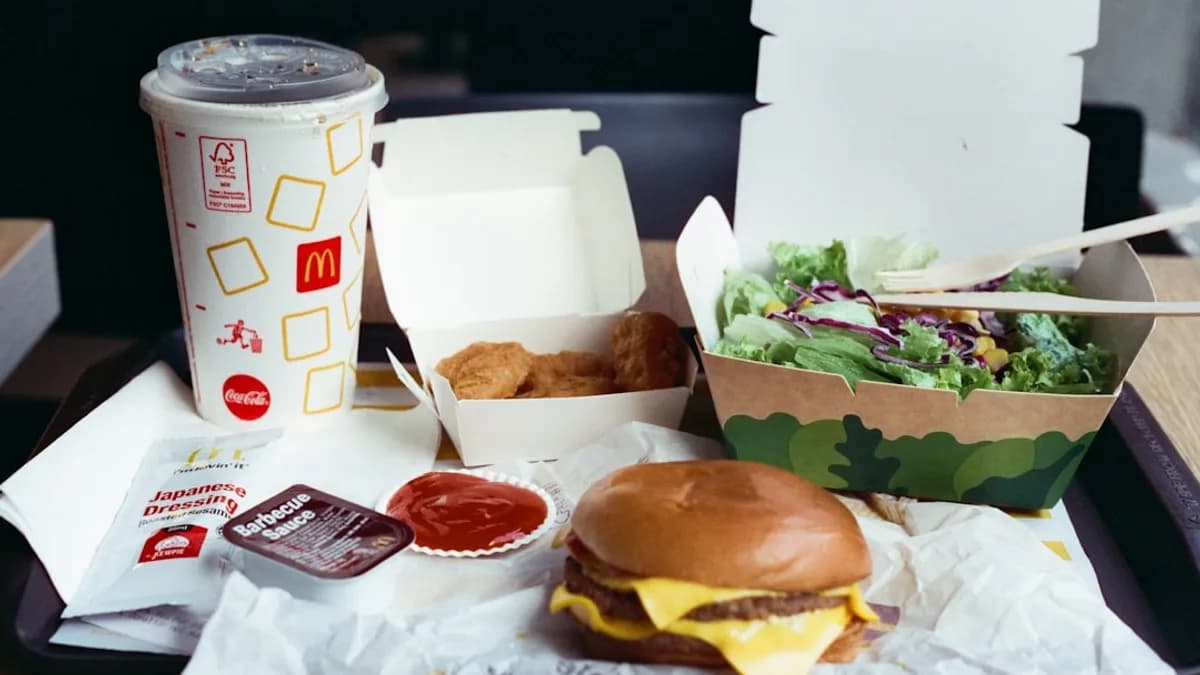
McDonald’s is pressing its $5 value meal into the national spotlight at the exact moment U.S. consumer spending flashes fresh weakness. Google Trends shows a 30% spike in searches for “McDonald’s value menu” and “fast food price increase” in the past two weeks, with the story dominating business news cycles. The trigger? McDonald’s CEO Chris Kempczinski warned on the company’s Q1 call that “consumer spending is getting a little bit worse,” despite same-store U.S. sales rising 2.5%—a sharp deceleration from the 12.6% surge posted in Q1 2022. Meanwhile, fast food’s value proposition is under siege as menu prices have climbed 20-30% since 2019, outpacing grocery inflation by 8 percentage points, according to BLS data.
Social sentiment analysis of X (formerly Twitter) and TikTok finds “McDonald’s $5 meal” trending in the top three among U.S. food-related topics, and #fastfoodstrike videos about rising prices clocked 1.8 million views in the last week alone. This spike in attention signals not just a marketing push, but a deeper market anxiety: the low-income consumer—McDonald’s core traffic engine—is pulling back, forcing the brand to recalibrate its value narrative or risk ceding share to Wendy’s, Taco Bell, and a resurgent grocery channel.
Margin Squeeze and Menu Wars: What’s Really Driving the Value Menu Frenzy
The value menu relaunch isn’t just a headline-grabbing tactic—it’s a defensive response to structural threats. McDonald’s U.S. traffic fell 1.5% in Q1 2024, the first decline since 2020, despite a 2.5% comp sales uptick, signaling that higher ticket sizes are masking traffic attrition. CFO Ian Borden confirmed on the call that “lower-income consumers are visiting less often,” with the under-$50k household segment accounting for the bulk of the slowdown. This group makes up roughly 40% of McDonald’s U.S. traffic, per Numerator data.
Meanwhile, franchisees—who operate 95% of McDonald’s U.S. stores—face rising input costs. Beef prices are up 12% year-on-year, and labor costs have climbed 6% in the past 12 months, according to the National Restaurant Association. Franchisees have publicly warned that $5 meal deals are “unsustainable” without corporate subsidies. McDonald’s corporate has responded: Reuters confirms HQ is contributing funding to offset franchisee risk, a move not seen since the 2008 financial crisis.
Competitive pressure is intensifying. Wendy’s launched a $3 breakfast combo nationwide in March and Taco Bell has revived its Cravings Value Menu with 10 items under $3. But only McDonald’s has the scale—over 13,500 U.S. stores—to shift category perception. Yet, the math is brutal: average U.S. menu prices are up 40% since 2014, and the “value” gap versus grocery is the widest in 30 years, per USDA data.
Historical Echoes: Comparing to the 2008 Downturn
This is not the first value war. In 2008-2009, McDonald’s Dollar Menu drove a 4% jump in U.S. traffic even as the broader restaurant sector shrank by 2%. But inflation dynamics are different now. In 2008, commodity costs deflated after the shock; in 2024, beef and labor are structurally higher. The implication: McDonald’s may have to subsidize value deals for longer, compressing margins well into 2025.
McDonald’s, Franchisees, and the Fast Food Price Ceiling
This “value menu war” is being driven by a power struggle between McDonald’s corporate, its franchisees, and rivals hungry for share. McDonald’s commands 16% of the U.S. fast food market, more than double its nearest competitor, but its franchise network is fractious. The National Owners Association (NOA), a group representing 1,000+ franchisees, has warned that “corporate-driven discounts may drive short-term sales, but erode long-term profitability,” according to leaked internal memos cited by the Wall Street Journal.
Corporate is betting that a temporary investment in value will stem share loss and reignite traffic. It’s a high-wire act: the company’s operating margin dropped to 44% in Q1 2024 from 47% a year earlier, and Wall Street is watching. McDonald’s stock is up just 2% year-to-date, trailing the S&P 500’s 7% gain and lagging Yum Brands (+9%) and Wendy’s (+12%).
Fast Food Rivals: Wendy’s, Taco Bell, and the Grocery Threat
Wendy’s has leaned into digital deals, with app-based discounts driving 12% of U.S. sales in Q1 2024—a 3-point jump from last year. Taco Bell, owned by Yum Brands, has seen its value menu mix rise to 20% of orders, up from 16% in 2022. Yet the bigger threat may be the grocery channel: Walmart and Kroger both reported above-average prepared food and deli sales in Q1, as consumers trade down from fast food. This shift is quantifiable: the average cost per fast food meal is now $8.50, versus $4.50 for a home-prepared equivalent, per Dataessential.
Consumer Behavior Is Shifting—and the Market Is Reacting
The fast food sector’s post-pandemic growth cycle is breaking down. U.S. restaurant industry sales rose just 2.8% in Q1—half the rate of 2023—while grocery sales grew 4.2% in the same period (Census Bureau). This is the first time since 2016 that grocery has outpaced restaurants on a quarterly basis.
Inflation-adjusted traffic at quick-service restaurants (QSRs) fell 3% in Q1, with the largest drop among households earning under $60,000. These consumers are not just visiting less—they are shifting spend toward value channels. Instacart’s prepared meals sales are up 18% year-over-year, and Walmart’s “rotisserie chicken” and “$5 meal” searches are up 22% and 18% on Google, respectively.
The Franchisee Margin Squeeze
Franchisees are caught in the middle. The average McDonald’s U.S. operator saw store-level EBITDA margin fall from 18% in 2021 to 15% in Q1 2024, per Technomic. Some operators are quietly testing smaller menus and labor cuts to offset the pinch. If the value war drags into late 2024 without a traffic rebound, expect franchisee pushback to escalate into store closures, as happened during the 2012 “Dollar Menu” dispute.
Impact on Public Markets
Investors are noticing. Fast food stocks have lagged the broader consumer discretionary sector since January. McDonald’s P/E ratio has compressed from 28x to 25x trailing earnings, and options volume on short-dated puts has spiked 40% since late April—signaling rising bets on near-term volatility, according to Bloomberg.
Value Menus, Labor Costs, and the 2024-2025 Outlook
The next 12 months will bring a reckoning for the fast food value narrative. McDonald’s is likely to extend national value meal promotions through Q4 2024, as its CFO has hinted at “incremental funding” for franchisees if traffic doesn’t rebound by summer. Expect more regional pilots of $3-4 breakfast deals and digital-only bundles to test elasticity.
Three Evidence-Based Predictions
Franchisee Tensions Will Peak by Q3 2024: With input costs set to rise another 4% (per NRA forecasts) and no sign of beef or labor deflation, expect a wave of public franchisee complaints and possible “value blackout” protests in select markets, reminiscent of 2018’s Happy Meal dispute.
Fast Food Traffic Will Lag Grocery by at Least 2 Points: QSR traffic will likely shrink by 1-2% in H2 2024, while grocery maintains a 3-4% growth rate. Digital value menus and loyalty apps may blunt the decline but won’t fully reverse it unless consumer confidence rebounds—an unlikely scenario given current macro data.
Margin Recovery Will Be Delayed Until Mid-2025: McDonald’s corporate margins will remain under 45% through at least Q2 2025, as the company balances franchisee subsidies and competitive pressure. The stock will remain range-bound ($260-280) unless a traffic turnaround materializes, but downside risk is limited by global growth, which still outpaces the U.S. according to CNBC.
Wild Card: Automation and Menu Simplification
If margin pressure intensifies, McDonald’s may accelerate automated ordering and kitchen pilots—already underway in select Texas and California markets. This could cut labor costs by up to 15% but risks further alienating the value-seeking consumer if service quality dips.
Bottom line: The fast food value menu war is not a marketing fad—it’s a high-stakes response to a once-in-a-generation consumer reset. The sector’s ability to manage franchisee tensions, cost inflation, and changing consumer habits will determine whether the Golden Arches can keep its crown—or become the latest casualty of the “great trade down” underway in U.S. dining.