GameStop's $56 Billion eBay Bid: The Meme Stock Frenzy Morphs Into Full-Contact M&A
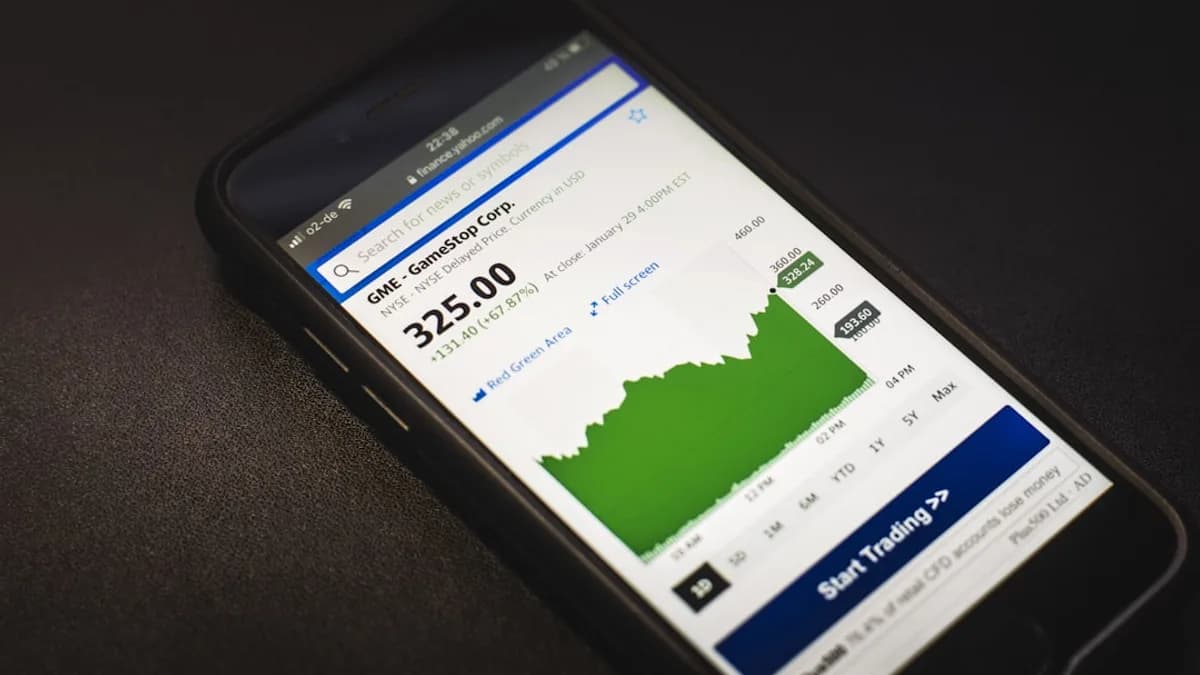
GameStop’s $56 billion unsolicited bid for eBay marks the most audacious escalation of meme stock muscle since the 2021 trading mania—and it’s sparking more search traffic than Amazon earnings or Fed minutes this week. Google Trends shows "GameStop eBay takeover" searches spiking 1,600% in 48 hours, outpacing most S&P 500 news. The deal’s sheer size—more than triple GameStop’s own market cap—has algorithmic traders, retail investors, and institutional desks all scrambling for angles.
This isn’t a standard M&A cycle. The trigger is a confluence of meme stock resurgence—GameStop shares doubled in the past week on renewed Reddit and X chatter—colliding with e-commerce consolidation rumors and the return of Roaring Kitty to social media. Legacy financial media and crypto Twitter are both amplifying the news, with GME trending top 3 on Stocktwits and r/WallStreetBets seeing its busiest day since January 2021 according to Bloomberg.
But this isn’t just Reddit-fueled noise. Market participants are parsing SEC rules, the structure of hostile takeovers, and whether a meme-fueled bid could ever clear regulatory and capital hurdles. Even eBay’s own shares have climbed 9% since the news broke, suggesting investors are at least partially pricing in a real premium—or the possibility of a bidding war.
Unpacking the Mechanics: How a $56B Offer Is Even Being Table
GameStop’s market cap stands at just under $15 billion as of market close Monday, meaning the offer for eBay—whose market value is roughly $26 billion—would require either massive equity issuance, creative financing, or both. The official proposal outlines a mix of GameStop stock and cash, with the cash portion rumored to be sourced from a new Wall Street syndicate. This is not a LBO in the traditional sense; think more along the lines of a reverse Pac-Man defense, with the smaller, more volatile GameStop making a play to swallow a much larger, cash-generating target.
Funding the Unfundable
The math is brutal: To make good on a $56 billion offer, GameStop would need to issue at least $40 billion in new shares, diluting current holders by more than 70%. The company’s current cash position is under $1.2 billion, while eBay sits on $4.5 billion, making an all-cash offer impossible without major external financing. Early speculation points to a syndicate led by hedge funds and market-making firms who have already profited handsomely from meme stock volatility, with sources citing Susquehanna, Citadel, and Millennium as possible backers according to the Financial Times.
This raises the specter of a “synthetic buyout,” where a flood of new GameStop stock—potentially issued at the inflated prices driven by retail demand—serves as the main acquisition currency. It’s a strategy with precedent: consider Tesla’s $2.6 billion all-stock buyout of SolarCity in 2016, but scaled up by an order of magnitude and with far less predictable capital markets support.
Regulatory and Structural Roadblocks
The SEC has already signaled it’s monitoring unusual trading in both GME and EBAY, and any hostile deal of this scale would be subject to rigorous antitrust and listing requirement scrutiny. Nasdaq rules prohibit backdoor listings and require minimum shareholder votes for deals that dilute more than 20% of outstanding shares. A GameStop-eBay tie-up would blow past those thresholds, making a traditional path unlikely. The threat of a hostile tender or proxy fight is real, but eBay’s staggered board structure and poison pill provisions give them defensive tools.
For all the meme energy, the probability of deal closure under conventional mechanisms is vanishingly low. But the market isn’t trading on probability—it’s trading on optionality, volatility, and the possibility that one of the “new rules” of meme finance finally cracks the old guard.
The Power Players: Activists, Meme Gurus, and Wall Street Arbitrageurs
GameStop’s board, led by Ryan Cohen, is betting that retail investors’ appetite for “sticking it to Wall Street” could be harnessed for the largest hostile M&A since Kraft’s $62 billion bid for Unilever in 2017—which failed. Cohen’s own stake, roughly 12% of GameStop, is now worth over $1.8 billion on paper, with his public statements pushing the “Amazon rival” narrative to both retail and institutional audiences.
Roaring Kitty, Retail, and the Social Media Swarm
Keith Gill (Roaring Kitty) re-emerged on X and YouTube just weeks before the bid, helping spark a 140% GME rally in May. His return has galvanized the retail army—over 350,000 mentions of GME on social platforms in the past week, per DataSift—and drawn in crypto traders cross-pollinating with NFT and DeFi communities. This digital mob can move prices, but it’s less clear whether they can sustain a multi-billion dollar M&A campaign.
Wall Street's Motives and Arbitrage
Hedge funds are playing multiple sides. Some, like Melvin Capital (which nearly imploded in the 2021 squeeze), have exited. But event-driven funds are piling into eBay, betting that even a failed bid will force a capital return or spin-off. Options markets are seeing record open interest in both names, with implied volatility on EBAY tripling since the offer—signaling expectations of further headlines, if not an outright deal.
eBay’s Board and Defensive Manoeuvres
eBay’s leadership, with Jamie Iannone as CEO, has so far issued boilerplate “reviewing proposal” statements. But internally, the company is reportedly assembling legal and financial advisers to mount a defense, including White & Case and Goldman Sachs, both veterans of hostile defense playbooks according to CNBC.
Shaking the Foundations: Implications for Public Markets and E-Commerce
No matter how the deal ends, the shockwaves will last. The attempted acquisition signals the convergence of meme stock retail mania and traditional M&A, a synthesis that could disrupt capital markets mechanics for years.
Meme Stocks as Strategic Weapons
This is not the first time meme stock momentum has enabled corporate action—AMC used its inflated equity to buy theaters and pay down debt in 2021—but never at this scale. If GameStop can even partially fund a bid with surging stock, it will embolden other highly volatile, retail-driven companies to consider M&A as a real-world extension of online hype. The risk: a feedback loop of speculative bubbles and real corporate consolidation, blurring the line between financial engineering and fundamental strategy.
E-Commerce and the Amazon Threat
The logic—such as it is—behind a GameStop-eBay tie-up is to create a vertically integrated rival to Amazon. Combined, the two would control significant U.S. e-commerce market share, especially in collectibles, refurbished electronics, and peer-to-peer sales. In 2023, eBay’s gross merchandise volume (GMV) was $73.2 billion, while GameStop’s was just $5.3 billion, highlighting the asymmetric size, but also the potential for cross-selling and supply chain integration.
Amazon’s own GMV eclipses $600 billion, making the combined entity still a distant second. But the real threat is disruption at the margins: if GameStop-eBay can siphon even 5% of the “enthusiast” buyer market, it could pressure Amazon’s high-margin categories and force a fresh round of pricing and service innovation according to 80 Level.
Capital Markets: Volatility, New Rules, and Regulatory Lag
The GameStop-eBay drama exposes how meme stocks can distort capital allocation. If GME’s price remains decoupled from fundamentals, it enables a new class of “synthetic acquirers” with theoretically unlimited buying power—as long as retail sentiment holds. This is a challenge for regulators, institutional investors, and even index funds, who now must price in a new class of risk: meme-driven M&A.
A successful hostile bid, or even a prolonged fight, could trigger revisions to listing standards and M&A rules, especially around shareholder votes, dilution limits, and the use of highly volatile stock as acquisition currency.
What Happens Next: 12-Month Scenarios and Market Fallout
The next year will be defined by three core questions: Can GameStop marshal enough capital (or meme energy) to force eBay to the table? Will regulators allow a takeover structured around volatile, retail-fueled equity? And what happens to public market norms if they do?
Short-Term: Proxy Fights and Shareholder Drama
Within the next three months, expect GameStop to escalate with a proxy contest or hostile tender offer if eBay’s board resists. Retail investors will likely drive both GME and EBAY prices further out of alignment with fundamentals. Options volumes and short interest will spike, with market makers adjusting hedges daily.
Medium-Term: Market Structure Stress Test
If the bid gains traction, watch for the SEC and Nasdaq to intervene—either by requiring new disclosures, halting trading, or tightening rules around “meme-fueled” capital raises. This will be a stress test for U.S. market structure, with global investors watching to see whether meme finance can actually move real assets.
Long-Term: New Precedents for M&A and Retail Power
If GameStop succeeds in acquiring eBay—however unlikely—it will set a precedent for other meme-driven companies (think AMC, Bed Bath & Beyond, or even crypto-native firms) to pursue similar strategies. Even if the deal fails, the attempt will embolden activist boards and retail coalitions to push for more aggressive M&A, especially in sectors vulnerable to consolidation.
Expect volatility in e-commerce and retail stocks for the next 6-12 months as the market reprices the probability of meme-fueled deals. Amazon could benefit in the short term from competitive chaos, but over a year, even the giants will be forced to adapt their M&A playbooks.
Prediction: Within 12 months, at least one other meme stock will announce a major M&A bid for a blue-chip or mid-cap target, and U.S. exchanges will propose new rules restricting the use of highly volatile equity as acquisition currency. GameStop’s bid, succeed or fail, will be the spark for a new chapter in retail-driven finance—and the consequences for market structure and corporate strategy will outlast this deal cycle.