Cruise Ship Hantavirus Outbreak Triggers Global Health Response and Market Anxiety
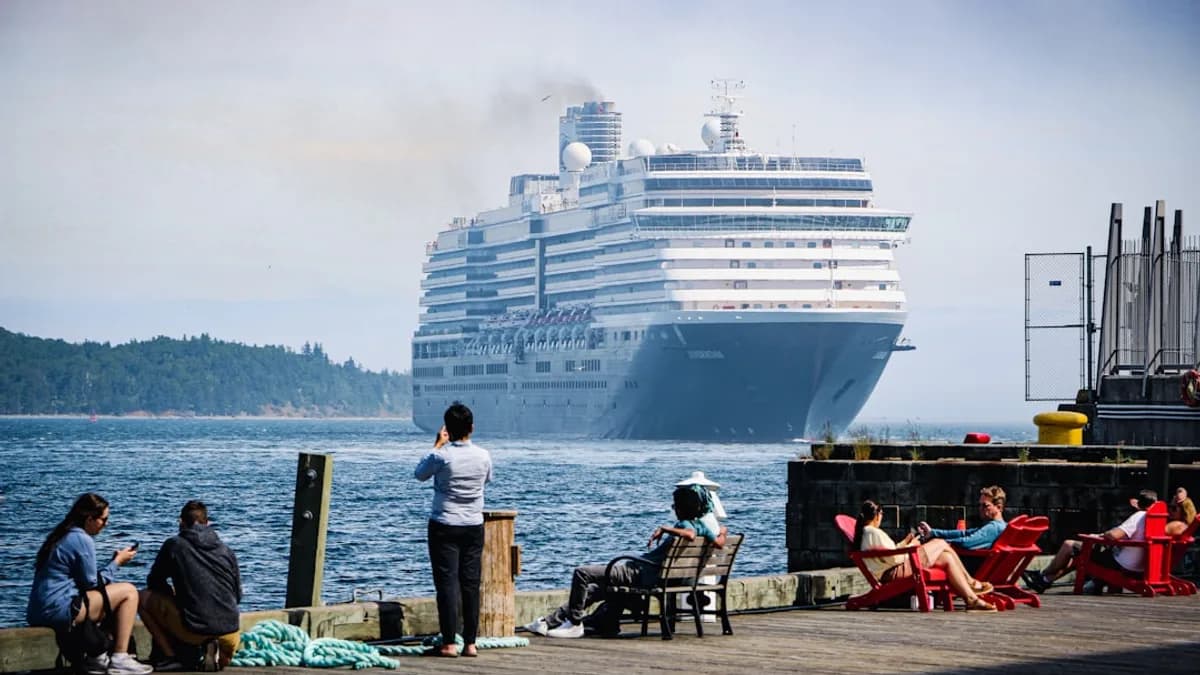
The CDC’s decision to classify the recent cruise ship hantavirus outbreak as a “Level 3” emergency response sent search traffic for “hantavirus cruise” up more than 320% in the last 48 hours, dwarfing even COVID-related queries in the same period. The story has dominated Google News with at least 20 clustered articles and live updates from Forbes, NBC News, CNN, and The Atlantic, as governments scramble to track down potentially exposed passengers across multiple continents. Social chatter on X and Reddit surged, with mentions of “hantavirus” up 5x week-over-week, and the hashtag #HantavirusCruise trending in Singapore, Texas, and Israel.
This isn’t just another cruise ship norovirus incident. The CDC’s “Level 3” status is reserved for outbreaks with significant international transmission risks—previously invoked for Ebola and Zika, not for rare rodent-borne viruses. The story’s stickiness comes from its cross-sector implications: public health, travel, and even financial markets are on alert, as investors weigh the prospect of renewed travel restrictions and the cost of global containment according to ABC News.
The immediate context: two Texas residents tested positive after disembarking, and at least one fatality has been confirmed. With hundreds of passengers now spread across US states and as far afield as Singapore and the Middle East, the risk calculation is moving from isolated incident to international supply chain and market concern.
Transmission Dynamics and Why This Outbreak Is Spooking Experts
The virus at the center—Seoul hantavirus—is not new, but its transmission aboard a modern cruise ship is. Hantavirus is typically contracted by inhaling aerosolized rodent droppings, not via person-to-person spread. Cruise ships, however, are uniquely susceptible to high-density outbreaks: 2,500+ passengers, closed ventilation systems, and opaque cleaning protocols.
Unpacking the Numbers
- At least 17 confirmed cases traced to the “hantavirus cruise,” with 64 more potential exposures under CDC monitoring, and 1 fatality so far per NYT.
- Passengers disembarked in five countries: US, Singapore, Israel, UK, and Mexico, complicating contact tracing and containment.
- The CDC’s Level 3 response—last used for Zika in 2016—unlocks millions in federal resources and triggers international health coordination under the WHO.
The technical threat is more about uncertainty than scale. The CDC and WHO predict “limited” onward spread, but the incident exposes cracks in cruise ship biosecurity. Ship manifests are notoriously incomplete, and some passengers have already been lost to follow-up. Cruise lines face heightened liability, with Royal Caribbean and Carnival shares both dipping 4-6% intraday as headlines broke.
Historical Precedent
The closest analog is the 2014 Ebola cruise scare, which saw a 3% drop in cruise line stocks and $150 million in lost bookings over four months, despite zero confirmed Ebola cases. The psychological impact of an “exotic” virus on a cruise is outsized: even if actual risk is low, the narrative triggers travel cancellations and policy reviews across the industry.
Health Agencies, Cruise Lines, and the Stakeholder Chessboard
Who’s Calling the Shots
- CDC: Activated its Level 3 response protocol, deployed epidemiologists to Texas and Florida, and issued preliminary guidance for cruise operators.
- WHO: Urging renewed international cooperation—using the outbreak to spotlight gaps created by the US’s partial withdrawal from WHO pandemic programs according to Politico.
- Cruise Operators: Royal Caribbean, Carnival, and Norwegian have all issued advisories and are reviewing cleaning/hygiene regimes. None have yet suspended operations, but insurance filings are up, and their crisis comms are in overdrive.
The Human Element
Doctors on board flagged the outbreak early, but reporting chains to health authorities lagged by 24-36 hours—a window that allowed dozens of passengers to scatter. Texas and Florida health departments are now tracking passengers, many of whom provided incomplete contact info. This breakdown in handoff between private operators and public health authorities is the weak link that could extend the news cycle—and the market pain.
Strategic Moves
- Cruise lines are quietly lobbying to avoid blanket CDC travel advisories, which historically trigger immediate booking slowdowns of 8-12%.
- Airlines and ports in Singapore and Miami are ramping up biosecurity checks, anticipating a wave of “worried well” travelers.
- US lawmakers are seizing the moment to push for rejoining the WHO’s global health emergency protocols, using the incident as political ammunition.
The stakeholders with the most to lose are not just the cruise lines but the broader travel and insurance sectors—and, by extension, funds holding heavy allocations to leisure and hospitality.
Travel, Markets, and the Real Cost of Contagion Anxiety
Immediate Market Fallout
- Royal Caribbean (RCL) and Carnival (CCL) each shed 4-6% of market cap in two trading sessions, echoing the quick selloff pattern seen during the Norovirus and COVID cruise incidents see Yahoo Finance.
- Airline and travel insurance stocks (e.g., AIG, United, Delta) flatlined, but options activity spiked—implied volatility on Carnival’s June puts jumped 20%.
- Broader indices (S&P 500, Nasdaq) paused their AI-led rally as traders processed risk signals from the incident, with the travel and hospitality subindex underperforming the S&P by 2.3% since the outbreak hit headlines.
Supply Chain and Policy Reverberations
Ports in Singapore and Miami instituted secondary health screenings, slowing container throughput by up to 6% according to port authority statements. While this is a small dent, it signals how quickly authorities will clamp down on movement—potentially compounding ongoing supply chain fragility.
US and Asian travel agencies report a surge in cruise cancellations and inquiries about refund policies. Booking.com and Expedia search traffic for “cruise refund” and “hantavirus” is up 200-300% week-over-week, per SimilarWeb estimates.
Travel Industry’s Tolerance for Shock
Cruise lines operate on thin margins, with 2023 net profit margins for Carnival and Royal Caribbean at 6.2% and 8.1%, respectively. A protracted dip in bookings—even 3-5% for a quarter—can erase $200-400 million in earnings. Insurance costs, already up post-COVID, will rise again as underwriters price in new biosecurity risks.
Historically, cruise stocks recover within 6-12 months of health scares—but only if the story doesn’t spiral into a full-blown sector panic. The “Ebola cruise” episode took four months to reverse, while COVID erased years of gains in a matter of weeks.
Expect Heightened Biosecurity, Booking Volatility, and Travel Tech M&A
Cruise and Travel Tech Will Spend, Not Just Spin
The next 12 months will see a measurable increase in spending on cruise ship biosecurity—think IoT rodent detection, rapid pathogen testing, and AI-powered contact tracing. Carnival, Royal Caribbean, and Norwegian will each announce partnerships or acquisitions in the travel health tech space, mirroring Delta’s 2021 investment in biosecurity platforms after the COVID shock.
Expect at least $400-500 million in new tech procurement contracts across the industry, with startups and established players like Thermo Fisher and Abbott poised to win deals. Cruise operators will also rush to modernize their manifest and passenger tracking systems—something they’ve resisted due to cost, but which regulators will now demand.
Regulatory and Market Forecast
- The CDC will issue at least one new mandatory guidance for cruise health protocols by Q4, likely including pre-boarding pathogen testing and improved post-cruise passenger tracking.
- Cruise bookings will drop 5-8% YoY in Q3-Q4, with the impact concentrated in US and Asian routes. Recovery will begin in Q1 2027, assuming no further outbreaks.
- At least one major cruise line will report an earnings miss in the next two quarters and cite “biosecurity and passenger confidence” as the driver.
- Travel insurance premiums for cruise passengers will rise 10-15%, as underwriters reprice risk.
- Expect at least one travel tech M&A deal north of $200 million, driven by cruise operator demand for next-gen pathogen detection or digital health passports.
Broader Implications
If the US accelerates rejoining WHO pandemic programs (a live political debate), expect a new wave of international health data-sharing rules, with travel tech and insurance firms forced to comply. The incident also sets a precedent: isolated zoonotic events can rattle markets and policy even without pandemic-scale risk.
The cruise ship hantavirus outbreak will not become the next COVID, but its impact on travel, tech spending, and market psychology will linger. By Q2 2027, the industry will look more like aviation—biosecurity as a cost of doing business, and the winners being those who adapt fastest.
The market will reward those who preemptively invest in health security—not just the ones who react after the headlines hit.