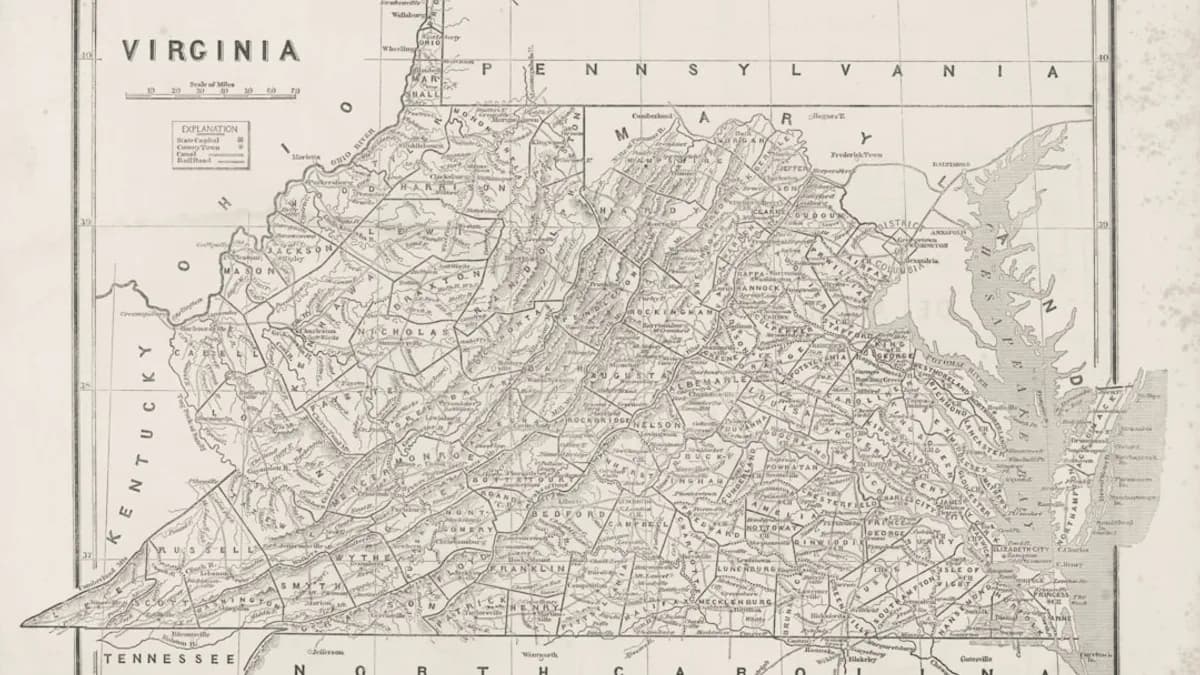
Virginia’s Redistricting Shakeup: Why the Battle Over the Tossed Map Is a National Flashpoint
A court’s decision to throw out Virginia’s redistricting map has unleashed a scramble among Democratic candidates and ignited fierce debate over election fairness, exposing divergent strategies between parties and raising the stakes for the 2026 midterms. The timing is critical: Democrats are racing to respond, the GOP’s approach is drawing national comparisons, and the outcome could set a precedent for how political maps are contested and enforced across the U.S. according to The New York Times.
The court’s ruling not only upended candidate plans but also spotlighted partisan divides over redistricting. Vice President Harris publicly accused Trump allies of trying to "rig" the next midterms, signaling that the fight over map-drawing is far from a local procedural matter—it’s a proxy battle for national political control as reported by Fox News.
How the Virginia Ruling Compares to Other Redistricting Showdowns
The Virginia court’s move stands out for its immediate electoral disruption. Democratic candidates, some already mid-campaign, are now scrambling to recalibrate their strategies and, in some cases, reconsider whether to run at all. The process echoes recent battles in states like Ohio, where the GOP openly defied court rulings on maps—a point Democratic strategist Platner highlighted in direct response to the Virginia decision as covered by The Hill.
Feature Table: Court Interventions and Party Responses
| State | Who Drew Map | Court Action | Party in Power | Party Response | Immediate Candidate Impact |
|---|---|---|---|---|---|
| Virginia | Legislature | Map tossed | Split | Dem scramble, GOP assertive | Dems forced to recalibrate |
| Ohio | Legislature | Map rejected | GOP | GOP defied court, used map | Minimal, map stayed |
The Virginia case is unique for the speed and scale of its disruption. Unlike Ohio, where courts’ authority was openly challenged but the map remained in use, Virginia’s court tossed the map outright, forcing all parties to adjust in real time.
Implications for Candidates and Electoral Tactics
Candidates in Virginia face a chaotic environment. Democratic hopefuls, in particular, are described as “scrambling” by multiple sources, with campaign plans thrown into uncertainty. The lack of a clear alternative map or timeline has left many local campaigns in limbo—a stark contrast to states where parties have simply ignored adverse rulings according to The New York Times.
Republican leaders have seized on the confusion, calling for swift action and framing the court’s intervention as judicial overreach. Democrats, by contrast, are focused on legal and procedural responses—strategizing for a map that could restore competitive districts or at least minimize further disruption.
National Ramifications: Why Virginia’s Map War Resonates
The fight over Virginia’s map is not happening in isolation. Vice President Harris’s charge that Trump allies seek to “rig” the 2026 midterms links the state’s legal battle to broader national concerns over voting rights and electoral manipulation. The comparison to Ohio—where the GOP simply defied court orders—suggests that both parties are now treating redistricting as a high-stakes strategic asset, with little expectation of neutral ground as reported by Fox News.
On Sunday political talk shows, Virginia’s redistricting battle was discussed alongside the Iran war, illustrating its perceived importance in shaping the national political landscape according to Fox News. Both parties are watching for signs of how courts, candidates, and voters will react, knowing that the outcomes in Virginia could influence future tactics in battleground states.
What Remains Unclear: Timelines and Enforcement
Crucial facts remain missing. Neither the sources nor court documents specify the new timeline for drawing and approving a replacement map—or whether the legislature will comply or seek to circumvent the ruling. The risk of a drawn-out standoff, as seen in Ohio, is real but not yet confirmed by any Virginia officials or court statements.
The sources do not provide concrete data on the number of districts affected, the demographic or partisan breakdown of tossed districts, or exactly how many candidates are reconsidering their campaigns. Without these details, it’s impossible to quantify the disruption or its downstream effects on voter mobilization, turnout, or party fundraising.
Watch These Signals Next
Three signals will reveal whether Virginia’s redistricting battle becomes a national bellwether or devolves into another partisan stalemate:
- Legislative Compliance: Does the Virginia legislature accept the court’s decision and move quickly to draw a new map, or does it follow Ohio’s lead and challenge the court’s authority?
- Candidate Realignment: How many candidates actually withdraw, switch districts, or pause their campaigns in response to the uncertainty?
- National Party Involvement: Will the DNC or RNC escalate the fight, funding lawsuits or mobilizing voters around the redistricting issue?
Without more granular data on district-level impacts and party strategies, the full consequences of the Virginia ruling remain to be seen. But the scramble among Democrats, the GOP’s aggressive posture, and the national attention from top officials make clear: the fight over who draws the lines is now central to the future of American electoral politics.
For the latest updates and in-depth context, see The New York Times, PBS, Fox News, and The Hill.