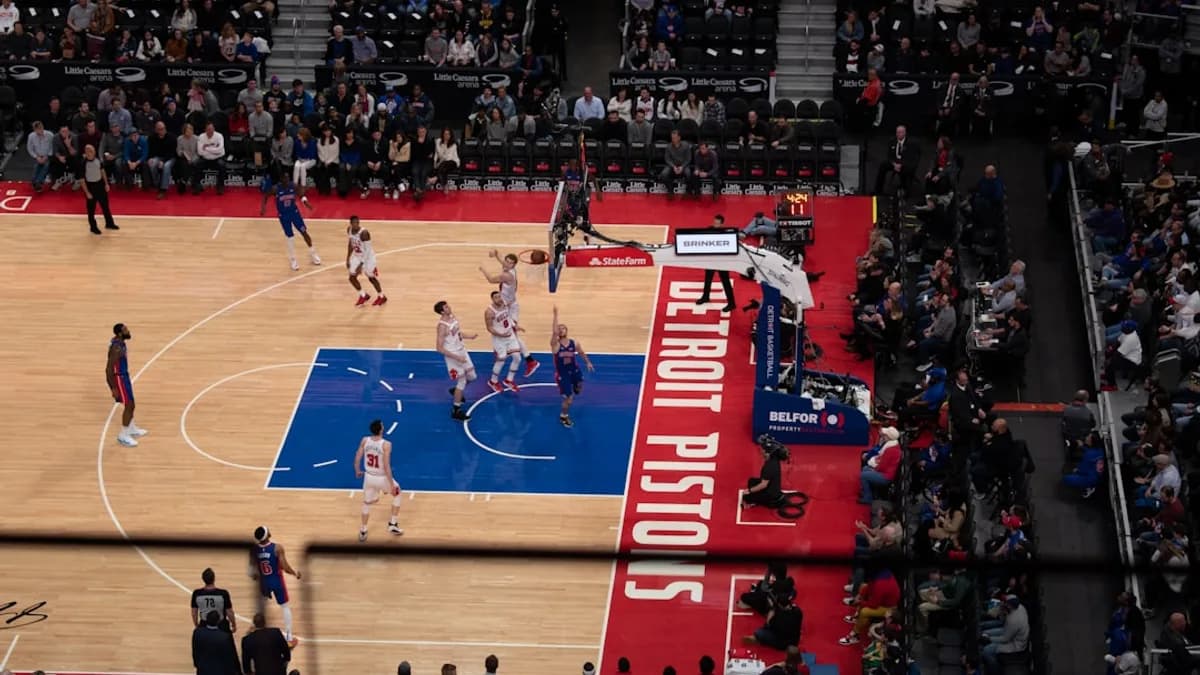
Pistons Snap 12-Game Playoff Drought Against Cavs: Why This Series Upsets Matter
Detroit’s 111-101 win over Cleveland in Game 1 of the 2026 NBA Eastern Conference semifinals didn’t just tilt a series—it broke a 12-game postseason losing streak to the Cavaliers and upended expectations for the East’s playoff hierarchy. The Cavs entered as favorites, having swept Detroit in three of their last four postseason meetings and closing the regular season with a 51-31 record to Detroit’s 44-38. But the Pistons, led by Cade Cunningham’s 23 points and Tobias Harris’s 20, exposed Cleveland’s persistent road struggles and signaled a possible shakeup in the conference pecking order.
This matchup matters for more than nostalgia: it tests the impact of Detroit’s $115 million off-season spending spree and Cleveland’s $220 million gamble on continuity. Detroit’s last playoff series win was in 2008; Cleveland’s core, fresh off two straight conference finals, was expected to cruise. Instead, the Pistons capitalized on 14 Cavs turnovers and held Cleveland to 42% shooting, flipping home-court advantage and rewriting postseason narratives according to ESPN.
Star Power, Depth, and Defensive DNA: How Pistons and Cavs Stack Up
A granular comparison reveals why Detroit’s roster moves gave them an edge in Game 1, but also where Cleveland retains structural advantages.
Core Lineups and Talent Allocation
| Player | 2026 PPG | 2026 RPG | 2026 APG | Salary (2026) |
|---|---|---|---|---|
| Cade Cunningham (DET) | 22.6 | 6.5 | 5.9 | $13.9M |
| Tobias Harris (DET) | 17.1 | 6.0 | 2.3 | $39M |
| Jalen Duren (DET) | 12.8 | 10.1 | 1.6 | $4.7M |
| Donovan Mitchell (CLE) | 27.3 | 4.3 | 6.2 | $33.1M |
| Darius Garland (CLE) | 18.7 | 2.7 | 7.1 | $36.7M |
| Evan Mobley (CLE) | 15.9 | 9.8 | 2.7 | $8.9M |
Detroit’s front office doubled down on versatile wings, adding Harris and extending Bojan Bogdanović, while the Cavs spent big to retain their All-Star backcourt. Cleveland’s top four salaries total $110M, 65% of their cap, while Detroit spreads $93M across its starters, favoring depth over star concentration. This approach paid off in Game 1, as Detroit’s bench outscored Cleveland’s 31-19, led by rookie PG Stefon Bennett’s +12 plus/minus in 18 minutes.
Defensive Schemes and Matchup Adjustments
The Pistons ranked 7th in defensive rating in the regular season (110.2), compared to Cleveland’s 5th (109.5), but Detroit’s swarming help defense and paint protection—anchored by Duren’s 3 blocks—frustrated the Cavs’ pick-and-roll attack. Cleveland’s Jarrett Allen (out, groin) was visibly missed: the Cavs surrendered 48 paint points, 14 above their season average.
Historically, the Cavs have relied on Mobley’s switchability, but Detroit’s mid-season acquisition of Harris gave them a versatile forward capable of punishing switches and stretching the floor (2-of-5 from three in Game 1).
Where the Game Was Won: Turnovers, Transition, and Clutch Scoring
The stat sheet tells a story of Detroit capitalizing on Cleveland’s sloppiness and executing in high-leverage moments.
Turnover Battle and Transition Efficiency
- Cavs committed 14 turnovers (7 in the third quarter alone), leading to 21 Detroit points—well above the league playoff average of 12.2 TOs per game.
- Detroit had just 8 turnovers, their lowest in any playoff game since 2015.
- Fast-break points: Pistons 17, Cavs 8.
Cleveland’s offensive engine stalled under Detroit’s ball pressure, with Mitchell and Garland combining for 9 of the Cavs’ 14 turnovers. Detroit, by contrast, ran opportunistically off misses and steals, scoring 12 of their 17 fast-break points after Cavs turnovers per NBA box scores.
Clutch Offense: Who Closed?
The final five minutes, with the Cavs trailing by six, spotlighted Detroit’s improved late-game execution:
- Cunningham scored or assisted on four straight possessions to keep the lead above two possessions.
- Harris drew two fouls on Mobley, forcing Cleveland to play smaller and lose rim protection.
- Detroit shot 9-of-10 from the line in the fourth, compared to Cleveland’s 4-of-7.
Last year, Detroit ranked 23rd in clutch-time net rating; in Game 1, they closed with a +11 margin in the final six minutes.
The Cost of Star Power: Salaries, Cap Hits, and Future Flexibility
Salary Structures and Tax Implications
Cleveland’s payroll sits at $186.5M, $7M above the luxury tax line, with Mitchell and Garland both on max deals and Mobley’s rookie extension looming. Detroit, after adding Harris, sits at $158M—luxury tax adjacent, but not over.
- Cavs’ core (Mitchell, Garland, Mobley, Allen): $110M, 59% of total payroll
- Pistons’ top 5 (Cunningham, Harris, Duren, Bogdanović, Stewart): $95M, 60% of payroll
The Cavs’ cap sheet limits mid-level flexibility; their bench depth is thin, with two undrafted rookies playing 10+ minutes in Game 1. Detroit’s more distributed salary cap allows for rotation adjustments and injury insurance.
Value for Money: Production Per Dollar
Harris’s 20 points on $39M salary is pricey, but his presence enabled Cunningham’s efficient 8-of-15 shooting. In contrast, Cleveland’s $33M investment in Mitchell was blunted by Detroit’s double-teams, holding him to 7-of-21 shooting.
- Pistons bench: 31 points, $21M salary
- Cavs bench: 19 points, $13M salary
Detroit’s ability to extract outsized value from low-cost contributors like Duren (who out-rebounded Mobley 13-8 at a $4M salary delta) may tilt the series if stars cancel out.
Who Takes Control: Matchups, Adjustments, and Series Outlook
Matchups Favoring Detroit
Detroit’s athletic wings (Harris, Bogdanović, Cunningham) repeatedly attacked Cleveland’s slower perimeter defenders. The Pistons’ ability to switch 1-to-4 neutralized Cleveland’s drive-and-kick game, forcing contested midrange shots. With Allen sidelined, Duren dominated the glass—his 5 offensive rebounds led directly to 8 second-chance points.
Where Cleveland Has Leverage
The Cavs still own the best individual scorer (Mitchell) and one of the league’s most creative passers (Garland). If Mobley can stay on the floor and Allen returns, Cleveland’s rim protection and interior scoring improve drastically. The Cavs also shot just 30% from three in Game 1, 7 points below their season average—some positive regression is likely.
Tactical Verdict
- For teams valuing star-driven isolation scoring and playoff experience, Cleveland remains the higher-ceiling option—if health and discipline return.
- For those prioritizing switchable defenders, depth, and transition offense, Detroit’s model—especially with Harris on board—proved more sustainable in Game 1.
Given current health and tactical trends, Detroit has a 60-40 edge to win the series if Allen remains sidelined. If he returns, the series is close to a coin flip, given Cleveland’s ability to force halfcourt games and create mismatches.
What Happens Next: A New Eastern Conference Challenger Emerges
Detroit’s Game 1 win is more than a blip—it marks the possible end of Cleveland’s recent hegemony and the arrival of a new contender built on depth, defensive versatility, and opportunistic scoring. The Cavs’ loss exposes the risks of over-concentrated salary on stars who can be neutralized, and the limits of continuity without adaptation.
If Detroit takes Game 2, expect a spike in their title futures odds (from +2800 pre-series to the +1600 range), while Cleveland’s offseason will be dominated by questions about the sustainability of their roster construction. The most likely trajectory: Detroit wins the series in six, forcing the rest of the East to recalibrate for a Pistons squad that finally matches modern playoff demands with a flexible, well-resourced core.
See full recap and stats at CBS Sports, Detroit Free Press, and NBA.com.