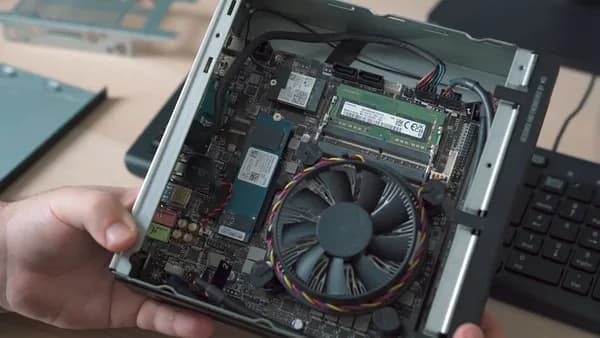
As edge computing explodes across the IoT landscape in 2026, organizations demand powerful AI capabilities that won’t overwhelm their resource-constrained devices. Deploying machine learning models at the edge requires frameworks that are nimble, efficient, and purpose-built for low power and limited memory. In this guide, we present a thoroughly researched comparison of the best lightweight machine learning frameworks for edge AI, focusing on performance, integration, deployment, and real-world strengths—so you can choose the right solution for your next edge AI application.
Introduction to Edge AI and Its Growing Importance
Edge AI refers to deploying artificial intelligence models directly on edge devices—such as sensors, cameras, smartphones, and embedded microcontrollers—rather than relying on centralized cloud servers. This approach enables real-time decision-making, reduces network bandwidth requirements, and enhances user privacy.
“The rapid development of the Internet of Things (IoT) has driven widespread demand for edge intelligence. However, resource-constrained edge devices struggle to support complex deep learning models, making lightweight deep learning models a key research direction.”
— Discover Computing, 2026
The exponential growth in IoT and mobile devices has made edge AI essential for industries ranging from healthcare and smart homes to manufacturing and automotive. As applications demand more autonomy, responsive performance, and privacy, lightweight machine learning frameworks have become the backbone of edge intelligence.
Key Requirements for Lightweight Machine Learning Frameworks on Edge Devices
Deploying AI on edge hardware presents unique technical challenges. Based on leading research and practitioner insights, the essential requirements for lightweight ML frameworks in edge AI include:
- Low Memory Footprint: Edge devices often have kilobytes to a few megabytes of RAM.
- Efficient Computation: Fast inference with minimal CPU/GPU usage preserves battery life and keeps latency low.
- Model Compression Support: Techniques like quantization, pruning, and knowledge distillation are vital for shrinking models without sacrificing accuracy.
- Hardware Acceleration: Support for device-specific accelerators (e.g., Edge TPU, ARM NN, NPU) boosts performance on supported chips.
- Cross-Platform Compatibility: Frameworks should run on a variety of operating systems and hardware platforms.
- Ease of Integration: Simple APIs, model conversion tools, and documentation speed up development.
- Security Features: Built-in support for secure model storage and inference helps protect sensitive applications.
“The accuracy-efficiency-robustness trade-off, high training resource overhead, and a lack of evaluation benchmarks remain key challenges for lightweight ML at the edge.”
— Discover Computing, 2026
Overview of Popular Lightweight ML Frameworks in 2026
Drawing from curated lists and industry reviews, here are the leading lightweight ML frameworks for edge deployment in 2026:
| Framework | Origin / Maintainer | Notable Strengths | Primary Platforms |
|---|---|---|---|
| TensorFlow Lite | Hardware acceleration, on-device inference | Android, iOS, Embedded | |
| PyTorch Mobile | Meta | Custom models, quantization, tutorials | Android, iOS |
| Core ML | Apple | Native iOS integration, power efficiency | iOS, macOS |
| ONNX Runtime Mobile | ONNX Community | Cross-framework, hardware acceleration | Android, iOS |
| MediaPipe | Real-time pipelines, perception tasks | Mobile, Embedded | |
| MNN | Alibaba | ARM optimization, low memory use | Android, iOS, Embedded |
| TFLite Micro | Microcontrollers, minimal footprint | MCUs (Arduino, STM32) | |
| Arm NN | ARM | Low-level access, edge optimization | ARM architecture |
| NCNN | Tencent | Pure C++, fast execution, cross-platform | Android, iOS, Embedded |
Key takeaway: The market is rich with specialized options, each targeting different hardware, developer preferences, and application domains.
Performance Benchmarks: Speed, Memory Usage, and Accuracy
When evaluating lightweight machine learning frameworks for edge AI, three core metrics stand out: inference speed, memory usage, and model accuracy. While comprehensive, standardized benchmarks remain limited (as noted in Discover Computing, 2026), current evidence and industry reviews highlight the following:
| Framework | Speed | Memory Usage | Accuracy Impact |
|---|---|---|---|
| TensorFlow Lite | High | Low to Moderate | Minimal with quant. |
| PyTorch Mobile | Moderate | Moderate | Minimal with quant. |
| Core ML | High | Low | Minimal |
| ONNX Runtime Mob. | High | Low to Moderate | Framework-dependent |
| MediaPipe | Very High | Very Low to Low | Task-optimized |
| MNN | High | Very Low | Minimal |
| TFLite Micro | Moderate | Extremely Low | Pruned models only |
| Arm NN | High | Low | Framework-dependent |
| NCNN | High | Very Low | Minimal |
Speed & Memory Usage
- TensorFlow Lite and Core ML consistently deliver fast inference with low resource requirements, especially when using quantized models and hardware acceleration.
- MNN and NCNN are optimized for execution speed and minimal memory—standout choices for real-time applications.
- TFLite Micro is tailored for environments with only kilobytes of RAM, suitable for microcontrollers and ultra-low-end devices.
Accuracy
- Most frameworks support quantization and pruning to shrink models, with negligible drops in accuracy for many applications.
- The trade-off between model size and predictive power remains an active area of research, particularly in safety-critical or high-precision edge use cases.
“Model compression has been widely adopted as a foundational approach; neural architecture search (NAS) and knowledge distillation have also emerged as important frontiers for balancing efficiency and accuracy.”
— Discover Computing, 2026
Ease of Integration and Developer Experience
Framework adoption often hinges on how quickly developers can go from model training to deployment. The frameworks compared here differ in their APIs, tooling, and documentation:
| Framework | Model Conversion | Tooling & APIs | Community/Docs |
|---|---|---|---|
| TensorFlow Lite | Easy (TF models) | Strong, Google support | Extensive |
| PyTorch Mobile | Easy (PyTorch) | Good, active tutorials | Growing |
| Core ML | Easy (Apple tool) | Seamless in iOS | Strong (iOS devs) |
| ONNX Runtime Mob. | Broad (ONNX) | Good, cross-framework | Moderate |
| MediaPipe | Pre-built pipes | Modular, Python/C++ | Strong for CV tasks |
| MNN | Good (ARM focus) | C++/Python support | Moderate |
| TFLite Micro | Simple | C, Arduino, STM32 | Growing |
| Arm NN | For ARM models | Low-level, C++ | Niche, focused |
| NCNN | Pure C++ | Lightweight, minimal | Moderate |
Highlights
- TensorFlow Lite: Offers conversion tools for full TensorFlow models, widespread community support, and integration with Google’s hardware and cloud ecosystem.
- PyTorch Mobile: Best for teams already using PyTorch, supporting custom models and quantization with a familiar workflow.
- Core ML: Provides seamless integration for Apple developers, with tools to convert models from TensorFlow and PyTorch, and optimized for Swift/Objective-C apps.
- ONNX Runtime Mobile: Stands out for interoperability—run models trained in PyTorch, TensorFlow, or other supported frameworks.
“Active community and tutorials are a key factor for PyTorch Mobile’s growing adoption.”
— EitBiz, 2025
Deployment and Compatibility with Edge Hardware
Successful edge AI deployment depends on hardware compatibility and optimization for specific chips. The frameworks reviewed support a variety of architectures and devices:
| Framework | ARM CPUs | GPUs | NPUs/Edge TPUs | Microcontrollers | iOS | Android |
|---|---|---|---|---|---|---|
| TensorFlow Lite | Yes | Yes | Yes | Limited | Yes | Yes |
| PyTorch Mobile | Yes | Yes | No | No | Yes | Yes |
| Core ML | No | Yes* | Yes* | No | Yes | No |
| ONNX Runtime Mob. | Yes | Yes | Yes | No | Yes | Yes |
| MediaPipe | Yes | Yes | No | Limited | Yes | Yes |
| MNN | Yes | Yes | No | No | Yes | Yes |
| TFLite Micro | Yes | No | No | Yes | No | No |
| Arm NN | Yes | Yes | Yes | No | No | Yes |
| NCNN | Yes | Yes | No | No | Yes | Yes |
*Core ML leverages Apple’s neural engines and GPUs, but is not available outside Apple hardware.
Hardware-Specific Highlights
- TensorFlow Lite: Supports hardware acceleration on many platforms, including Google’s Edge TPU and ARM NN.
- TFLite Micro: Designed for microcontroller units (MCUs) like Arduino and STM32, with no OS requirement.
- Arm NN: Provides close-to-metal optimization for ARM chips and supports hardware acceleration.
- NCNN: Pure C++ implementation with no third-party library dependencies, enabling deployment on a wide range of mobile hardware.
“For hardware-specific machine learning development, Arm NN delivers low-level access and energy efficiency on ARM chips.”
— EitBiz, 2025
Security Considerations for Edge AI Frameworks
Security is a growing concern for AI at the edge, where devices may be physically accessible or operate outside secure perimeters. While few frameworks offer built-in security features, some best practices and ecosystem tools are available:
- Model Encryption: Most frameworks allow models to be stored in encrypted formats, but actual implementation is left to the developer.
- Secure Inference: Some hardware platforms (e.g., Apple’s Secure Enclave, Google’s Edge TPU) support secure on-device inference, but this is not standardized across frameworks.
- No Direct Security APIs: None of the reviewed frameworks provide direct APIs for secure model execution at the time of writing.
“Security features remain limited in current lightweight ML frameworks. Developers must employ platform-specific mechanisms for secure model storage and execution.”
— Discover Computing, 2026
Use Cases and Industry Applications
Lightweight ML frameworks power a diverse range of edge AI applications across industries:
- Healthcare: On-device diagnostic apps, anomaly detection in wearables (TensorFlow Lite, Core ML).
- Smart Home & IoT Sensors: Real-time event detection, person/pet identification (TFLite Micro, MediaPipe).
- Industrial Automation: Computer vision for quality control, predictive maintenance (ONNX Runtime Mobile, MNN).
- Mobile Apps: Augmented reality filters, language translation, fitness trackers (Core ML, PyTorch Mobile).
- Automotive: Real-time obstacle detection, driver monitoring (NCNN, Arm NN).
- Security Cameras: Fast facial recognition, motion analysis (MediaPipe, NCNN).
“MediaPipe is a dream for AI app development involving computer vision, delivering real-time pipelines for face detection, pose tracking, and gesture recognition.”
— EitBiz, 2025
Pros and Cons Summary of Each Framework
| Framework | Pros | Cons |
|---|---|---|
| TensorFlow Lite | Hardware acceleration; easy model conversion; wide support | Limited microcontroller support |
| PyTorch Mobile | Custom models; quantization; active community | Fewer hardware acceleration options |
| Core ML | Tight iOS integration; low battery usage; easy conversion | Apple-only; limited to Apple hardware |
| ONNX Runtime Mob. | Multi-framework support; hardware acceleration | Moderate documentation; less mature |
| MediaPipe | Real-time pipelines; modular; excellent for computer vision | Focused on perception tasks; less general |
| MNN | ARM and memory optimization; cross-platform | Lower awareness in Western markets |
| TFLite Micro | Minimal footprint; MCU support; no OS needed | Limited to simple/pruned models |
| Arm NN | Close-to-metal optimization; energy efficient | Niche; requires ARM hardware |
| NCNN | Pure C++; easy deployment; fast execution | Fewer tutorials; minimalistic API |
Final Recommendations for Choosing the Right Framework
Selecting the best lightweight machine learning framework for edge AI depends on your hardware, application, and development workflow:
- For Android and cross-platform edge apps: TensorFlow Lite stands out due to hardware acceleration, broad platform support, and easy model conversion.
- For iOS-exclusive applications: Core ML is the top choice, offering seamless integration, power efficiency, and native performance.
- If your workflow is PyTorch-based: PyTorch Mobile allows smooth model transition to edge devices, with growing community resources.
- For maximum cross-framework flexibility: ONNX Runtime Mobile supports models from multiple training frameworks and hardware acceleration.
- For microcontroller/ultra-low-power applications: TFLite Micro is unmatched for MCUs, while MNN and NCNN deliver speed and efficiency for mobile/embedded platforms.
- For real-time perception tasks: MediaPipe provides pre-built, customizable pipelines optimized for visual and audio interpretation.
Don’t overlook hardware-specific frameworks like Arm NN for ARM-based projects, or NCNN for C++-centric mobile AI applications.
“Research is shifting from ‘ex post’ model compression to efficiency-focused native architecture design and algorithm-hardware co-optimization.”
— Discover Computing, 2026
FAQ: Lightweight Machine Learning Frameworks for Edge AI
Q1: What is the main benefit of using lightweight ML frameworks for edge AI?
A: Lightweight frameworks enable real-time AI inference on resource-constrained devices, reducing the need for cloud connectivity and improving privacy and responsiveness. (Discover Computing, 2026)
Q2: Which frameworks support microcontrollers or devices with <1MB RAM?
A: TFLite Micro is specifically designed for microcontrollers, operating with minimal binary size and no OS support. (EitBiz, 2025)
Q3: Can I run models trained in TensorFlow or PyTorch on other frameworks?
A: Yes. ONNX Runtime Mobile and Core ML (via Apple’s model conversion tools) allow running models trained in different frameworks, enabling interoperability. (EitBiz, 2025)
Q4: Do these frameworks provide built-in security for model deployment?
A: At the time of writing, most frameworks do not offer built-in security features; developers must use device or OS-level security mechanisms. (Discover Computing, 2026)
Q5: Which frameworks offer the best support for hardware acceleration?
A: TensorFlow Lite, ONNX Runtime Mobile, and Arm NN provide advanced hardware acceleration options for ARM CPUs, GPUs, and specialized NPUs. (EitBiz, 2025; GitHub - crespum/edge-ai)
Q6: What is the main challenge when deploying deep learning on edge devices?
A: The biggest challenge is balancing accuracy, efficiency, and robustness while working within the severe resource constraints of edge hardware. (Discover Computing, 2026)
Bottom Line
The field of lightweight machine learning frameworks for edge AI has matured rapidly, now offering a spectrum of solutions optimized for every hardware class and application. Leaders like TensorFlow Lite, PyTorch Mobile, Core ML, and ONNX Runtime Mobile deliver robust performance, while specialized options such as TFLite Micro, MNN, and NCNN cater to ultra-compact and high-speed deployments. However, developers must navigate trade-offs between efficiency and accuracy, embrace emerging techniques like model compression and neural architecture search, and remain vigilant about security. For most organizations, the ideal framework will be the one that best matches their device constraints, development stack, and industry requirements—grounded in the evidence and benchmarks discussed above.