In the rapidly evolving world of cryptocurrency, safeguarding your assets is more critical than ever. With exchange hacks and phishing attacks on the rise, a hardware wallets comparison 2026 is essential for anyone serious about crypto security. This comprehensive guide provides a data-driven analysis of the top hardware wallets—Ledger, Trezor, and Coldcard—focusing on their security features, supported coins, usability, and price. Whether you’re managing a diverse DeFi portfolio or holding Bitcoin for the long term, this article will help you select the best device for your needs.
Why Hardware Wallets Are Essential for Crypto Security
Cryptocurrency theft remains a significant threat in 2026. According to multiple industry reports, over $2.1 billion was stolen from centralized exchanges and hot wallets in the past year alone. In contrast, properly used hardware wallets have never been hacked in the wild (LedgerMind™, EarnifyHub).
"Hardware wallets remain the gold standard for cryptocurrency security because they solve the fundamental problem of key exposure."
— LedgerMind™ Research
Key Advantages:
- Offline Key Storage: Hardware wallets store your private keys in isolated, tamper-resistant chips, never exposing them to internet-connected devices.
- Physical Transaction Confirmation: Transactions must be physically approved on the device, neutralizing remote malware risks.
- Protection Against Exchange Failures: Self-custody removes counterparty risk, so hacks like the $1.4B Bybit exploit or exchange bankruptcies can’t touch your funds.
Statistics:
- 0 recorded hacks of properly used hardware wallets (EarnifyHub)
- Hardware wallets secure $50B+ in assets (2026 estimate)
If you own more crypto than you’re willing to lose, a hardware wallet isn’t optional—it’s essential.
Overview of Ledger, Trezor, and Coldcard Wallets
The hardware wallet market is dominated by three names: Ledger, Trezor, and Coldcard. Each brings its philosophy and unique strengths to the table.
| Wallet | Notable Models | Launch Year | Core Focus | Best For |
|---|---|---|---|---|
| Ledger | Nano S Plus, Nano X, Stax | 2016–2026 | Secure element, multi-asset | Multi-asset, DeFi, convenience |
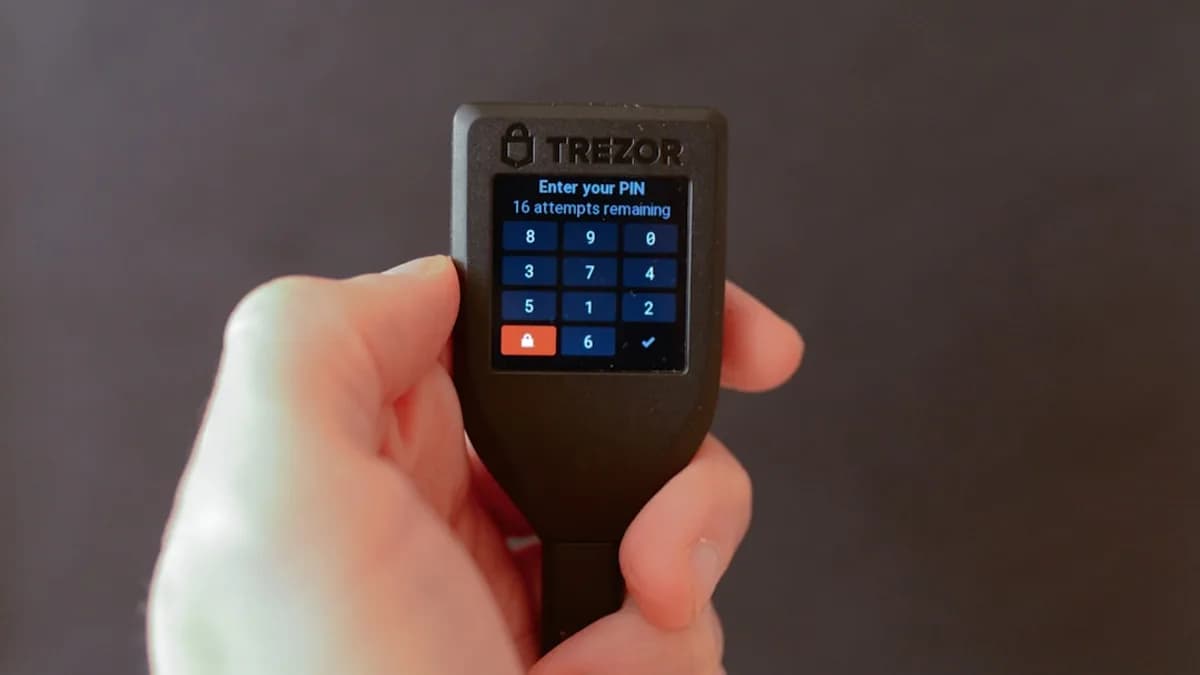
| Trezor | Safe 5, Model T | 2014–2026 | Open-source, touchscreen | Beginners, open-source fans |
| Coldcard | Mk4, Q | 2018–2026 | Bitcoin-only, air-gapped | Bitcoin maximalists, power users |
Ledger
- Market leader with 7+ million units sold (Blocklr)
- Offers a range from entry-level (Nano S Plus, $79) to premium (Stax, $279)
- Known for secure element chips and broad coin support
Trezor
- Pioneer of open-source hardware wallets
- Latest model: Safe 5 ($149), featuring a color touchscreen and haptic feedback (Blocklr)
- Focuses on transparency and community audits
Coldcard
- Ultra-secure, Bitcoin-only device
- Advanced features like air-gap signing, PSBT support, and duress PIN
- Favored by users who prioritize maximal security and physical isolation
Security Features Compared: Encryption, Seed Backup, and Firmware
Security is the primary reason to choose a hardware wallet. Let's compare the architecture that keeps your crypto safe.
| Feature | Ledger Nano S Plus/X/Stax | Trezor Safe 5/Model T | Coldcard Mk4/Q |
|---|---|---|---|
| Secure Element | Yes (EAL5+/EAL6+) | Yes (Safe 5: EAL5+), No (others) | Yes (ATECC608 + SE) |
| Firmware | Partially open (core closed) | Fully open-source | Fully open-source |
| Passphrase Support | Yes | Yes | Yes (advanced, BIP39) |
| Air-gap Capability | No | No | Yes (microSD, no USB required) |
| Physical Confirmation | Yes (buttons/touchscreen) | Yes (touchscreen/buttons) | Yes (buttons) |
| Supply Chain Protections | Holographic seal, anti-tamper firmware | Tamper-evident packaging | Tamper-evident packaging |
Secure Element Certification
- Ledger: All current models use a Common Criteria EAL5+ or EAL6+ secure element, the highest commercial grade, also found in passports and bank cards (CryptoRyancy).
- Trezor: The Safe 5 finally introduced a secure element (EAL5+), but earlier models (including Model T) rely on general-purpose microcontrollers.
- Coldcard: Uses a proven secure element (ATECC608), combined with air-gapped design for next-level physical security.
"A Secure Element chip (CC EAL5+ certified) is the non-negotiable baseline—most competitor wallets skip it entirely."
— CryptoRyancy
Firmware: Open Source vs Proprietary
- Ledger: Core firmware is proprietary (closed source), but select modules (like the Recover service) are now open source.
- Trezor: Fully open-source firmware. Anyone can review the code and verify builds (LedgerMind™).
- Coldcard: Fully open source, with reproducible builds for maximum transparency.
Seed Backup and Passphrase Support
All three wallets support:
- BIP39 seed phrases for backup and recovery.
- Passphrase protection for creating hidden wallets within wallets (also known as “plausible deniability” wallets).
Physical Attack Resistance
- Ledger and Coldcard: Both use tamper-evident packaging and secure elements, making extraction of private keys extremely difficult, even with specialized equipment.
- Trezor: Older models without secure elements are more vulnerable to physical attacks, although Safe 5 addresses this (EarnifyHub).
"Devices without secure elements showed a 347% higher vulnerability rate to side-channel attacks."
— Wallet Scrutiny (via LedgerMind™)
Supported Cryptocurrencies and Wallet Compatibility
The amount and variety of cryptocurrencies supported varies significantly:
| Device | Supported Coins (2026) | Notable Chains/Features |
|---|---|---|
| Ledger | 5,500+ | Ethereum, Bitcoin, Solana, 70+ blockchains, NFT support, DeFi dApps |
| Trezor | 1,600+ (Safe 5: 9,000+ per Blocklr) | Ethereum, Bitcoin, EVM chains, some DeFi |
| Coldcard | Bitcoin + 12 others | Bitcoin-only focus, no altcoins, PSBT, air-gap, microSD |
Highlights
- Ledger is the clear leader for multi-asset support, covering nearly every top-100 token and dozens of blockchains. The Ledger Live app offers seamless integration for buying, swapping, and staking.
- Trezor supports a broad range of assets, with recent updates expanding support to over 9,000 tokens on the Safe 5 (Blocklr).
- Coldcard is intentionally Bitcoin-centric. If you want to store altcoins or interact with DeFi, look elsewhere.
Wallet Compatibility
- Ledger: Works with Ledger Live, MetaMask, WalletConnect, and hundreds of DeFi apps.
- Trezor: Compatible with Trezor Suite (desktop/web), MetaMask, and popular wallet apps.
- Coldcard: Integrates with Bitcoin-only wallets like Sparrow, Electrum, and Specter; supports advanced multi-signature setups.
User Interface and Ease of Setup
A hardware wallet should be both secure and user-friendly, especially for beginners.
| Device | Display & Input | Setup Process | Companion App |
|---|---|---|---|
| Ledger Nano X | OLED, buttons | Guided via Ledger Live | Ledger Live (desktop/mobile) |
| Ledger Stax | E-Ink touchscreen | Intuitive touch interface | Ledger Live |
| Trezor Safe 5 | 1.54" color touchscreen, haptic | Simple onboarding, on-device prompts | Trezor Suite |
| Coldcard Mk4/Q | Monochrome 128x64, buttons | Text-based, advanced options, microSD air-gap | No official app (use with Bitcoin desktop wallets) |
Ledger
- Ledger Live: Widely praised for its setup wizard, app store, and portfolio management features.
- Nano X: Bluetooth allows setup and use via smartphone.
- Stax: Touchscreen offers a more modern, intuitive feel.
Trezor
- Trezor Suite: User-friendly desktop/web app with clear transaction signing and backup flow.
- Safe 5: Color touchscreen and haptic feedback make navigation simple—even for first-timers.
Coldcard
- Minimalist interface: Designed for security-first users; setup is more technical.
- Air-gapped setup: Use microSD for signing transactions, never connecting the wallet to a potentially compromised PC.
Price Comparison and Value for Money
Price is often a deciding factor, but it should be weighed against features and security.
| Device | Price Range (2026) | Key Features |
|---|---|---|
| Ledger Nano S Plus | $79 | EAL5+ secure element, 5,500+ coins |
| Ledger Nano X | $149 | Bluetooth, 5,500+ coins, mobile support |
| Ledger Stax | $279 | E-Ink touchscreen, premium feel |
| Trezor Safe 5 | $149 | Touchscreen, EAL5+ secure element, open source |
| Trezor Model T | $249 | Touchscreen, open source |
| Coldcard Mk4 | $159 | Bitcoin-only, air-gapped, microSD |
| Coldcard Q | $299 | Advanced Bitcoin-only features |
"At $79 with a CC EAL5+ certified Secure Element, Clear Signing support via ERC-7730, and compatibility with 5,500+ assets, [Ledger Nano S Plus] delivers the security fundamentals that actually matter—without paying a premium for Bluetooth you probably don’t need."
— CryptoRyancy
Value Assessment
- Ledger Nano S Plus: Best value for most users—secure, versatile, affordable.
- Ledger Nano X/Stax: Worth it for Bluetooth/mobile use or premium build.
- Trezor Safe 5: Best for open-source enthusiasts at a mid-tier price.
- Coldcard: Pricier, but justified for Bitcoin maximalists and advanced users.
Customer Support and Firmware Updates
Ongoing support and regular firmware updates are vital for staying secure.
| Device | Firmware Updates | Open Source? | Support Channels |
|---|---|---|---|
| Ledger | Frequent, fast patches | Partially (select modules) | Live chat, email, extensive documentation |
| Trezor | Regular, transparent | Fully open source | Email, forums, active community |
| Coldcard | Regular (slower, focused) | Fully open source | Email, Telegram, documentation |
- Ledger: Known for prompt firmware patches, especially following vulnerability disclosures. The closed-source nature means users rely on Ledger’s internal security team.
- Trezor: Firmware and security updates are public and peer-reviewed. Community can audit releases before installing.
- Coldcard: Updates are less frequent but laser-focused on Bitcoin security. All code is public and reproducible.
All brands recommend buying direct from the manufacturer to avoid supply chain attacks (EarnifyHub, LedgerMind™).
Use Cases: Beginners vs Advanced Users
Beginners
- Ledger Nano S Plus or Trezor Safe 5 are the top picks for newcomers.
- Ledger: Simple setup, wide support, affordable.
- Trezor: Transparent code, easy onboarding, color touchscreen.
Advanced Users
- Coldcard Mk4/Q is the choice for those requiring air-gap security, multi-signature, or plausible deniability features.
- Ledger Nano X/Stax: Ideal for active DeFi traders needing Bluetooth/mobile signing and broad asset management.
- Trezor: Appeals to those who want full control over their firmware and value open verification.
"The best approach? Use both in a multi-signature setup."
— LedgerMind™ Research
Multi-signature: Advanced users often combine devices (e.g., Ledger + Coldcard) for institutional-grade protection.
Final Verdict: Which Hardware Wallet is Best for You?
A hardware wallets comparison 2026 must be grounded in your actual needs. Here’s a summary:
| User Type | Best Wallet(s) | Why |
|---|---|---|
| Everyday DeFi User | Ledger Nano X/Stax | 5,500+ coins, Bluetooth/mobile, Ledger Live app |
| Open-Source Advocate | Trezor Safe 5 | Fully auditable firmware, touchscreen |
| Bitcoin Maximalist | Coldcard Mk4/Q | Air-gap, PSBT, duress PIN, no altcoin risk |
| Budget-Conscious | Ledger Nano S Plus | Secure element, broad support, $79 price |
No single wallet is perfect for everyone. For most, the Ledger Nano S Plus or Nano X balances certified security, usability, and price. If open-source firmware is your top priority, choose Trezor Safe 5. For maximum, Bitcoin-only security, Coldcard is unmatched.
If you hold significant assets, consider a multi-signature setup involving two different brands for maximum resilience.
FAQ
Q1: Are hardware wallets really unhackable?
A: There are no recorded hacks of properly used hardware wallets according to multiple 2026 industry reports. Incidents result from user error (phishing, compromised seed backups), not the devices themselves.
Q2: Which wallet supports the most cryptocurrencies?
A: Ledger leads with support for 5,500+ coins/tokens across 70+ blockchains. Trezor Safe 5 supports up to 9,000+ assets, but with less DeFi and NFT integration. Coldcard is strictly Bitcoin-focused.
Q3: What is a secure element and why does it matter?
A: A secure element (EAL5+/EAL6+) is a chip designed to resist physical tampering and key extraction. Ledger and Coldcard use them; Trezor Safe 5 added one in its latest model.
Q4: Can I use these wallets with DeFi protocols and MetaMask?
A: Ledger and Trezor are compatible with MetaMask and most DeFi platforms. Coldcard does not support DeFi or altcoins—it's Bitcoin-only.
Q5: Where should I buy my hardware wallet?
A: Always buy directly from the manufacturer (e.g., ledger.com, trezor.io, coldcard.com) to avoid supply chain attacks.
Q6: Are firmware updates safe?
A: All brands provide regular updates. Trezor and Coldcard are fully open source, so updates are peer-audited. Ledger’s core firmware is closed but professionally certified.
Bottom Line
A hardware wallets comparison 2026 reveals that Ledger, Trezor, and Coldcard each offer robust, proven security—far beyond what hot wallets or exchanges can provide. Your priorities should guide your choice:
- Ledger: Best for broad asset support and mobile convenience.
- Trezor: Best for those who value transparency and open-source code.
- Coldcard: Best for maximalist, air-gapped Bitcoin storage.
No matter your choice, buy from official channels, back up your seed phrase securely, and never share it online. For large or institutional holdings, combine devices in a multi-signature scheme for layered security. In 2026, the best protection for your crypto is still in your own hands—with the right hardware wallet.