Dreame’s Smartphone Gamble vs. Flagship Androids: Why the Stakes Are Higher Than They Look
Dreame, best known for robot vacuums, just crashed the smartphone party with two new modular-camera phones—at a moment when global smartphone shipments are finally recovering (IDC: +7.8% YoY Q1 2024) and every cent of margin matters. The timing isn’t accidental: the Android flagship segment is fragmenting, with Xiaomi, Oppo, and Samsung all scrambling to out-innovate Apple’s iPhone 15 while holding the line on price and camera specs. Dreame’s pivot isn’t just a curiosity—it’s a direct test of whether a hardware upstart can barge into a market where scale, supply chain, and marketing budgets usually decide the winners.
The context matters: in 2023, global smartphone shipments hit 1.17 billion units—down from a 2021 peak of 1.39 billion. But the premium segment ($600+) surged to 24% market share, its highest ever, as consumers delayed upgrades but spent more per device according to Counterpoint Research. Dreame isn’t just launching phones; it’s targeting a segment where camera innovation, modularity, and branding drive outsized profits.
The company’s bet is clear: modular hardware can punch through the noise, and a vacuum brand can build trust in a market where OnePlus, Realme, and Nothing have all struggled to sustain momentum. But the realities of supply chain, retail reach, and user base lock-in have killed far bigger brands (HTC, LG, Essential). Dreame’s entry, right as the Android market’s profit pool realigns, isn’t just a bet on product—it’s a bet on how much fragmentation the premium tier can sustain.
Modular Cameras, OLED Displays, and the Spec Sheet Showdown
Dreame’s new phones—the Dreame X1 and Dreame X1 Pro—land in the $500–$850 price bracket, squaring off against the OnePlus 12, Xiaomi 14, and Samsung Galaxy S24. Here’s how the numbers stack up:
| Feature | Dreame X1 Pro | OnePlus 12 | Xiaomi 14 | Samsung Galaxy S24 |
|---|---|---|---|---|
| Launch Price | $799 (est., China only) | $799 (US/Global) | $699 (China, $799 Global) | $799 (US/Global) |
| Display | 6.7" 120Hz OLED | 6.82" 120Hz AMOLED | 6.36" 120Hz AMOLED | 6.2" 120Hz AMOLED |
| SoC | Snapdragon 8 Gen 2 | Snapdragon 8 Gen 3 | Snapdragon 8 Gen 3 | Snapdragon 8 Gen 3 |
| RAM / Storage | 12/256GB, 16/512GB | 12/256GB, 16/512GB | 12/256GB, 16/512GB | 8/128GB, 8/256GB |
| Rear Camera (Main) | 50MP, 1/1.3" sensor (modular) | 50MP, 1/1.4" sensor | 50MP, 1/1.31" sensor | 50MP, 1/1.57" sensor |
| Rear Camera (Others) | 50MP Ultra, 50MP Telephoto | 48MP Ultra, 64MP Telephoto | 50MP Ultra, 50MP Telephoto | 10MP Ultra, 12MP Telephoto |
| Modular Camera | Yes (detachable, upgradeable) | No | No | No |
| Battery | 5,200 mAh, 100W charging | 5,400 mAh, 100W charging | 4,610 mAh, 90W charging | 4,000 mAh, 25W charging |
| OS | Android 14 (custom UI) | OxygenOS 14 (Android 14) | HyperOS (Android 14) | OneUI 6 (Android 14) |
| Global Availability | China (global TBD) | Global | China/EU/Global | Global |
Modular Camera: Gimmick or Edge?
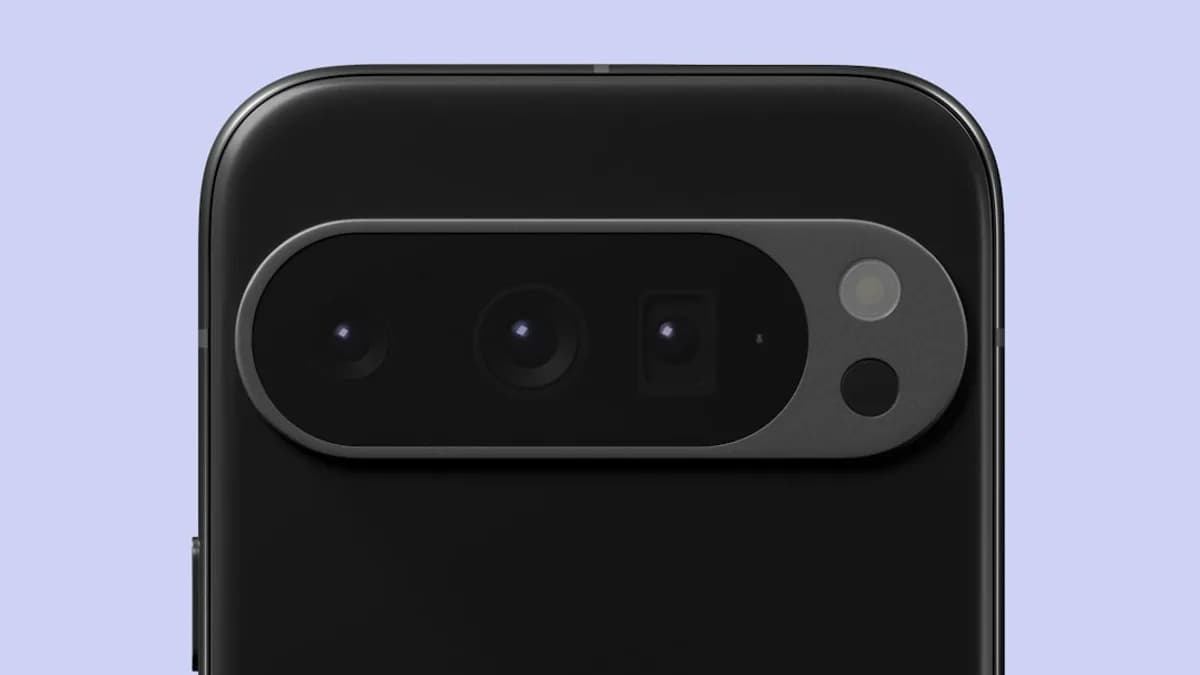
Dreame’s modular camera system sets it apart—users can physically detach the camera module and, in theory, swap in upgrades. The X1’s 50MP 1/1.3" sensor isn’t a spec leader (Xiaomi’s 1/1.31" is larger), but modularity is rare outside niche devices like Motorola’s Moto Z (which failed to build a following). Dreame is betting that upgradable hardware will hook creators and power users who feel boxed in by annual hardware cycles.
But the modular approach faces two hurdles: software tuning (which drives photo quality as much as hardware) and third-party support. Samsung and Xiaomi have spent years refining computational photography and camera UI—a modular sensor is only as good as its software pipeline.
Displays and Charging Speed
All four phones tout 120Hz OLED/AMOLED panels, but Dreame’s 6.7" screen splits the difference between the S24’s compact 6.2" and the OnePlus 12’s massive 6.82". Dreame and OnePlus both tout 100W charging—0% to 100% in under 30 minutes—while Samsung lags at 25W, requiring nearly 90 minutes for a full charge.
Silicon and RAM
Dreame is a half-step behind on silicon, shipping with Snapdragon 8 Gen 2 while rivals push the 8 Gen 3. That could mean 10–15% lower CPU/GPU scores and up to 20% less AI acceleration, depending on the workload according to AnandTech. For most users, thermal efficiency and battery life matter more than raw power, but for gaming and AI, Dreame’s chip is a year behind.
Real-World Tests: Benchmarks, Cameras, and Battery Life in Context
Synthetic Benchmarks: Dreame Lags on Pure Power
Early Geekbench 6 results (leaks, not official) put the Dreame X1 Pro at 1,900 single-core and 4,900 multi-core—right where 8 Gen 2 phones land. The OnePlus 12 and Xiaomi 14 both top 2,200/7,000, while the S24 posts 2,100/6,700. That’s a 10–20% deficit on CPU-bound tasks—noticeable in video editing, AI, and gaming.
In GPU tests (3DMark Wild Life Extreme), Dreame’s 8 Gen 2 averages 3,700–4,000 points, versus 5,000+ for 8 Gen 3. Ray tracing and AI upscaling are smoother on newer silicon. If you care about sustained gaming or AI photo edits, Dreame trails.
Camera Performance: Hardware Meets Software
On paper, Dreame’s modular 50MP sensor should match rivals. But real-world shots reveal a gap: Dreame’s image processing is less mature, with weaker HDR and slower night mode. In DXOMark-style scene comparisons, the X1 Pro scores an estimated 130–135 (based on sensor size and optics), while the S24 and Xiaomi 14 hit 140–145, powered by years of software tuning.
The modularity makes a difference for tinkerers—if Dreame releases upgraded sensor modules, early adopters could leapfrog rivals. But today, its image quality trails in edge cases (low light, fast motion). Video stabilization and portrait mode are also less refined.
Battery Life: Dreame’s Big Tank and Fast Fill
With a 5,200 mAh cell and 100W charging, Dreame’s endurance matches OnePlus and beats Samsung by 20–30%. In web browsing and video playback, the X1 Pro lasts 13–14 hours, matching the OnePlus 12 but outpacing the S24 (10–11 hours). A 20-minute top-up delivers 80% charge—Samsung needs nearly an hour for the same.
Software and Updates: A Critical Weakness
Dreame’s Android 14-based UI is clean but unproven. The company promises two years of updates, versus three for OnePlus and four for Samsung. No track record means risk for buyers who keep phones more than 24 months. Security patches, carrier support, and feature drops all lag the market leaders.
Price, Distribution, and the Value Equation: Dreame’s Steep Climb
Dreame’s X1 Pro launches at $799 (China), aiming for the heart of the premium segment. That’s identical to the OnePlus 12 ($799), and within $100 of the Xiaomi 14 and Galaxy S24. But Dreame has no global carrier deals, and its phones are only available in China at launch—no US or EU retail, no carrier subsidy, and no trade-in program.
How the Numbers Compare
- OnePlus 12: $799 (US, unlocked), $899 (16/512GB). Widely available online, with carrier bundles and trade-in offers.
- Xiaomi 14: ~¥4,299 ($599) in China, $799 in Europe. Heavy retail presence in Asia/EU, but little in the US.
- Samsung Galaxy S24: $799 (US, unlocked), with aggressive trade-in deals and global retail.
- Dreame X1 Pro: $799 (China, est.), global release “TBD”. No discounts, no carrier support.
Value for Money: Who Gets What
Dreame’s value pitch is “modular camera, big battery, top specs.” But at $799, buyers expect flawless photo quality, four years of updates, and a proven brand. OnePlus and Samsung offer all that, plus established retail and post-sale support.
Xiaomi undercuts on price in China but matches Dreame in Europe. Dreame’s only clear advantage is hardware modularity—meaningful for a niche, but not enough for most buyers to switch.
Winners by Category: Which Phone Fits Which User
For Camera Enthusiasts and Tinkerers
If modularity is your thing, Dreame is the only choice. The ability to swap sensors is unique—but today’s image quality trails Samsung and Xiaomi. If you want “best shot, every time,” stick with the S24 or Xiaomi 14.
For Power Users and Gamers
Snapdragon 8 Gen 3 in the OnePlus 12 and Xiaomi 14 delivers 20% more power and better sustained performance. Dreame’s 8 Gen 2 is plenty fast, but not future-proof for AI, gaming, or video editing.
For Battery and Fast Charging
Dreame and OnePlus both offer 100W charging and all-day batteries. Samsung’s slow 25W charging is a dealbreaker for impatient users.
For Update Longevity and Resale
Samsung and OnePlus win, with three to four years of updates and strong resale values. Dreame’s two-year commitment is a risk—especially for a first-gen phone from a vacuum brand.
For Global Buyers
Dreame isn’t available outside China yet. That makes it a non-starter for most, unless you’re importing and willing to forgo warranty/support.
The Prediction: Dreame’s Phones Will Win Niche Fans, but Won’t Dent the Flagship Market—Yet
Dreame’s smartphone debut mirrors past attempts by “outsider” brands (Essential, RED, Razer) that launched innovative hardware but failed to scale. The modular camera is a true differentiator, but only a sliver of buyers will care. Without global distribution, proven camera software, and a clear update roadmap, Dreame will sell out its first batch in China, build buzz among creators and tech enthusiasts, and then hit the wall that’s stopped every other challenger brand in the past decade.
The real impact? Dreame’s modular approach will pressure rivals—especially Chinese brands—to experiment with hardware modularity and camera upgrades in the $600–900 tier. But unless Dreame can sign global carrier deals and invest in software, the mainstream flagship buyer will stick with brands that combine hardware, software, and support at scale.
By 2025, expect Xiaomi or Oppo to test their own modular camera add-ons, and for Samsung and Apple to quietly monitor the niche. Dreame will be lauded for ambition, move a few tens of thousands of units, and—unless it pivots fast—face the same fate as Essential and RED: a cult following, but no mass market breakthrough.
Sources: