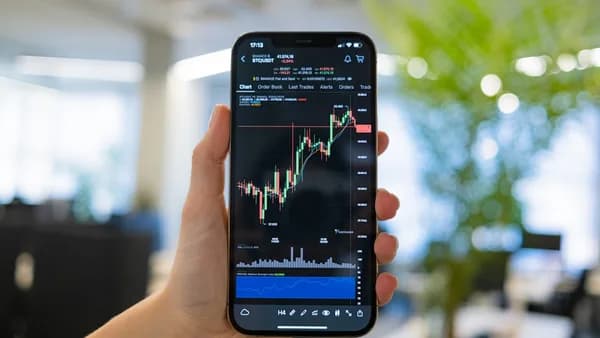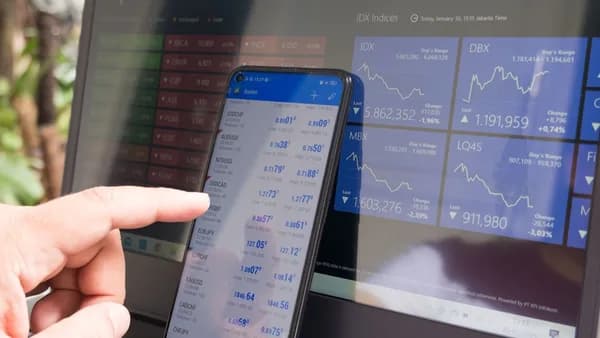
In 2026, both options trading apps and algorithmic trading tools have become cornerstones of the modern retail and professional investing landscape. As AI-driven automation reshapes financial markets, understanding the real distinctions between these two categories is crucial for traders aiming to align their strategy with the best available technology. This comprehensive analysis—grounded in the latest research and performance data—breaks down the strengths, differences, and best-fit use cases of options apps vs algorithmic tools 2026.
Overview of Options Trading Apps
Options trading apps are platforms that allow users to buy and sell options contracts—derivatives that grant the right, but not the obligation, to buy or sell an underlying asset at a specific price within a certain timeframe. According to Fidelity, options trading is fundamentally about leveraging relatively small amounts of capital for potentially outsized returns, managing risk, and generating income through strategic use of call and put contracts.
Key Characteristics
- Asset Focus: Primarily stocks and ETFs via options contracts (calls and puts).
- Core Features:
- Real-time quotes and execution for buying/selling options
- Order management for complex multi-leg strategies (spreads, straddles, etc.)
- Portfolio tracking, profit/loss calculation, and risk metrics
- Accessibility: Designed for retail investors with intuitive mobile and web interfaces.
- Pricing Structure: Most charge per-contract fees (e.g., TradeStation: $0.60 per options contract).
How Options Work
“An option is a legal contract that gives you the right to buy or sell an asset at a specific price by a specific time.” — Fidelity
Options apps guide users through:
- Choosing between calls and puts
- Selecting strike prices and expiration dates
- Managing open positions and understanding “in the money” (ITM) vs. “out of the money” (OTM) scenarios
Why Use Options Apps?
- Leverage: Control large positions with less capital outlay
- Hedging: Protect portfolios against downside risk
- Income Generation: Write options and collect premiums
Overview of Algorithmic Trading Tools
Algorithmic trading tools (often called algo-trading, AI trading, or quant tools) automate the entire trading process using sophisticated mathematical models and, increasingly, artificial intelligence. In 2026, these platforms are accessible to both institutional and retail traders, offering everything from basic rule-based automation to adaptive, self-learning AI systems.
Key Characteristics
- Asset Coverage: Stocks, ETFs, options, futures, crypto, and more
- Core Features:
- Strategy automation (from simple rules to complex machine learning)
- Backtesting on historical data
- Real-time data ingestion, pattern recognition, and automated execution via broker APIs
- Advanced analytics (Sharpe ratio, win rates, risk-adjusted returns)
- User Base: Both programmers and non-coders (with platforms like Stock Market Guides targeting non-developers)
- Pricing Structure: Free to premium ($0 to $69+/month, depending on platform and features)
How Algorithmic Trading Works
“AI trading operates through a sophisticated architecture that processes massive datasets to make decisions at speeds far exceeding human capability.” — HyScaler
The workflow typically includes:
- Massive data ingestion (prices, volumes, news, social sentiment)
- Pattern recognition (using machine learning, NLP, and even computer vision)
- Strategy optimization (via millions of backtests and simulations)
- Automated execution (placing orders in milliseconds)
Evolution in 2026
- Agentic Brokerage: Natural language AI agents that build and execute strategies based on plain-English prompts (e.g., “Hedge my tech stocks if the VIX spikes above 25”).
- Market Impact: Algorithmic tools now facilitate 60%–89% of global equity trading volume (HyScaler).
Key Differences in Functionality and Use Cases
| Feature/Aspect | Options Trading Apps | Algorithmic Trading Tools |
|---|---|---|
| Primary Use | Manual trading of options contracts | Automated execution of trading strategies |
| Asset Coverage | Options (calls, puts on stocks/ETFs) | Stocks, options, futures, crypto, etc. |
| Automation | Limited (manual order entry/management) | Full (from data ingestion to order execution) |
| Strategy Complexity | User-driven, some multi-leg support | Rule-based to adaptive AI/ML strategies |
| Data Analysis | Basic charts, Greeks, P/L calculators | Advanced ML, NLP, backtesting, sentiment, etc. |
| Speed | Human-limited (manual) | Millisecond execution, 24/7 monitoring |
| Learning Curve | Lower (intuitive interfaces) | Higher (can require coding/ML knowledge) |
“With the right software, you can stream market data, run simulations, and automate trades based on predefined rules, all with minimal manual oversight.” — StockAnalysis.com
Cost and Fee Comparison
Understanding costs is essential in the options apps vs algorithmic tools 2026 debate. Fee structures vary widely based on product, features, and user sophistication.
| Platform/Service | Best For | Cost (2026) | Notes |
|---|---|---|---|
| TradeStation | Active traders/algo devs | Free (account required) | $0 stock trades, $0.60/option |
| Stock Market Guides | Non-programmers | $29–$69/month | Stock, swing, and options picks |
| QuantConnect | Open-source quants | $60+/month | Cloud-based, advanced |
| Mindful Trader | Trade alert service | $47/month | Algorithmic trade alerts |
| Interactive Brokers | Algo trading brokerage | Free | Usage fees may apply |
- Free Tier: Some platforms (e.g., TradeStation, Interactive Brokers) offer free access with an account and funding, though options trading still incurs per-contract fees.
- Subscription Models: Platforms like Stock Market Guides and QuantConnect charge monthly fees for access to algorithms, signals, or backtesting infrastructure.
- Customization Costs: Building your own algorithmic infrastructure can range from free (open-source) to significant, depending on hosting, development, and data costs.
“Most of the pricing listed is for monthly plans, but many of these tools also offer (discounted) annual pricing.” — StockAnalysis.com
User Skill Level and Learning Curve
Options Trading Apps
- Beginner-Friendly: Designed for accessibility, with intuitive UIs and educational resources.
- Learning Focus: Understanding contract types, Greeks, and order entry.
- No Coding Required: All actions are via point-and-click interfaces.
Algorithmic Trading Tools
- For Developers & Advanced Users: Platforms like QuantConnect and TradeStation offer programming interfaces (Python, C#, proprietary languages).
- Non-Coders: Stock Market Guides and some LLM-based assistants (e.g., TradeGPT) offer algorithmic signals without the need for technical skills.
- Steeper Curve: Full automation, backtesting, and advanced strategy design require statistical and coding proficiency.
| User Type | Best Fit Tool | Learning Curve |
|---|---|---|
| Beginners | Options apps, Stock Market Guides | Low |
| Intermediate | TradeStation (EasyLanguage) | Moderate |
| Advanced/Quants | QuantConnect, custom infra | High |
Impact on Trading Speed and Efficiency
Options Trading Apps
- Manual Execution: Orders are placed and managed by the user.
- Reaction Time: Human speed—seconds to minutes.
- Limitation: Cannot realistically monitor or react to multiple assets simultaneously.
Algorithmic Trading Tools
- Automated Execution: Trades executed in milliseconds via APIs.
- 24/7 Monitoring: AI and algorithms never fatigue, can track thousands of assets globally.
- Smart Order Routing: AI systems execute across multiple exchanges for best pricing and minimal slippage.
“The system connects to exchanges via APIs to execute trades automatically. Using Smart Order Routing... ensures orders are filled at the best possible price with minimal slippage.” — HyScaler
Performance Example: In Q1 2026, AI trading signals (including options scanners) outperformed the S&P 500 by 3.8 percentage points, thanks in part to superior speed and data processing (TradeAlgo).
Risk Management Features
Options Trading Apps
- Manual Controls: Users set stop-losses, take-profit orders, and can close contracts at will.
- Risk Metrics: Real-time Greeks (Delta, Gamma, Theta, Vega), P/L calculations, margin monitoring.
Algorithmic Trading Tools
- Automated Risk Controls: Algorithms enforce position sizing, stop-losses, drawdown limits, and can halt trading on adverse signals.
- Advanced Stress Testing: AI systems run millions of Monte Carlo simulations and backtests to identify vulnerabilities.
- Emotionless Trading: AI eliminates human biases (fear, greed, overtrading).
“AI eliminates human biases such as fear, greed, and ‘revenge trading,’ sticking strictly to data-driven logic.” — HyScaler
Regulatory Note: As of February 2026, the SEC requires disclosure of AI involvement in investment advice (TradeAlgo), adding a compliance layer for risk management.
Integration with Brokers and Markets
Options Trading Apps
- Brokerage-Linked: Most apps require accounts with integrated brokers (e.g., TradeStation, Interactive Brokers).
- Asset Limitations: Typically support stocks and ETFs via listed options; some also offer futures and crypto options.
Algorithmic Trading Tools
- API Access: Deep integration with multiple brokerages and exchanges for real-time data and execution.
- Multi-Asset Support: Many platforms enable trading across stocks, options, futures, and crypto.
- Custom Infrastructure: Advanced users can deploy algorithms on their own cloud or hardware for full control.
| Platform | Broker Integration | Asset Classes Supported |
|---|---|---|
| TradeStation | Native | Stocks, ETFs, options, crypto |
| QuantConnect | API (multiple) | Stocks, options, futures, etc. |
| Stock Market Guides | Signal only | Stocks, options |
Which Strategy Benefits More from Each Tool?
Options Trading Apps
Best for:
- Discretionary trading: Users who prefer hands-on control and real-time decision making.
- Tactical hedging: Quick protection against market swings, e.g., buying puts for downside protection.
- Simple income generation: Selling covered calls or cash-secured puts.
Algorithmic Trading Tools
Best for:
- Systematic strategies: Rules-based or AI-driven trading across multiple assets.
- High-frequency trading: Scalping, market making, or exploiting millisecond-level market inefficiencies.
- Data-driven options trading: AI options scanners, as in Q1 2026, delivered a 64.7% win rate and +12.4% return (TradeAlgo).
- Risk-adjusted outperformance: Algorithmic tools produced a composite Sharpe ratio of up to 1.41 for options strategies (vs. 0.92 for S&P 500).
“AI options scanning tools posted the strongest category performance, with an average win rate of 64.7% on flagged setups.” — TradeAlgo
Final Recommendations Based on Trader Profiles
| Trader Profile | Best Tool Type | Rationale |
|---|---|---|
| New Investors | Options apps, Stock Market Guides | Lower learning curve, hand-holding, direct access |
| Discretionary Options Traders | Options apps | Full manual control, direct risk management |
| Systematic/Quant Traders | Algorithmic trading tools | Automation, backtesting, advanced analytics |
| Non-Programmers (Active) | Stock Market Guides, TradeStation | Algorithmic signals without coding |
| Developers/Quants | QuantConnect, TradeStation | Full customization, cloud deployment |
| High-Frequency Traders | Algorithmic trading tools | Millisecond execution, multi-asset coverage |
“Algorithmic tools now facilitate 60%–89% of global equity trading volume, transforming what was once a niche institutional tool into a market cornerstone.” — HyScaler
FAQ: Options Apps vs Algorithmic Tools 2026
Q1: Are algorithmic trading tools only for professional traders in 2026?
No. As of 2026, retail adoption has surged—12.8 million U.S. retail AI tool users are active, up 41% year-over-year (TradeAlgo, HyScaler). Many platforms are now accessible to non-programmers.
Q2: Do algorithmic tools really outperform manual trading?
According to Q1 2026 data, AI-powered trading systems outperformed the S&P 500 by 3.8 percentage points, with AI options scanning tools posting a 64.7% win rate (TradeAlgo).
Q3: How much does it cost to use these tools?
Costs vary. TradeStation offers free access (with account funding), but charges $0.60 per options contract. Subscription-based algorithmic tools range from $29 to $69+/month (Stock Market Guides, QuantConnect).
Q4: Can I automate options strategies using algorithmic tools?
Yes. Platforms like TradeStation and QuantConnect support automated options trading, including multi-leg strategies and AI-powered scanning (StockAnalysis.com, TradeAlgo).
Q5: What risks should I be aware of when using algorithmic trading tools?
Watch for “model drift” (models failing in new market conditions), overfitting, and regulatory compliance—disclosure of AI involvement is now required by the SEC (HyScaler, TradeAlgo).
Q6: Which is better for beginners: options apps or algorithmic trading tools?
Options apps are generally better for beginners due to their user-friendly interfaces and educational resources. However, non-coder-friendly algorithmic tools (like Stock Market Guides) offer a middle ground.
Bottom Line
The choice between options trading apps and algorithmic trading tools in 2026 depends on your strategy, skill level, and desired degree of automation. Options apps excel at giving traders hands-on control, flexibility, and direct access to options markets—ideal for discretionary or simple hedging strategies. Algorithmic trading tools, meanwhile, offer unmatched speed, analytical power, and scalability, with proven outperformance in options scanning and systematic trading. As AI-driven platforms become ever more accessible and powerful, even non-programmers can harness their edge—making the technology gap between Wall Street and Main Street narrower than ever. The best choice is the one that aligns with your unique trading goals, risk tolerance, and willingness to leverage automation.